Konecranes upgrades Palm warehouse with automated cranes
New cranes, control systems, and runway upgrades increase throughput and optimize material flow in automated paper roll storage. www.konecranes.com Automation in paper manufacturing, logistics, and material handling is advancing to support higher throughput and just-in-time delivery. In this context, Konecranes is modernizing an automated paper roll warehouse for Palm at its Wörth facility in Germany, integrating four new automated cranes, upgraded software, and redesigned infrastructure to improve warehouse efficiency and material flow. The project, initiated in May 2025, involves replacing two existing automated cranes across two warehouse bays with four new units equipped with vacuum lifters. In parallel, crane runways are being renewed and the entire material flow system is being optimized. Implementation began in 2025 and is scheduled to continue through 2027, with staged commissioning to maintain ongoing operations. A central aspect of the modernization is the introduction of a new control system for floor-based material handling equipment. This system was deployed during live operation in September–October 2025, marking the first time Konecranes has extended its automation capabilities beyond overhead crane systems into integrated warehouse material flow control. This development positions the company as a broader provider of end-to-end material flow automation. Installation of the first two cranes and their associated runway is planned for spring 2026, followed by the second pair and remaining runway in spring 2027. The phased rollout ensures continuity in warehouse operations while progressively increasing system capacity. Increased throughput and optimized warehouse operations The upgraded system is designed to improve handling efficiency for paper rolls produced on-site. By combining additional crane capacity with optimized control logic and infrastructure, the warehouse is expected to achieve measurable gains in throughput. According to project data, the modernization enables a 30% increase in loading capacity, supporting faster and more flexible supply of containerboard products. This improvement is particularly relevant in high-volume paper production environments, where synchronized material flow between production lines and storage systems is critical. Automated cranes with vacuum lifters allow secure handling of large paper rolls, while upgraded runways and control systems reduce bottlenecks and improve cycle times. Simulation-driven system design A multi-year pilot phase preceded implementation, during which both companies collaborated on system design and validation. Detailed simulations conducted by Konecranes modeled warehouse operations, enabling optimization of crane movements, storage strategies, and throughput scenarios before deployment. This approach allowed the partners to verify feasibility and quantify efficiency gains prior to installation, reducing implementation risks in a live production environment. Simulation-based design is increasingly used in automated warehouse projects to align system performance with operational requirements. Expanding automation scope in material flow systems Beyond crane replacement, the integration of floor-based equipment control represents a shift toward unified material flow systems. By coordinating cranes with other handling equipment through a single control architecture, the solution supports more responsive and synchronized warehouse operations. Such integration is particularly relevant in industries like paper and packaging, where continuous production processes depend on reliable intermediate storage and retrieval systems. The modernization at Wörth illustrates how upgrading both hardware and control layers can enhance overall system performance rather than addressing components in isolation. While similar automated storage solutions exist in the paper industry, the combination of increased crane density, integrated control of multiple handling layers, and simulation-driven design distinguishes this implementation in terms of system-level optimization. Edited by Natania Lyngdoh, Induportals Editor — Adapted by AI. www.konecranes.com Powered by Induportals Media Publishing
 machineryasia
New cranes, control systems, and runway upgrades increase throughput and optimize material flow in automated paper roll storage.
www.konecranes.com
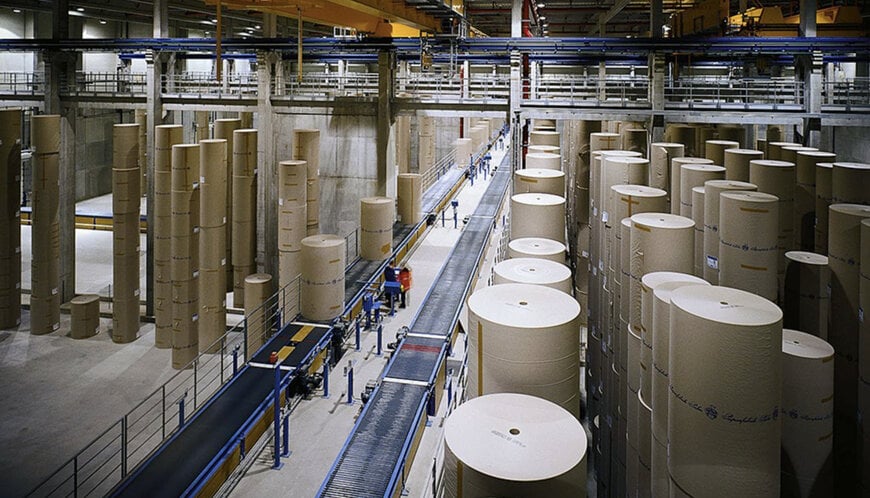
Automation in paper manufacturing, logistics, and material handling is advancing to support higher throughput and just-in-time delivery. In this context, Konecranes is modernizing an automated paper roll warehouse for Palm at its Wörth facility in Germany, integrating four new automated cranes, upgraded software, and redesigned infrastructure to improve warehouse efficiency and material flow.
The project, initiated in May 2025, involves replacing two existing automated cranes across two warehouse bays with four new units equipped with vacuum lifters. In parallel, crane runways are being renewed and the entire material flow system is being optimized. Implementation began in 2025 and is scheduled to continue through 2027, with staged commissioning to maintain ongoing operations.
A central aspect of the modernization is the introduction of a new control system for floor-based material handling equipment. This system was deployed during live operation in September–October 2025, marking the first time Konecranes has extended its automation capabilities beyond overhead crane systems into integrated warehouse material flow control. This development positions the company as a broader provider of end-to-end material flow automation.
Installation of the first two cranes and their associated runway is planned for spring 2026, followed by the second pair and remaining runway in spring 2027. The phased rollout ensures continuity in warehouse operations while progressively increasing system capacity.
Increased throughput and optimized warehouse operations
The upgraded system is designed to improve handling efficiency for paper rolls produced on-site. By combining additional crane capacity with optimized control logic and infrastructure, the warehouse is expected to achieve measurable gains in throughput. According to project data, the modernization enables a 30% increase in loading capacity, supporting faster and more flexible supply of containerboard products.
This improvement is particularly relevant in high-volume paper production environments, where synchronized material flow between production lines and storage systems is critical. Automated cranes with vacuum lifters allow secure handling of large paper rolls, while upgraded runways and control systems reduce bottlenecks and improve cycle times.
Simulation-driven system design
A multi-year pilot phase preceded implementation, during which both companies collaborated on system design and validation. Detailed simulations conducted by Konecranes modeled warehouse operations, enabling optimization of crane movements, storage strategies, and throughput scenarios before deployment.
This approach allowed the partners to verify feasibility and quantify efficiency gains prior to installation, reducing implementation risks in a live production environment. Simulation-based design is increasingly used in automated warehouse projects to align system performance with operational requirements.
Expanding automation scope in material flow systems
Beyond crane replacement, the integration of floor-based equipment control represents a shift toward unified material flow systems. By coordinating cranes with other handling equipment through a single control architecture, the solution supports more responsive and synchronized warehouse operations.
Such integration is particularly relevant in industries like paper and packaging, where continuous production processes depend on reliable intermediate storage and retrieval systems. The modernization at Wörth illustrates how upgrading both hardware and control layers can enhance overall system performance rather than addressing components in isolation.
While similar automated storage solutions exist in the paper industry, the combination of increased crane density, integrated control of multiple handling layers, and simulation-driven design distinguishes this implementation in terms of system-level optimization.
Edited by Natania Lyngdoh, Induportals Editor — Adapted by AI.
www.konecranes.com
Powered by
Induportals Media Publishing