Two-Axle Articulated Dump Truck Engineering and Performance Specifications
JCB introduces the 715 articulated dump truck to optimize material transport within the digital supply chain of high-volume earthmoving and construction projects. www.jcb.com The JCB 715 is a 9.3-tonne articulated dump truck (ADT) engineered to interface with mid-sized excavating and loading machinery in off-road environments. By utilizing a two-axle configuration and high-torque powertrain, the vehicle addresses the technical requirements of Tier 1 construction sites and mining operations where maneuverability and ground pressure management are critical for operational efficiency. Powertrain and Traction Mechanics The vehicle is powered by a JCB 448 Stage V diesel engine, which generates 129 kW (173 hp) and 690 Nm of torque at 1,500 rpm. This low-speed torque peak is designed to maximize fuel efficiency during high-load hauling cycles. To transfer power to the terrain, the machine utilizes heavy-duty ZF axles equipped with differential locks. A central component of the drivetrain is the 8-speed automatic powershift transmission featuring active torque lock. This mechanism eliminates traditional torque converter losses by enabling a direct mechanical link between the engine and the axles. This technical configuration ensures sustained traction on steep gradients and through low-friction surfaces, such as deep mud, while allowing for a maximum travel speed of 40 kph. Payload Capacity and Structural Integrity The 715 ADT features a 7.1 m3 heaped body capacity designed to accommodate a maximum payload of 12,750 kg. To mitigate wear from abrasive materials, the dump body is constructed with a Hardox 450 reinforced steel floor as standard. The machine’s unladen weight of 9,320 kg, distributed across two axles, allows for a high payload-to-weight ratio, which reduces rolling resistance and fuel consumption during return cycles. Operator Interface and Data Integration The Command Plus cab is designed with a central driving position to provide 360-degree visibility, supported by ROPS/FOPS structural certification. Technical monitoring is managed through the JCB UX display, a 7-inch touchscreen interface shared with X Series excavators. This hardware parity allows for a unified automotive data ecosystem across a fleet, enabling operators to transfer personalized profiles and machine configurations between different vehicle types. The system integrates electronic start-up checks that digitally monitor fluid levels and critical pressures, reducing the risk of mechanical failure. Furthermore, the LiveLink telematics system provides real-time diagnostic data to fleet managers, facilitating predictive maintenance and asset tracking. Cooling Systems and Maintenance Accessibility To maintain thermal efficiency in high-dust environments, the 715 utilizes a patented cooling pack mounted high on the rear of the front chassis section. This placement isolates the radiator from ground-level debris. A variable-speed reversible fan automatically regulates temperature while periodically purging the cooling fins of dust buildup. Serviceability is addressed through ground-level access points and lift-off mudguards, which allow for the inspection of filters and hydraulic components without specialized lifting equipment. Edited by Evgeny Churilov, Induportals Media - Adapted by AI. www.jcb.com Powered by Induportals Media Publishing
 machineryasia
JCB introduces the 715 articulated dump truck to optimize material transport within the digital supply chain of high-volume earthmoving and construction projects.
www.jcb.com
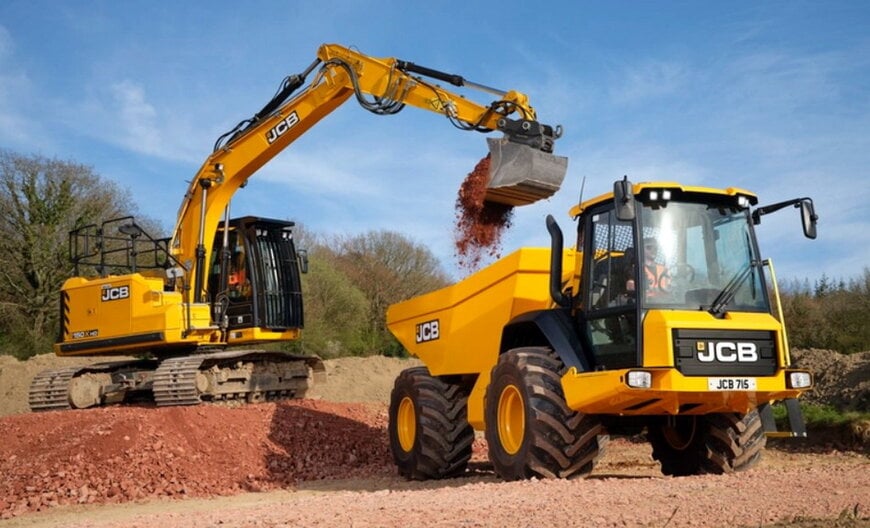
The JCB 715 is a 9.3-tonne articulated dump truck (ADT) engineered to interface with mid-sized excavating and loading machinery in off-road environments. By utilizing a two-axle configuration and high-torque powertrain, the vehicle addresses the technical requirements of Tier 1 construction sites and mining operations where maneuverability and ground pressure management are critical for operational efficiency.
Powertrain and Traction Mechanics
The vehicle is powered by a JCB 448 Stage V diesel engine, which generates 129 kW (173 hp) and 690 Nm of torque at 1,500 rpm. This low-speed torque peak is designed to maximize fuel efficiency during high-load hauling cycles. To transfer power to the terrain, the machine utilizes heavy-duty ZF axles equipped with differential locks.
A central component of the drivetrain is the 8-speed automatic powershift transmission featuring active torque lock. This mechanism eliminates traditional torque converter losses by enabling a direct mechanical link between the engine and the axles. This technical configuration ensures sustained traction on steep gradients and through low-friction surfaces, such as deep mud, while allowing for a maximum travel speed of 40 kph.
Payload Capacity and Structural Integrity
The 715 ADT features a 7.1 m3 heaped body capacity designed to accommodate a maximum payload of 12,750 kg. To mitigate wear from abrasive materials, the dump body is constructed with a Hardox 450 reinforced steel floor as standard. The machine’s unladen weight of 9,320 kg, distributed across two axles, allows for a high payload-to-weight ratio, which reduces rolling resistance and fuel consumption during return cycles.
Operator Interface and Data Integration
The Command Plus cab is designed with a central driving position to provide 360-degree visibility, supported by ROPS/FOPS structural certification. Technical monitoring is managed through the JCB UX display, a 7-inch touchscreen interface shared with X Series excavators. This hardware parity allows for a unified automotive data ecosystem across a fleet, enabling operators to transfer personalized profiles and machine configurations between different vehicle types.
The system integrates electronic start-up checks that digitally monitor fluid levels and critical pressures, reducing the risk of mechanical failure. Furthermore, the LiveLink telematics system provides real-time diagnostic data to fleet managers, facilitating predictive maintenance and asset tracking.
Cooling Systems and Maintenance Accessibility
To maintain thermal efficiency in high-dust environments, the 715 utilizes a patented cooling pack mounted high on the rear of the front chassis section. This placement isolates the radiator from ground-level debris. A variable-speed reversible fan automatically regulates temperature while periodically purging the cooling fins of dust buildup. Serviceability is addressed through ground-level access points and lift-off mudguards, which allow for the inspection of filters and hydraulic components without specialized lifting equipment.
Edited by Evgeny Churilov, Induportals Media - Adapted by AI.
www.jcb.com
Powered by
Induportals Media Publishing