Is Equipment as a Service the future of your fleet?
The reality of fleet ownership is that you're basically running two businesses: the one that makes money — prepping sites, installing utilities, or mining commodities, for example — and the one that costs money — equipment service and repairs. For many companies, a significant amount of time and energy is spent managing that second one, stressing over parts availability, mechanics' hours, and the costs of unplanned downtime. The methods of acquiring machines haven't really changed for a long time: buy, lease, or rent. But a fourth option is gaining traction and fundamentally changes how contractors and producers can think about heavy equipment ownership. It's called Equipment as a Service (EaaS). The name may sound complex, but it's a very practical option. You buy the use, not the iron. And, for the right operation, it can be the difference between struggling with downtime and guaranteeing production. What is Equipment as a Service? You can think of EaaS like a metered utility. When you flip a light switch, you don't own the power plant — you just pay for the electricity you use. With EaaS, instead of buying machines, you purchase a block of fleet operating hours. You pay when you use the machines, not to own the steel and rubber itself. In a typical EaaS agreement (like the ones we structure at Volvo CE), you get access to the fleet you need while the manufacturer and dealer retain ownership and responsibility. They handle the maintenance, repairs, and life cycle management. You simply provide the operators and fuel. You might think this sounds like renting, but EaaS differs significantly from traditional methods: Renting is an operating expense (OpEx) that's usually short-term and based on individual machines. Costs are fixed each month, but maintenance and repair costs are either limited or not included. Using more hours than agreed upon will result in additional fees, while using fewer hours than expected means you lose money. Leases are also tied to individual machines with fixed costs each month, but for longer terms. According to current accounting standards, leases are a capital expense (CapEx) with added costs and taxes, impacting your balance sheet. The burden of maintenance and repair falls to either you or the dealer. Purchasing requires a significant upfront investment (CapEx) and impacts cash flow for a long time. It may take years to see a return on the initial investment, not to mention that all maintenance costs and repair scheduling are on you, and resale values could tank. With EaaS, the script is flipped. It's a long-term, fleet-based usage contract that qualifies as an operating expense (OpEx), freeing up your capital. The supplier (dealer or OEM) performs regular service and handles repairs if a machine breaks down. This effectively guarantees uptime: They are incentivized to keep your machine running because you only pay when it works. The "ownership" piece of traditional O&O costs shift to the "operating" side only.
 machineryasia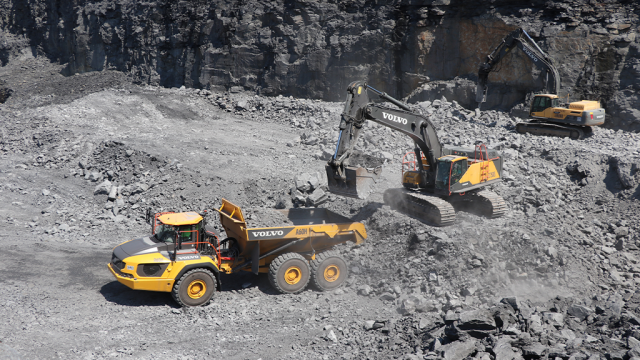
The reality of fleet ownership is that you're basically running two businesses: the one that makes money — prepping sites, installing utilities, or mining commodities, for example — and the one that costs money — equipment service and repairs.
For many companies, a significant amount of time and energy is spent managing that second one, stressing over parts availability, mechanics' hours, and the costs of unplanned downtime.
The methods of acquiring machines haven't really changed for a long time: buy, lease, or rent. But a fourth option is gaining traction and fundamentally changes how contractors and producers can think about heavy equipment ownership. It's called Equipment as a Service (EaaS).
The name may sound complex, but it's a very practical option. You buy the use, not the iron. And, for the right operation, it can be the difference between struggling with downtime and guaranteeing production.
What is Equipment as a Service?
You can think of EaaS like a metered utility. When you flip a light switch, you don't own the power plant — you just pay for the electricity you use. With EaaS, instead of buying machines, you purchase a block of fleet operating hours. You pay when you use the machines, not to own the steel and rubber itself.
In a typical EaaS agreement (like the ones we structure at Volvo CE), you get access to the fleet you need while the manufacturer and dealer retain ownership and responsibility. They handle the maintenance, repairs, and life cycle management. You simply provide the operators and fuel.
You might think this sounds like renting, but EaaS differs significantly from traditional methods:
Renting is an operating expense (OpEx) that's usually short-term and based on individual machines. Costs are fixed each month, but maintenance and repair costs are either limited or not included. Using more hours than agreed upon will result in additional fees, while using fewer hours than expected means you lose money.
Leases are also tied to individual machines with fixed costs each month, but for longer terms. According to current accounting standards, leases are a capital expense (CapEx) with added costs and taxes, impacting your balance sheet. The burden of maintenance and repair falls to either you or the dealer.
Purchasing requires a significant upfront investment (CapEx) and impacts cash flow for a long time. It may take years to see a return on the initial investment, not to mention that all maintenance costs and repair scheduling are on you, and resale values could tank.
With EaaS, the script is flipped. It's a long-term, fleet-based usage contract that qualifies as an operating expense (OpEx), freeing up your capital. The supplier (dealer or OEM) performs regular service and handles repairs if a machine breaks down. This effectively guarantees uptime: They are incentivized to keep your machine running because you only pay when it works. The "ownership" piece of traditional O&O costs shift to the "operating" side only.