How modern aggregates processing technology is helping revitalize a First Nations community
At 176 years old, Garden River First Nation, near Sault Ste. Marie in Ontario, is at the cutting edge of aggregates processing — a business that is proving to be a major economic engine that's helping to revitalize the community. For its most recent project, Garden River (Ketegaunseebee, in the Ojibwe language) is supplying aggregates for the 16 kilometres of Highway 17A that run directly through the reserve. The 34-kilometre highway serves as the Kenora Bypass for the Trans-Canada Highway. The resurfacing is taking place from late 2025 to 2028 and requires close to 100,000 tonnes of gravel, 170,000 tonnes of Granular B type 1, and 100,000 tonnes of Superpave and asphalt dust. "When we became aware that Highway 17A was going to undergo resurfacing and we were to be partnered into that project, we realized that our old crusher was too outdated and wasn't capable of producing some of the products like the Superpave," says Chris Morettin, business entities manager for Garden River First Nation. "We needed to replace that model with something brand new that had the capabilities to meet Ministry of Transportation requirements." Their two-decade-old impactor required constant maintenance and couldn't keep up with the operation's demands. Morettin and Travis Belleau, aggregate supervisor, started doing research on newer crushing technology. In spring 2025, they decided on a Kleemann system: a jaw crusher, two cone crushers, two screen decks, and a stacker. "We conducted a financial analysis based on revenues that were going to be generated. We were able to see that purchasing this equipment would pay for itself over the life span of this project," says Morettin.
 machineryasia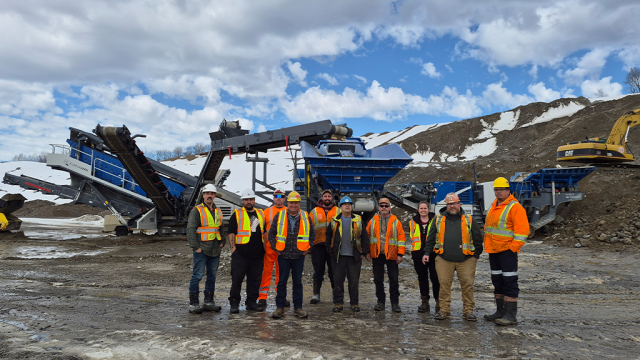
At 176 years old, Garden River First Nation, near Sault Ste. Marie in Ontario, is at the cutting edge of aggregates processing — a business that is proving to be a major economic engine that's helping to revitalize the community. For its most recent project, Garden River (Ketegaunseebee, in the Ojibwe language) is supplying aggregates for the 16 kilometres of Highway 17A that run directly through the reserve. The 34-kilometre highway serves as the Kenora Bypass for the Trans-Canada Highway.
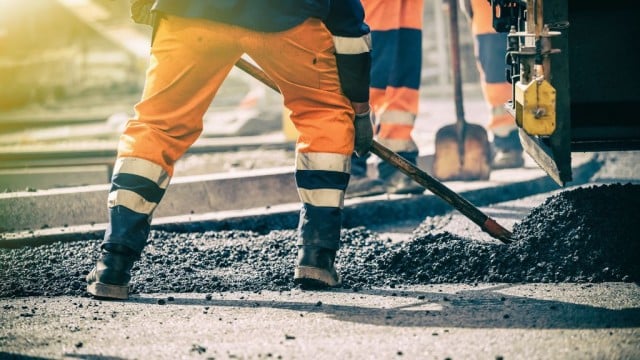
The resurfacing is taking place from late 2025 to 2028 and requires close to 100,000 tonnes of gravel, 170,000 tonnes of Granular B type 1, and 100,000 tonnes of Superpave and asphalt dust.
"When we became aware that Highway 17A was going to undergo resurfacing and we were to be partnered into that project, we realized that our old crusher was too outdated and wasn't capable of producing some of the products like the Superpave," says Chris Morettin, business entities manager for Garden River First Nation. "We needed to replace that model with something brand new that had the capabilities to meet Ministry of Transportation requirements."
Their two-decade-old impactor required constant maintenance and couldn't keep up with the operation's demands. Morettin and Travis Belleau, aggregate supervisor, started doing research on newer crushing technology. In spring 2025, they decided on a Kleemann system: a jaw crusher, two cone crushers, two screen decks, and a stacker.
"We conducted a financial analysis based on revenues that were going to be generated. We were able to see that purchasing this equipment would pay for itself over the life span of this project," says Morettin.