Mobile crane deployment using integrated ballast trailer transport system
Kranverleih Kunze implements the first Liebherr LTM 1055-3.3 with a ballast trailer in Germany to optimize logistics and bypass individual road transport authorizations. www.liebherr.com At the handover of the new LTM 1055-3.3 in Ehingen (from left to right): Sven Bahms (Liebherr), Dirk Kunze, Christian Jahn and Friedrich Guder (all Kranverleih Kunze). Kranverleih Kunze has expanded its machinery fleet with a Liebherr LTM 1055-3.3 mobile crane. This delivery represents the first instance of this specific crane model being paired with a dedicated ballast trailer in the German market. The Saxony-based company utilizes this configuration for industrial construction, steel assembly, and the maintenance of energy infrastructure across various federal states. The primary operational challenge addressed by this equipment selection involves the logistical burden of transporting counterweights. Typically, moving a crane with its full ballast requires individual road permits for each journey, particularly when crossing state borders. This administrative process often leads to delays and increased overhead costs for short-term and medium-term taxi crane assignments that require rapid deployment across different jurisdictions. To mitigate these issues, the LTM 1055-3.3 was integrated with a specialized trailer system developed with a local partner. This setup facilitates the transport of the entire 11-tonne ballast within standard weight limits. Under the VwV-StVO §29 regulations, the crane remains under 27.5 tonnes total weight as a single unit, while the combined tractor-trailer weight stays below 41.8 tonnes. These parameters qualify the vehicle for a general permanent license, which is valid for three years and covers the entire scope of German road traffic regulations, eliminating the need for single-trip permits. Working together on site: alongside an LTM 1120‑4.1, the LTM 1055‑3.3 dismantles a chimney at Dresden’s former waste‑to‑energy plant. In practical application, the system was utilized during a project in Dresden in April 2026. At the IMA materials research institute, the crane lifted 5.5-tonne hollow-core slabs. The trailer-based ballast system allowed the operator to rig the full 11-tonne counterweight on-site in a single lift, reducing setup time. The crane also utilized VarioBase Plus technology to maintain lifting capacities of 3.3 tonnes at a 30-metre radius. Following this, the unit was deployed to a waste-to-energy plant for chimney dismantling, where it operated with a nine-tonne configuration while the remaining ballast stayed on the trailer, demonstrating adaptability for consecutive work sites. Edited by an industrial journalist, Lekshman Ramdas, with AI assistance. www.liebherr.com Powered by Induportals Media Publishing
 machineryasia
Kranverleih Kunze implements the first Liebherr LTM 1055-3.3 with a ballast trailer in Germany to optimize logistics and bypass individual road transport authorizations.
www.liebherr.com
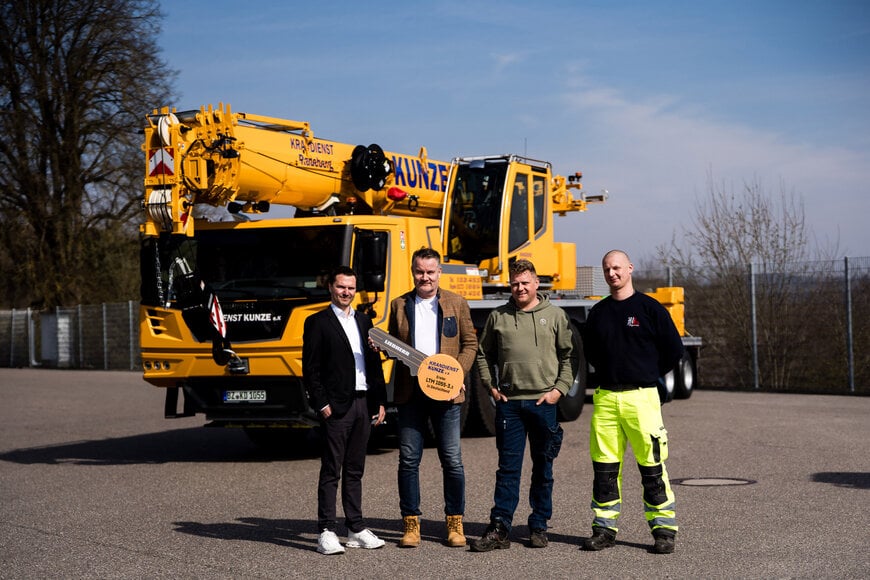
At the handover of the new LTM 1055-3.3 in Ehingen (from left to right): Sven Bahms (Liebherr), Dirk Kunze, Christian Jahn and Friedrich Guder (all Kranverleih Kunze).
Kranverleih Kunze has expanded its machinery fleet with a Liebherr LTM 1055-3.3 mobile crane. This delivery represents the first instance of this specific crane model being paired with a dedicated ballast trailer in the German market. The Saxony-based company utilizes this configuration for industrial construction, steel assembly, and the maintenance of energy infrastructure across various federal states.
The primary operational challenge addressed by this equipment selection involves the logistical burden of transporting counterweights. Typically, moving a crane with its full ballast requires individual road permits for each journey, particularly when crossing state borders. This administrative process often leads to delays and increased overhead costs for short-term and medium-term taxi crane assignments that require rapid deployment across different jurisdictions.
To mitigate these issues, the LTM 1055-3.3 was integrated with a specialized trailer system developed with a local partner. This setup facilitates the transport of the entire 11-tonne ballast within standard weight limits. Under the VwV-StVO §29 regulations, the crane remains under 27.5 tonnes total weight as a single unit, while the combined tractor-trailer weight stays below 41.8 tonnes. These parameters qualify the vehicle for a general permanent license, which is valid for three years and covers the entire scope of German road traffic regulations, eliminating the need for single-trip permits.
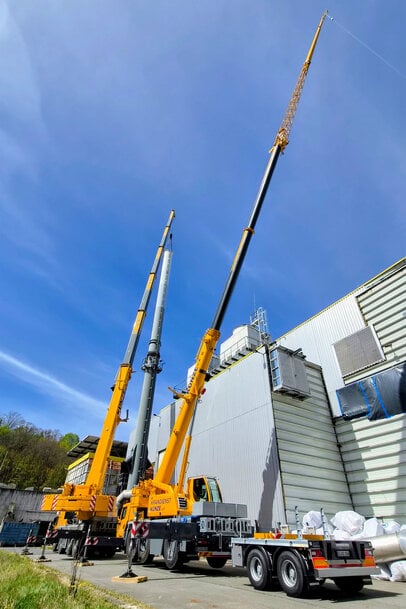
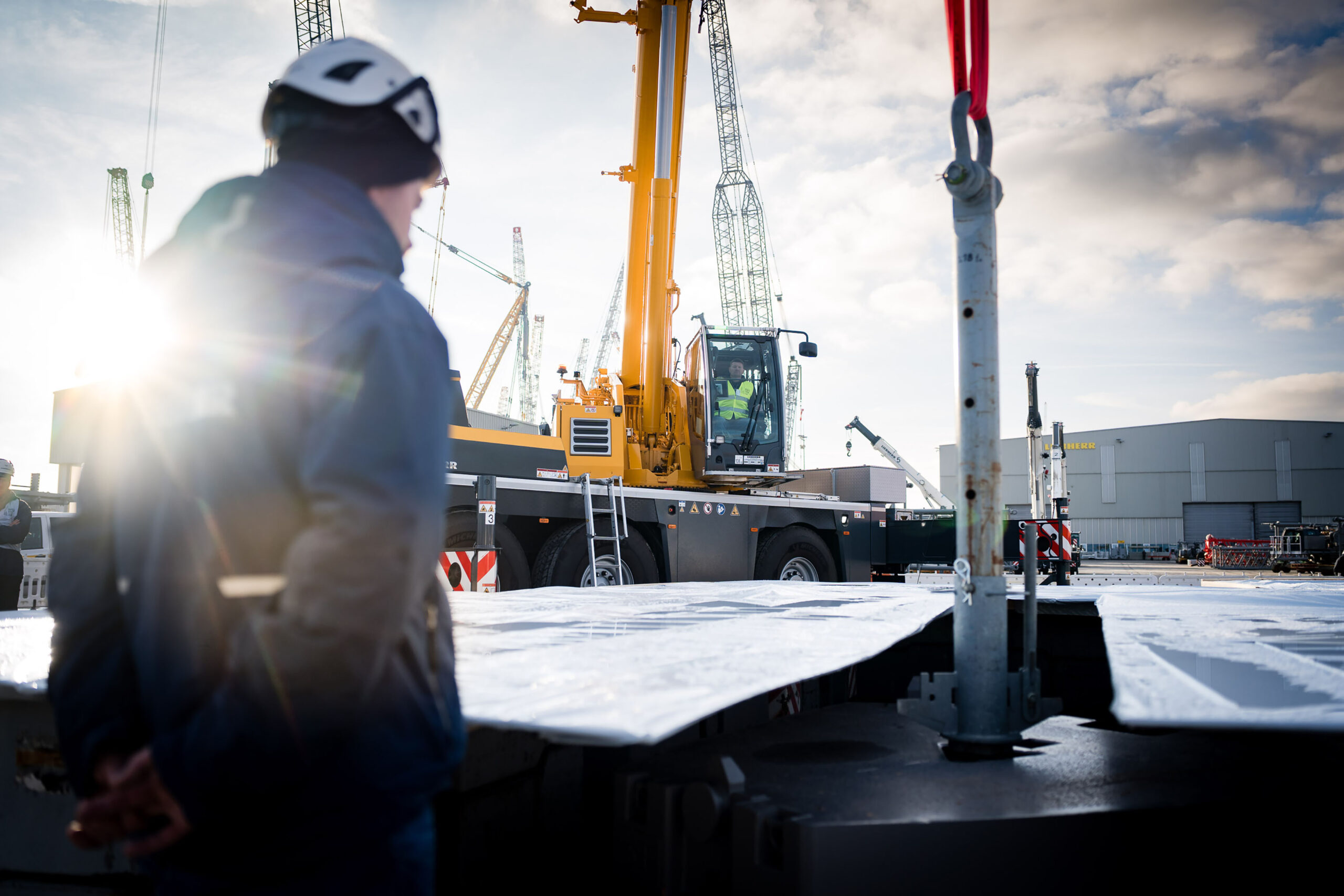
Working together on site: alongside an LTM 1120‑4.1, the LTM 1055‑3.3 dismantles a chimney at Dresden’s former waste‑to‑energy plant.
In practical application, the system was utilized during a project in Dresden in April 2026. At the IMA materials research institute, the crane lifted 5.5-tonne hollow-core slabs. The trailer-based ballast system allowed the operator to rig the full 11-tonne counterweight on-site in a single lift, reducing setup time. The crane also utilized VarioBase Plus technology to maintain lifting capacities of 3.3 tonnes at a 30-metre radius. Following this, the unit was deployed to a waste-to-energy plant for chimney dismantling, where it operated with a nine-tonne configuration while the remaining ballast stayed on the trailer, demonstrating adaptability for consecutive work sites.
Edited by an industrial journalist, Lekshman Ramdas, with AI assistance.
www.liebherr.com
Kranverleih Kunze has expanded its machinery fleet with a Liebherr LTM 1055-3.3 mobile crane. This delivery represents the first instance of this specific crane model being paired with a dedicated ballast trailer in the German market. The Saxony-based company utilizes this configuration for industrial construction, steel assembly, and the maintenance of energy infrastructure across various federal states.
The primary operational challenge addressed by this equipment selection involves the logistical burden of transporting counterweights. Typically, moving a crane with its full ballast requires individual road permits for each journey, particularly when crossing state borders. This administrative process often leads to delays and increased overhead costs for short-term and medium-term taxi crane assignments that require rapid deployment across different jurisdictions.
To mitigate these issues, the LTM 1055-3.3 was integrated with a specialized trailer system developed with a local partner. This setup facilitates the transport of the entire 11-tonne ballast within standard weight limits. Under the VwV-StVO §29 regulations, the crane remains under 27.5 tonnes total weight as a single unit, while the combined tractor-trailer weight stays below 41.8 tonnes. These parameters qualify the vehicle for a general permanent license, which is valid for three years and covers the entire scope of German road traffic regulations, eliminating the need for single-trip permits.
Working together on site: alongside an LTM 1120‑4.1, the LTM 1055‑3.3 dismantles a chimney at Dresden’s former waste‑to‑energy plant.
In practical application, the system was utilized during a project in Dresden in April 2026. At the IMA materials research institute, the crane lifted 5.5-tonne hollow-core slabs. The trailer-based ballast system allowed the operator to rig the full 11-tonne counterweight on-site in a single lift, reducing setup time. The crane also utilized VarioBase Plus technology to maintain lifting capacities of 3.3 tonnes at a 30-metre radius. Following this, the unit was deployed to a waste-to-energy plant for chimney dismantling, where it operated with a nine-tonne configuration while the remaining ballast stayed on the trailer, demonstrating adaptability for consecutive work sites.
Edited by an industrial journalist, Lekshman Ramdas, with AI assistance.
www.liebherr.com
Powered by
Induportals Media Publishing