Hybrid material handler reduces recycling operating costs
Ashvin Metals installed hybrid material handling equipment at its Poulton-Le-Fylde recycling yard to improve reach, reduce fuel consumption, and lower operating costs. www.sennebogen.com Ashvin Metals operates three recycling facilities in the United Kingdom and specializes in the processing of non-ferrous metals including aluminum, copper, and brass. Scrap delivered to the company’s yards is sorted, compacted, and prepared for further downstream processing. At the Poulton-Le-Fylde site in northwest England, operational efficiency is strongly influenced by the available yard space. Handling mixed scrap, feeding shear equipment, and loading containers require continuous machine movements within a confined work area. The company therefore sought to improve the productivity of its scrap recycling operations while maintaining safe and efficient material flows. The objective was to increase machine reach and lifting capability so that a single machine could cover a larger working zone without repositioning. At the same time, the company aimed to reduce fuel consumption and overall operating costs. Deployment of hybrid material handling equipment In 2024, Ashvin Metals invested in a new hybrid material handling machine with an operating weight of approximately 50 tonnes. The equipment is powered by a 210 kW diesel engine and incorporates an energy-recovery system designed to capture and reuse energy generated during the boom’s lowering movements. This recuperation technology supports lower fuel consumption during repetitive loading and sorting cycles typical in scrap handling environments. The hybrid configuration therefore contributes to both operational efficiency and energy savings during continuous yard operations. The machine was equipped with a 20-meter reach and a 0.8 m³ orange-peel grab, enabling operators to handle different types of scrap materials and containers from a single operating position. Extended reach improves yard productivity The extended working radius was a key factor in the investment decision. At the Poulton-Le-Fylde site, the increased reach allows the operator to access multiple processing points without moving the machine, reducing repositioning time and improving workflow continuity. “Our previous machine weighed 40 tons – it did the job, but the larger machine allows us to park it in one corner and still comfortably reach both the shear and scrap boxes,” said Andrew Dixon, owner of Ashvin Metals. By covering a wider area from a fixed position, the equipment supports more efficient handling cycles and simplifies yard logistics, particularly in constrained industrial spaces. Reduced fuel consumption and operating costs In addition to operational flexibility, the hybrid energy-recovery system contributes to lower fuel consumption during daily operations. According to the company, the machine’s technology reduces fuel usage by up to 30 percent compared with conventional equipment performing similar tasks. This reduction directly affects overall operating costs for the recycling facility, where material handling equipment typically runs for extended daily shifts. Lower fuel consumption also reduces maintenance requirements associated with engine load and operational wear. Operational benefits for recycling facilities For Ashvin Metals, the introduction of hybrid material handling equipment has improved both productivity and cost efficiency at the Poulton-Le-Fylde yard. The combination of extended reach, higher lifting capacity, and reduced energy consumption allows the recycling company to maintain efficient scrap processing despite spatial limitations. The investment demonstrates how equipment configuration and energy-efficient technologies can optimize scrap recycling operations, particularly in facilities where yard layout and machine mobility are critical factors in operational performance. Edited by an industrial journalist, Sucithra Mani — AI-powered www.sennebogen.com Powered by Induportals Media Publishing
 machineryasia
Ashvin Metals installed hybrid material handling equipment at its Poulton-Le-Fylde recycling yard to improve reach, reduce fuel consumption, and lower operating costs.
www.sennebogen.com
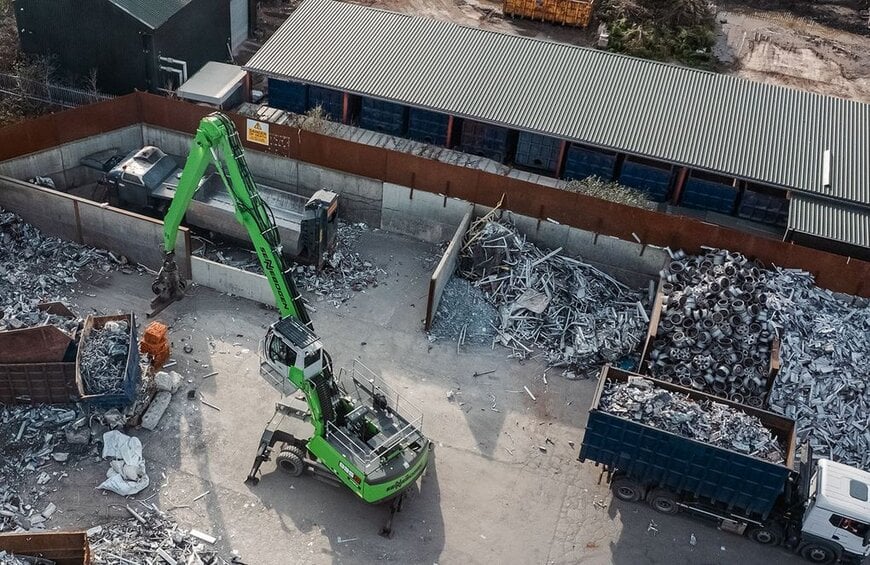
Ashvin Metals operates three recycling facilities in the United Kingdom and specializes in the processing of non-ferrous metals including aluminum, copper, and brass. Scrap delivered to the company’s yards is sorted, compacted, and prepared for further downstream processing.
At the Poulton-Le-Fylde site in northwest England, operational efficiency is strongly influenced by the available yard space. Handling mixed scrap, feeding shear equipment, and loading containers require continuous machine movements within a confined work area. The company therefore sought to improve the productivity of its scrap recycling operations while maintaining safe and efficient material flows.
The objective was to increase machine reach and lifting capability so that a single machine could cover a larger working zone without repositioning. At the same time, the company aimed to reduce fuel consumption and overall operating costs.
Deployment of hybrid material handling equipment
In 2024, Ashvin Metals invested in a new hybrid material handling machine with an operating weight of approximately 50 tonnes. The equipment is powered by a 210 kW diesel engine and incorporates an energy-recovery system designed to capture and reuse energy generated during the boom’s lowering movements.
This recuperation technology supports lower fuel consumption during repetitive loading and sorting cycles typical in scrap handling environments. The hybrid configuration therefore contributes to both operational efficiency and energy savings during continuous yard operations.
The machine was equipped with a 20-meter reach and a 0.8 m³ orange-peel grab, enabling operators to handle different types of scrap materials and containers from a single operating position.
Extended reach improves yard productivity
The extended working radius was a key factor in the investment decision. At the Poulton-Le-Fylde site, the increased reach allows the operator to access multiple processing points without moving the machine, reducing repositioning time and improving workflow continuity.
“Our previous machine weighed 40 tons – it did the job, but the larger machine allows us to park it in one corner and still comfortably reach both the shear and scrap boxes,” said Andrew Dixon, owner of Ashvin Metals.
By covering a wider area from a fixed position, the equipment supports more efficient handling cycles and simplifies yard logistics, particularly in constrained industrial spaces.
Reduced fuel consumption and operating costs
In addition to operational flexibility, the hybrid energy-recovery system contributes to lower fuel consumption during daily operations. According to the company, the machine’s technology reduces fuel usage by up to 30 percent compared with conventional equipment performing similar tasks.
This reduction directly affects overall operating costs for the recycling facility, where material handling equipment typically runs for extended daily shifts. Lower fuel consumption also reduces maintenance requirements associated with engine load and operational wear.
Operational benefits for recycling facilities
For Ashvin Metals, the introduction of hybrid material handling equipment has improved both productivity and cost efficiency at the Poulton-Le-Fylde yard. The combination of extended reach, higher lifting capacity, and reduced energy consumption allows the recycling company to maintain efficient scrap processing despite spatial limitations.
The investment demonstrates how equipment configuration and energy-efficient technologies can optimize scrap recycling operations, particularly in facilities where yard layout and machine mobility are critical factors in operational performance.
Edited by an industrial journalist, Sucithra Mani — AI-powered
www.sennebogen.com
Powered by
Induportals Media Publishing