Hydrogen Backhoe Expands Zero-Emission Construction Options
JCB introduced a hydrogen-powered 3CX backhoe loader designed to deliver diesel-equivalent performance while reducing carbon emissions in construction and material-handling applications. www.jcb.com JCB has launched the production version of its 3CX Hydrogen backhoe loader, extending the use of hydrogen combustion technology in the construction equipment sector. The machine is intended for contractors and fleet operators seeking lower-emission alternatives for excavation, loading, grading, and material-handling operations without changing established machine operating procedures. The 3CX Hydrogen uses a 55 kW hydrogen combustion engine developed by JCB following more than five years of research and a reported investment exceeding £100 million. According to the company, the engine delivers power and torque characteristics comparable to the diesel-powered 3CX model. The system received full EU Engine Type-Approval for use in non-road mobile machinery, supporting deployment in regulated construction and infrastructure environments. Hydrogen Combustion Approach for Construction Equipment The machine forms part of JCB’s broader hydrogen equipment programme, which has included field trials involving power generation equipment, Loadall telescopic handlers, and backhoe loaders. The hydrogen-powered platform targets applications where continuous operation and rapid refuelling remain critical operational requirements. Unlike battery-electric construction machinery that may require extended charging periods, the hydrogen-powered 3CX can be refuelled on site using a mobile hydrogen refueller developed in partnership with HYKIT. Hydrogen storage is provided through three composite-wrapped tanks mounted on the cab roof, operating at 350 bar pressure and sized to support a full working day under standard operating conditions. The machine retains a conventional backhoe architecture apart from the hydrogen storage and fuel delivery systems. JCB stated that service intervals and maintenance procedures remain similar to those of diesel-powered machines, reducing the need for operator retraining and workshop modifications. Field Trials and Operational Performance JCB conducted site trials with construction companies using the hydrogen-powered backhoe in loading, pallet handling, and grading applications. Operators involved in the evaluation reported that machine response and working characteristics were comparable to existing diesel models. The company indicated that maintaining equivalent torque delivery was a key engineering objective because backhoe loaders are frequently used in variable-load applications requiring immediate hydraulic and drivetrain response. This compatibility is intended to support adoption within the wider automotive data ecosystem and digital supply chain environments increasingly focused on emissions reporting and equipment sustainability metrics. Hydrogen supply for UK customers will be supported through JCB partner Ryze Power, while JCB Finance plans to offer three-year operating lease agreements bundled with service and insurance packages to simplify fleet integration. Technical Positioning in the Construction Equipment Market Hydrogen combustion engines differ from hydrogen fuel-cell systems by using modified internal combustion engine architecture rather than electrochemical power generation. JCB stated that the approach allows the use of established diesel-engine manufacturing processes and components while avoiding dependence on certain rare earth materials commonly associated with battery-electric systems. The company reported building more than 150 hydrogen engines during the evaluation phase. The 3CX Hydrogen is described as the first production backhoe loader using a fully approved hydrogen combustion engine for non-road mobile equipment applications. Hydrogen combustion technology is being evaluated across the off-highway equipment sector as manufacturers investigate alternatives capable of supporting high-utilisation duty cycles, rapid refuelling, and operation in locations where charging infrastructure remains limited. Edited by an industrial journalist Sucithra Mani with AI assistance. www.jcb.com Powered by Induportals Media Publishing
 machineryasia
JCB introduced a hydrogen-powered 3CX backhoe loader designed to deliver diesel-equivalent performance while reducing carbon emissions in construction and material-handling applications.
www.jcb.com
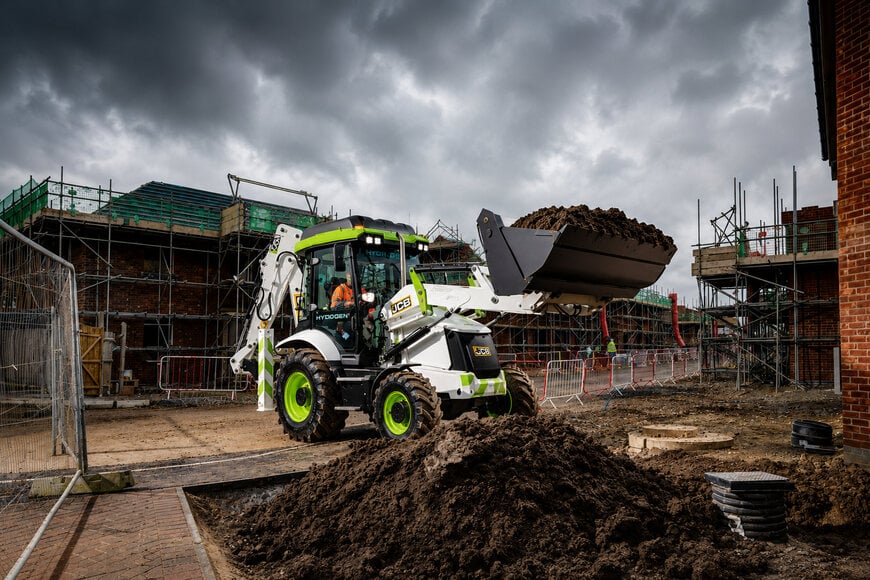
JCB has launched the production version of its 3CX Hydrogen backhoe loader, extending the use of hydrogen combustion technology in the construction equipment sector. The machine is intended for contractors and fleet operators seeking lower-emission alternatives for excavation, loading, grading, and material-handling operations without changing established machine operating procedures.
The 3CX Hydrogen uses a 55 kW hydrogen combustion engine developed by JCB following more than five years of research and a reported investment exceeding £100 million. According to the company, the engine delivers power and torque characteristics comparable to the diesel-powered 3CX model. The system received full EU Engine Type-Approval for use in non-road mobile machinery, supporting deployment in regulated construction and infrastructure environments.
Hydrogen Combustion Approach for Construction Equipment
The machine forms part of JCB’s broader hydrogen equipment programme, which has included field trials involving power generation equipment, Loadall telescopic handlers, and backhoe loaders. The hydrogen-powered platform targets applications where continuous operation and rapid refuelling remain critical operational requirements.
Unlike battery-electric construction machinery that may require extended charging periods, the hydrogen-powered 3CX can be refuelled on site using a mobile hydrogen refueller developed in partnership with HYKIT. Hydrogen storage is provided through three composite-wrapped tanks mounted on the cab roof, operating at 350 bar pressure and sized to support a full working day under standard operating conditions.
The machine retains a conventional backhoe architecture apart from the hydrogen storage and fuel delivery systems. JCB stated that service intervals and maintenance procedures remain similar to those of diesel-powered machines, reducing the need for operator retraining and workshop modifications.
Field Trials and Operational Performance
JCB conducted site trials with construction companies using the hydrogen-powered backhoe in loading, pallet handling, and grading applications. Operators involved in the evaluation reported that machine response and working characteristics were comparable to existing diesel models.
The company indicated that maintaining equivalent torque delivery was a key engineering objective because backhoe loaders are frequently used in variable-load applications requiring immediate hydraulic and drivetrain response. This compatibility is intended to support adoption within the wider automotive data ecosystem and digital supply chain environments increasingly focused on emissions reporting and equipment sustainability metrics.
Hydrogen supply for UK customers will be supported through JCB partner Ryze Power, while JCB Finance plans to offer three-year operating lease agreements bundled with service and insurance packages to simplify fleet integration.
Technical Positioning in the Construction Equipment Market
Hydrogen combustion engines differ from hydrogen fuel-cell systems by using modified internal combustion engine architecture rather than electrochemical power generation. JCB stated that the approach allows the use of established diesel-engine manufacturing processes and components while avoiding dependence on certain rare earth materials commonly associated with battery-electric systems.
The company reported building more than 150 hydrogen engines during the evaluation phase. The 3CX Hydrogen is described as the first production backhoe loader using a fully approved hydrogen combustion engine for non-road mobile equipment applications.
Hydrogen combustion technology is being evaluated across the off-highway equipment sector as manufacturers investigate alternatives capable of supporting high-utilisation duty cycles, rapid refuelling, and operation in locations where charging infrastructure remains limited.
Edited by an industrial journalist Sucithra Mani with AI assistance.
www.jcb.com
Powered by
Induportals Media Publishing