Mobile cranes enhance emergency response reliability
The Munich Fire Service deployed two new mobile cranes from Liebherr to improve operational reliability and performance in technical rescue operations. www.liebherr.com The Munich Fire Service operates in a demanding urban environment where heavy rescue operations require reliable lifting equipment. Its existing cranes, commissioned in 1991 and 1998, had reached a stage where increasing maintenance costs and the risk of technical failures began to affect operational readiness. The service aimed to ensure consistent response capability, reduce the likelihood of equipment-related delays, and improve performance in complex rescue scenarios such as road accidents involving heavy vehicles, rail incidents, and structural collapses. To meet these objectives, the fire brigade replaced its ageing fleet with two modern 70-tonne mobile cranes, selecting a solution that combines lifting performance, compact design, and operational flexibility. Technical solution and procurement process Following a Europe-wide tender, the LTM 1070-4.2 was selected. The decision was based on a comprehensive package including both the base vehicle and fire service-specific equipment, as well as the crane’s technical capabilities. Key requirements included high lifting capacity with on-board ballast, strong manoeuvrability for confined urban environments, and adaptable outriggers for stable operation on limited space. Additional features such as a rear recovery winch, intercom system between operator and rigger, and compatibility with snow chains ensured suitability for varied emergency scenarios. The two identical cranes were strategically stationed in different parts of Munich to meet a mandated maximum response time of 30 minutes, while also enabling coordinated tandem lifting when required. Why the solution was selected The fire service prioritised operational reliability and tactical flexibility. Identical crane configurations allow crews to work with consistent performance parameters, simplifying training and enabling interchangeable deployment. As explained by fire officer Dominik Franz, having identical systems improves response efficiency in complex incidents where coordination and predictability are critical. The selected mobile crane also offered a balance between compact dimensions and high lifting capacity, making it suitable for dense urban environments where space constraints often limit equipment deployment. Deployment and training Implementation included a structured training programme to ensure safe and efficient use of the new equipment. This involved: Instructor training at Liebherr’s Ehingen facility Practical driver training at a military training area Operational training for approximately 50 crane operator Additional specialised instruction on vehicle and machinery recovery Close collaboration between the fire brigade and the manufacturer ensured that operational requirements were addressed throughout procurement and deployment. Results: Improved readiness and operational capability The introduction of the new cranes delivers several measurable and operational benefits: Reduced risk of technical failure compared to ageing equipment Improved response capability through dual strategic deployment Enhanced operational flexibility, including tandem lifting capability Greater efficiency in urban environments due to compact design and manoeuvrability Although no specific numerical performance metrics were provided, the replacement of ageing assets with modern, standardised equipment directly contributes to higher availability, lower maintenance burden, and improved safety in emergency operations. Operational impact The new mobile cranes expand the Munich Fire Service’s ability to respond to complex rescue scenarios, including heavy vehicle recovery, crane accidents, and rescues at height or depth. They also support inter-regional assistance when neighbouring districts require additional lifting capacity. By aligning equipment capabilities with operational demands, the fire brigade strengthens its readiness for both routine and high-risk interventions. Conclusion The deployment of modern mobile cranes demonstrates how targeted equipment renewal can enhance reliability and operational performance in emergency services. By combining technical capability, standardisation, and comprehensive training, the Munich Fire Service has improved its capacity to manage complex rescue operations efficiently and safely. Edited by an industrial journalist Sucithra Mani with AI assistance. www.liebherr.com Powered by Induportals Media Publishing
 machineryasia
The Munich Fire Service deployed two new mobile cranes from Liebherr to improve operational reliability and performance in technical rescue operations.
www.liebherr.com
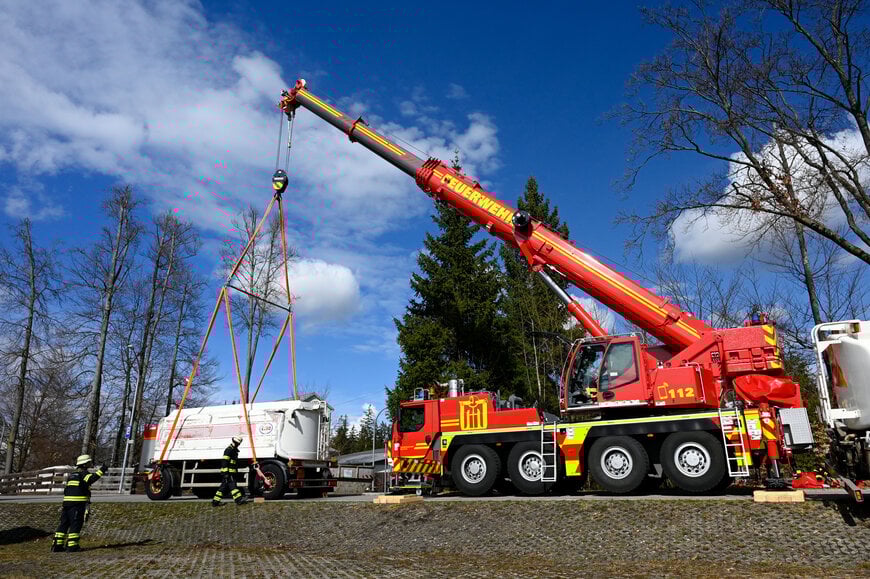
The Munich Fire Service operates in a demanding urban environment where heavy rescue operations require reliable lifting equipment. Its existing cranes, commissioned in 1991 and 1998, had reached a stage where increasing maintenance costs and the risk of technical failures began to affect operational readiness.
The service aimed to ensure consistent response capability, reduce the likelihood of equipment-related delays, and improve performance in complex rescue scenarios such as road accidents involving heavy vehicles, rail incidents, and structural collapses.
To meet these objectives, the fire brigade replaced its ageing fleet with two modern 70-tonne mobile cranes, selecting a solution that combines lifting performance, compact design, and operational flexibility.
Technical solution and procurement process
Following a Europe-wide tender, the LTM 1070-4.2 was selected. The decision was based on a comprehensive package including both the base vehicle and fire service-specific equipment, as well as the crane’s technical capabilities.
Key requirements included high lifting capacity with on-board ballast, strong manoeuvrability for confined urban environments, and adaptable outriggers for stable operation on limited space. Additional features such as a rear recovery winch, intercom system between operator and rigger, and compatibility with snow chains ensured suitability for varied emergency scenarios.
The two identical cranes were strategically stationed in different parts of Munich to meet a mandated maximum response time of 30 minutes, while also enabling coordinated tandem lifting when required.
Why the solution was selected
The fire service prioritised operational reliability and tactical flexibility. Identical crane configurations allow crews to work with consistent performance parameters, simplifying training and enabling interchangeable deployment.
As explained by fire officer Dominik Franz, having identical systems improves response efficiency in complex incidents where coordination and predictability are critical.
The selected mobile crane also offered a balance between compact dimensions and high lifting capacity, making it suitable for dense urban environments where space constraints often limit equipment deployment.
Deployment and training
Implementation included a structured training programme to ensure safe and efficient use of the new equipment. This involved:
- Instructor training at Liebherr’s Ehingen facility
- Practical driver training at a military training area
- Operational training for approximately 50 crane operator
- Additional specialised instruction on vehicle and machinery recovery
Close collaboration between the fire brigade and the manufacturer ensured that operational requirements were addressed throughout procurement and deployment.
Results: Improved readiness and operational capability
The introduction of the new cranes delivers several measurable and operational benefits:
Results: Improved readiness and operational capability
The introduction of the new cranes delivers several measurable and operational benefits:
- Reduced risk of technical failure compared to ageing equipment
- Improved response capability through dual strategic deployment
- Enhanced operational flexibility, including tandem lifting capability
- Greater efficiency in urban environments due to compact design and manoeuvrability
Although no specific numerical performance metrics were provided, the replacement of ageing assets with modern, standardised equipment directly contributes to higher availability, lower maintenance burden, and improved safety in emergency operations.
Operational impact
The new mobile cranes expand the Munich Fire Service’s ability to respond to complex rescue scenarios, including heavy vehicle recovery, crane accidents, and rescues at height or depth. They also support inter-regional assistance when neighbouring districts require additional lifting capacity.
By aligning equipment capabilities with operational demands, the fire brigade strengthens its readiness for both routine and high-risk interventions.
Conclusion
The deployment of modern mobile cranes demonstrates how targeted equipment renewal can enhance reliability and operational performance in emergency services. By combining technical capability, standardisation, and comprehensive training, the Munich Fire Service has improved its capacity to manage complex rescue operations efficiently and safely.
Edited by an industrial journalist Sucithra Mani with AI assistance.
www.liebherr.com
Operational impact
The new mobile cranes expand the Munich Fire Service’s ability to respond to complex rescue scenarios, including heavy vehicle recovery, crane accidents, and rescues at height or depth. They also support inter-regional assistance when neighbouring districts require additional lifting capacity.
By aligning equipment capabilities with operational demands, the fire brigade strengthens its readiness for both routine and high-risk interventions.
Conclusion
The deployment of modern mobile cranes demonstrates how targeted equipment renewal can enhance reliability and operational performance in emergency services. By combining technical capability, standardisation, and comprehensive training, the Munich Fire Service has improved its capacity to manage complex rescue operations efficiently and safely.
Edited by an industrial journalist Sucithra Mani with AI assistance.
www.liebherr.com
Powered by
Induportals Media Publishing