How Wireless Remote Controls Improve Safety and Efficiency in Construction Lifting Operations
Construction lifting operations often take place in environments where visibility, operator positioning and equipment coordination can change throughout the working day. Cranes, electric hoists and other lifting systems may need to move structural components, machinery, fabricated materials or construction supplies through areas where personnel and equipment are also operating. While traditional pendant controls remain widely […] The post How Wireless Remote Controls Improve Safety and Efficiency in Construction Lifting Operations appeared first on World Construction Today.
 machineryasia
Construction lifting operations often take place in environments where visibility, operator positioning and equipment coordination can change throughout the working day. Cranes, electric hoists and other lifting systems may need to move structural components, machinery, fabricated materials or construction supplies through areas where personnel and equipment are also operating.
While traditional pendant controls remain widely used, wireless remote control systems provide another way of operating lifting equipment by allowing the operator to move independently of the pendant cable.
The main benefit is not simply eliminating a cable. It is giving the operator greater flexibility to choose an appropriate position from which to observe and control the lifting operation.
Better Operator Positioning Around the Load
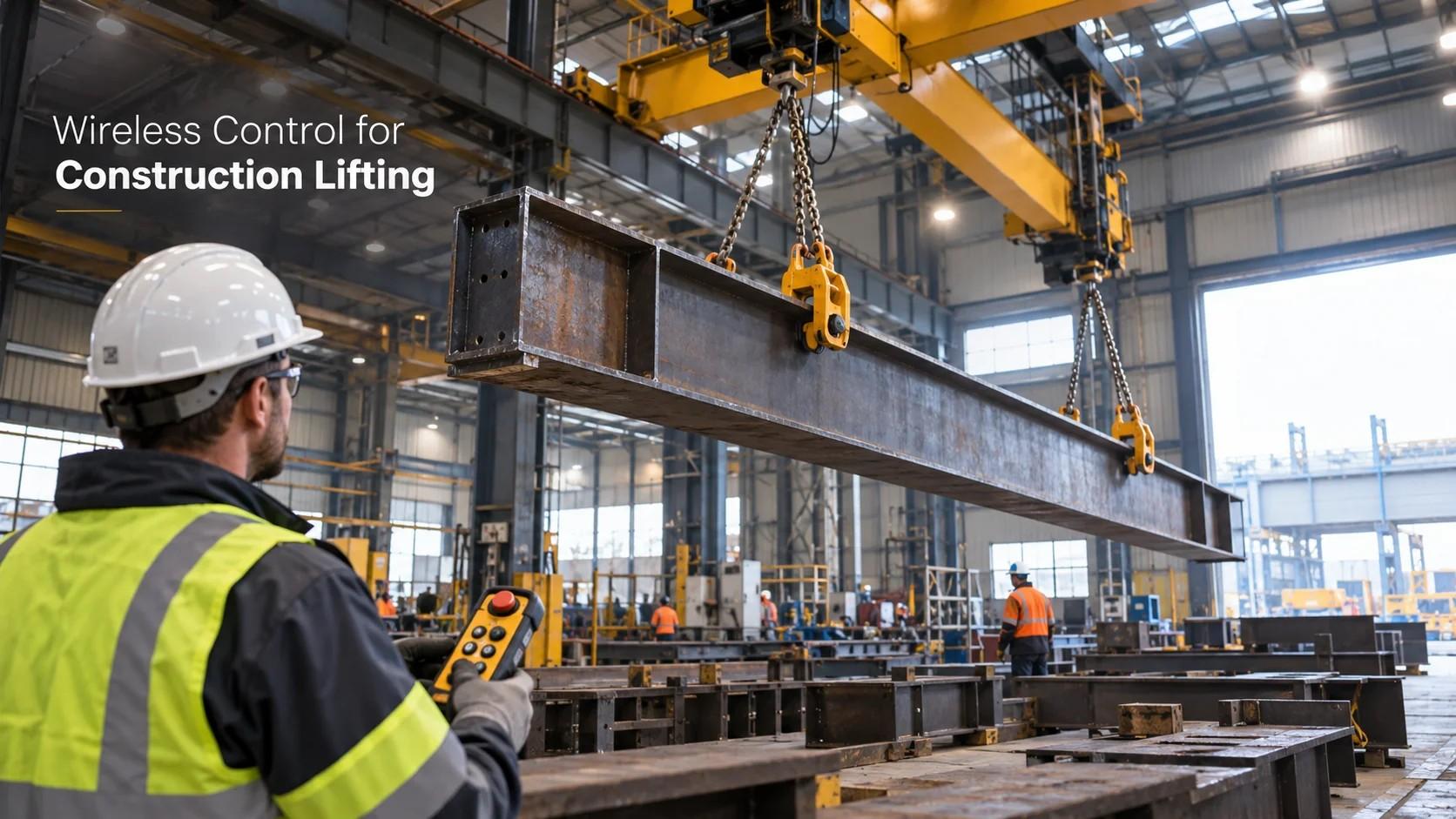
With a pendant-controlled crane, the operator’s movement is limited by the length and location of the control cable.
In many lifting operations, however, the best position for observing the load can change as the load moves.
Wireless control allows an operator to reposition while continuing to control the crane or hoist. This may make it easier to observe the suspended load, nearby equipment, obstacles and the final placement area.
This can be particularly useful during activities such as steel handling, equipment installation, prefabricated component movement and workshop-to-site material handling.
Wireless operation should not be considered a replacement for established lifting procedures, communication between personnel or proper operator training. Instead, it provides another control option that can improve operating flexibility when correctly integrated into the lifting system.
Where Wireless Control Fits into a Crane System
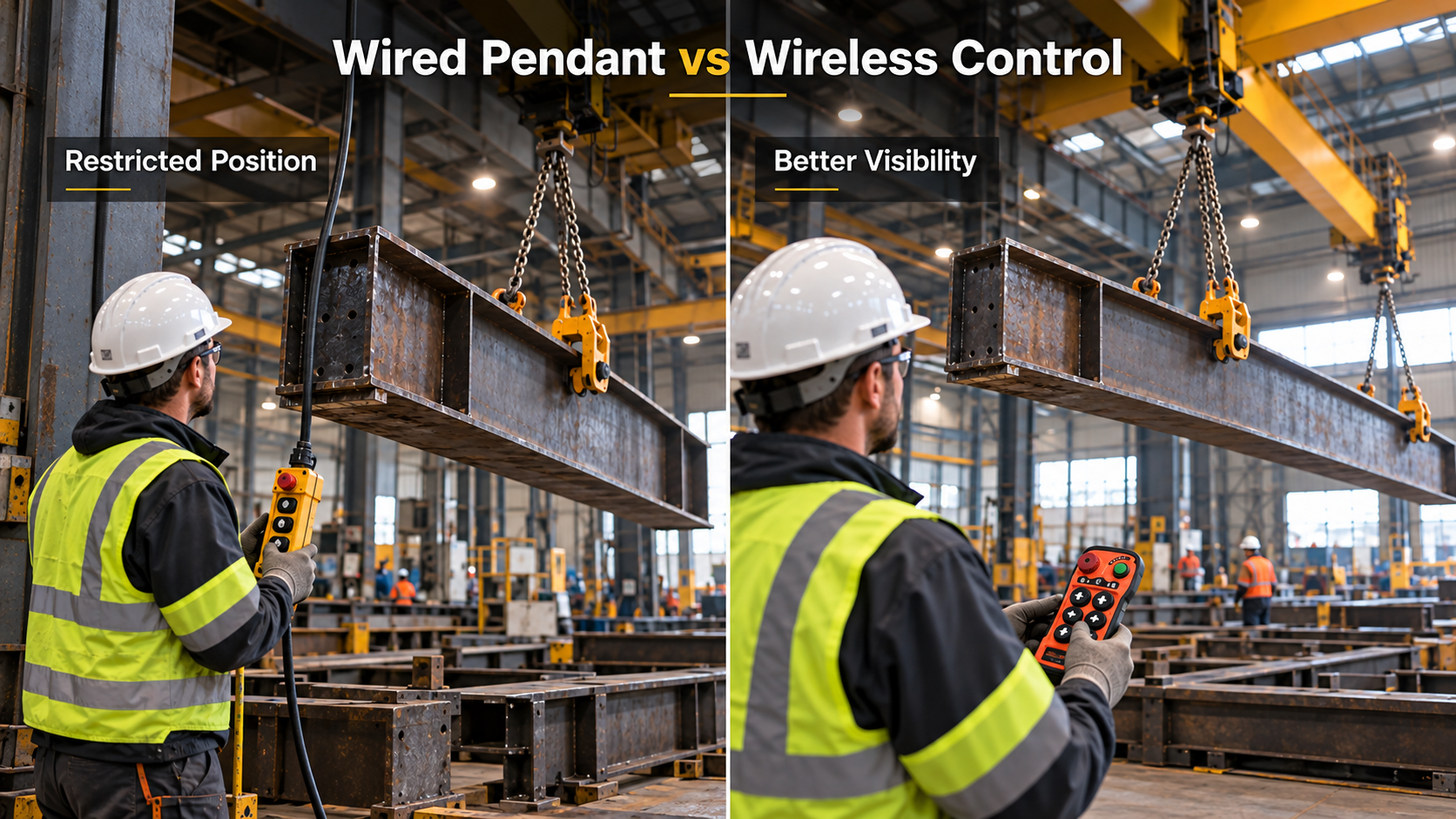
A wireless crane control system generally consists of a handheld transmitter and a receiver connected to the crane’s electrical control circuit.
When an operator presses a control button, the transmitter sends the command wirelessly to the receiver. The receiver then converts that command into the required electrical output for the crane control circuit.
A simplified control path can be represented as:
Transmitter → Wireless Communication → Receiver → Relay Outputs → Crane Control Circuit
For many existing cranes, this means that wireless control can be added without replacing the complete mechanical lifting system.
Industrial wireless crane remote control systems can therefore be used in new installations as well as retrofit projects involving overhead cranes, electric hoists and other lifting equipment.
Wireless Control Can Be Useful in Retrofit Projects
Replacing an entire crane is not always necessary when the lifting equipment itself remains mechanically serviceable.
In some cases, the operator control system can be modernized while the existing contactors, motors and main crane structure remain in service.
A retrofit project may involve connecting a wireless receiver to the existing crane control circuit so that its relay outputs reproduce the required operating commands.
However, compatibility must be checked before installation.
The transmitter appearance or number of buttons alone is not enough to determine whether a remote-control system is suitable for a particular crane.
Important factors include the required crane motions, control logic, receiver supply voltage, relay configuration and existing wiring.
What Should Be Checked Before Selecting a Wireless Control System?
A basic electric hoist may only require lifting and lowering commands, while an overhead crane may require separate controls for hoisting, trolley movement and bridge movement.
The operating speed also matters.
A single-speed crane and a dual-speed crane require different control arrangements. A dual-speed system normally requires corresponding two-stage commands from the transmitter and receiver.
Receiver voltage is another important consideration. The receiver must be compatible with the available control power supply and the crane’s electrical design.
Existing wiring should therefore be reviewed before replacing or retrofitting the remote-control system.
For projects involving overhead cranes, this overhead crane remote control selection and receiver matching guide provides a more detailed explanation of the main compatibility factors.
Signal Reliability Matters in Industrial Environments
Construction and industrial environments can contain steel structures, electrical equipment, motors, machinery and multiple wireless devices.
For this reason, signal reliability should be considered when selecting a wireless crane control system.
The required operating distance should be evaluated together with the actual working environment rather than considered as an isolated specification.
In practical applications, operators also need predictable communication between the transmitter and receiver during normal operation.
Where several cranes or wireless systems operate in the same facility, system configuration should also be considered to reduce the possibility of unintended interaction between equipment.
Emergency Stop and Control Safety
Wireless control is only one part of the overall crane safety system.
Industrial remote controls commonly incorporate emergency-stop functionality, but this does not replace the crane’s electrical protection, limit switches, braking system, operating procedures or site safety requirements.
The remote-control system should therefore be integrated into the machine’s established control and safety architecture.
Operators should also understand the functions assigned to each control before using the equipment.
For retrofit projects, installation and wiring should be carried out according to the crane’s electrical design and the remote-control manufacturer’s technical documentation.
Choosing the Right System for the Application
The most appropriate wireless control system depends on the actual lifting equipment rather than simply the transmitter’s appearance.
Before selecting a system, contractors and equipment owners should understand the crane type, required motions, operating speeds, receiver supply voltage and existing control arrangement.
For more complex lifting systems, information about the control panel and wiring configuration can help determine the appropriate transmitter and receiver setup before installation.
This becomes particularly important when upgrading existing cranes where the original electrical system will remain in use.
Wireless Control as Part of Modern Lifting Equipment
Wireless remote controls provide construction and industrial lifting operators with greater flexibility in choosing where they operate the equipment.
For overhead cranes, electric hoists and similar lifting systems, the technology can also provide a practical route for modernizing operator control without necessarily replacing the complete machine.
The value of wireless control ultimately depends on correct system selection and integration.
Rather than selecting a remote solely by button count or appearance, contractors should consider the crane’s control functions, electrical requirements, working environment and operating procedures.
When those factors are properly matched, wireless control can become a practical component of modern construction lifting operations.
The post How Wireless Remote Controls Improve Safety and Efficiency in Construction Lifting Operations appeared first on World Construction Today.