Dual-drive technology for site dumpers
JCB introduces Dual Drive technology on its 9-tonne site dumper range to improve operator visibility, reduce reversing risks and increase on-site safety. www.jcb.com JCB has expanded its site dumper portfolio with the launch of the 9T Dual Drive, available in both front-tip and swivel skip configurations. The machine is designed for construction, infrastructure and earthmoving applications where operator visibility, manoeuvrability and on-site safety are critical operational requirements. The new model incorporates a rotating cab system that allows operators to face the direction of travel at all times. Derived from technology already used on JCB’s Dual Drive backhoe loaders, the system is intended to reduce operator fatigue, minimise reversing movements and improve machine control in confined or high-traffic jobsite environments. Rotating operator station improves visibility The main technical development is a centrally mounted rotating operator station integrating the seat, steering wheel and machine controls. The entire assembly rotates through 180 degrees using JCB’s heel-click activation system, eliminating the need for manual lever operation. The air-suspension seat is positioned centrally within the cab to maximise visibility in all directions. HVAC services are routed beneath the cab floor to avoid obstructing the operator’s line of sight. A seat-lock inhibit system prevents the driveline and hydraulic systems from operating unless the seat unit is securely locked into one of the designated driving positions. This safety mechanism is intended to reduce the risk of incorrect operating configurations during machine movement. Enhanced safety systems for construction sites The 9T Dual Drive has been developed with a focus on improving safety performance on construction sites where reversing manoeuvres and restricted visibility remain major causes of accidents. JCB states that the cab structure has been impact tested to withstand forces generated by a 20-tonne excavator. The dumper also includes follow-me-home work lights that allow operators to exit the machine safely after shutdown in low-light environments. By enabling operators to remain facing the direction of travel, the system reduces the need for repeated head turning and reversing movements, helping to lower physical strain during long operating shifts. Hydrostatic transmission and traction performance The dumper is powered by a 55 kW (74 hp) JCB DieselMAX engine combined with a new hydrostatic transmission and a two-speed transfer box driving both axles. The drivetrain configuration delivers a maximum travel speed of 30 km/h while maintaining traction across uneven ground conditions commonly encountered on construction and infrastructure projects. JCB has also upgraded the braking system to reduce driver input effort. Hydrostatic transmission systems are increasingly used in compact and mid-sized construction equipment because they allow smoother low-speed control, simplified directional changes and improved manoeuvrability in confined work areas. Cab ergonomics and reduced maintenance costs JCB states that the machine offers the largest cab space and lowest noise levels within its class. The cab design uses flat glazing and all-steel external panels to simplify repairs and reduce maintenance costs following site damage. Standard equipment includes a 7-inch touchscreen display, radio, additional storage compartments and a Thatcham-approved keypad immobiliser. The machine targets contractors and rental fleet operators seeking safer site transport equipment with improved ergonomics, reduced operator fatigue and compatibility with modern connected construction site requirements. Additional Context: This section details technical specifications and competitive benchmarking not included in the original product announcement The 9-tonne site dumper category is widely used in urban construction, civil engineering and quarry support operations. Key competitive benchmarking criteria in this segment include payload capacity, operator visibility, turning radius, travel speed, transmission type and onboard safety systems. Competing manufacturers including Volvo Construction Equipment, Mecalac and Thwaites offer articulated dumpers with enhanced visibility systems, swivel operator stations or camera-assisted reversing technologies. JCB’s Dual Drive approach differs by rotating the entire operator station, including steering and machine controls, rather than relying solely on mirrors or camera systems. The 30 km/h maximum travel speed positions the machine within the upper performance range of hydrostatic site dumpers in this capacity class. The use of a two-speed hydrostatic transmission also distinguishes the model from competitors that continue to use conventional powershift drivetrains. Edited by Sucithra Mani, Induportals editor – adapted by AI. www.jcb.com Powered by Induportals Media Publishing
 machineryasia
JCB introduces Dual Drive technology on its 9-tonne site dumper range to improve operator visibility, reduce reversing risks and increase on-site safety.
www.jcb.com
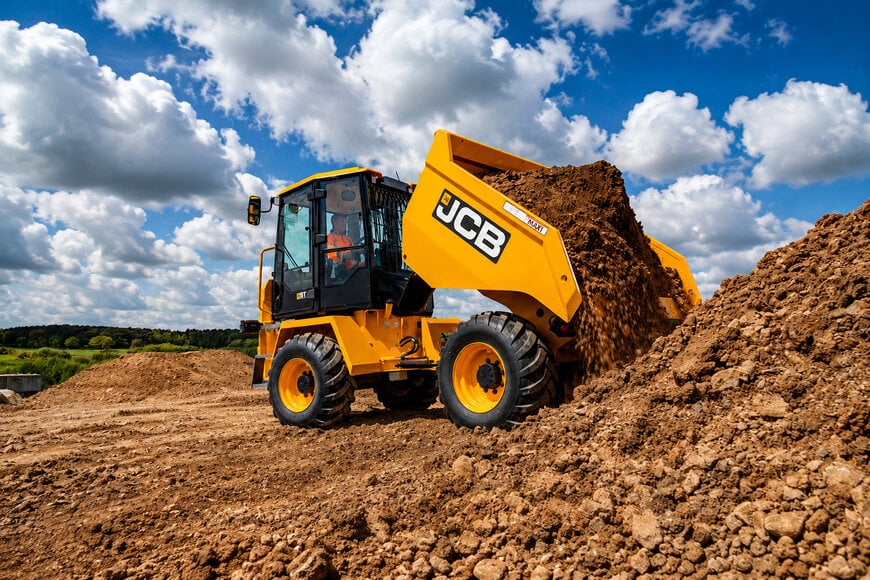
JCB has expanded its site dumper portfolio with the launch of the 9T Dual Drive, available in both front-tip and swivel skip configurations. The machine is designed for construction, infrastructure and earthmoving applications where operator visibility, manoeuvrability and on-site safety are critical operational requirements.
The new model incorporates a rotating cab system that allows operators to face the direction of travel at all times. Derived from technology already used on JCB’s Dual Drive backhoe loaders, the system is intended to reduce operator fatigue, minimise reversing movements and improve machine control in confined or high-traffic jobsite environments.
Rotating operator station improves visibility
The main technical development is a centrally mounted rotating operator station integrating the seat, steering wheel and machine controls. The entire assembly rotates through 180 degrees using JCB’s heel-click activation system, eliminating the need for manual lever operation.
The air-suspension seat is positioned centrally within the cab to maximise visibility in all directions. HVAC services are routed beneath the cab floor to avoid obstructing the operator’s line of sight.
A seat-lock inhibit system prevents the driveline and hydraulic systems from operating unless the seat unit is securely locked into one of the designated driving positions. This safety mechanism is intended to reduce the risk of incorrect operating configurations during machine movement.
Enhanced safety systems for construction sites
The 9T Dual Drive has been developed with a focus on improving safety performance on construction sites where reversing manoeuvres and restricted visibility remain major causes of accidents.
JCB states that the cab structure has been impact tested to withstand forces generated by a 20-tonne excavator. The dumper also includes follow-me-home work lights that allow operators to exit the machine safely after shutdown in low-light environments.
By enabling operators to remain facing the direction of travel, the system reduces the need for repeated head turning and reversing movements, helping to lower physical strain during long operating shifts.
Hydrostatic transmission and traction performance
The dumper is powered by a 55 kW (74 hp) JCB DieselMAX engine combined with a new hydrostatic transmission and a two-speed transfer box driving both axles.
The drivetrain configuration delivers a maximum travel speed of 30 km/h while maintaining traction across uneven ground conditions commonly encountered on construction and infrastructure projects. JCB has also upgraded the braking system to reduce driver input effort.
Hydrostatic transmission systems are increasingly used in compact and mid-sized construction equipment because they allow smoother low-speed control, simplified directional changes and improved manoeuvrability in confined work areas.
Cab ergonomics and reduced maintenance costs
JCB states that the machine offers the largest cab space and lowest noise levels within its class. The cab design uses flat glazing and all-steel external panels to simplify repairs and reduce maintenance costs following site damage.
Standard equipment includes a 7-inch touchscreen display, radio, additional storage compartments and a Thatcham-approved keypad immobiliser.
The machine targets contractors and rental fleet operators seeking safer site transport equipment with improved ergonomics, reduced operator fatigue and compatibility with modern connected construction site requirements.
Additional Context: This section details technical specifications and competitive benchmarking not included in the original product announcement
The 9-tonne site dumper category is widely used in urban construction, civil engineering and quarry support operations. Key competitive benchmarking criteria in this segment include payload capacity, operator visibility, turning radius, travel speed, transmission type and onboard safety systems.
Competing manufacturers including Volvo Construction Equipment, Mecalac and Thwaites offer articulated dumpers with enhanced visibility systems, swivel operator stations or camera-assisted reversing technologies. JCB’s Dual Drive approach differs by rotating the entire operator station, including steering and machine controls, rather than relying solely on mirrors or camera systems.
The 30 km/h maximum travel speed positions the machine within the upper performance range of hydrostatic site dumpers in this capacity class. The use of a two-speed hydrostatic transmission also distinguishes the model from competitors that continue to use conventional powershift drivetrains.
Edited by Sucithra Mani, Induportals editor – adapted by AI.
www.jcb.com
Powered by
Induportals Media Publishing