Compact Equipment for Forest Fire Prevention
Bobcat Company’s machinery and attachments support vegetation management, firebreak creation, and access maintenance to reduce wildfire risk in forestry and peri-urban environments. www.bobcat.com Rising wildfire frequency and scale are increasing the need for preventive land management across forestry and infrastructure interfaces. In this context, compact equipment is being deployed to manage combustible vegetation and maintain access routes. This approach is reflected in the use of forestry attachments and compact machines introduced by Bobcat Company for fire prevention applications. Fire risk linked to vegetation load and regional exposure Wildfire data from Spain illustrates the scale of the challenge. Approximately 336,345 hectares burned in August 2025 alone, with more than 33,359 hectares affected by late July. The majority of the burned area was concentrated in Galicia, Castilla, and Extremadura, indicating regional exposure patterns linked to vegetation density and climate conditions. These figures highlight the role of vegetation as a primary fuel source. Preventive strategies therefore focus on reducing biomass accumulation through systematic clearing and the establishment of safety buffers in forested and peri-urban zones. This aligns with broader wildfire risk mitigation practices where fuel load management is a key parameter. Vegetation clearing as a primary control mechanism Mechanical clearing targets shrubs, undergrowth, and dry biomass that contribute to fire propagation. Equipment such as forestry mulchers, tree cutters, and stump grinders is used to fragment and remove vegetation, reducing the continuity of combustible material. This process lowers the probability that ignition events escalate, as fragmented biomass reduces flame spread pathways. In interface zones between forests and built environments, clearing operations are used to create firebreaks and low-fuel strips that act as physical barriers to fire progression. Compact machines enable these operations in constrained or uneven terrain where conventional heavy equipment cannot operate. Their size and maneuverability allow selective clearing between trees, limiting collateral damage to surrounding vegetation while maintaining targeted fuel reduction. Equipment adaptability across terrain and task requirements Fire prevention operations require multiple tasks, including clearing, material handling, and ground preparation. The use of interchangeable attachments enables a single carrier machine to perform these functions sequentially. Quick coupling systems support rapid switching between tools, reducing downtime between operations. Attachments designed for dense vegetation operate under high-flow or Super-Flow hydraulic configurations, allowing performance to scale with machine capacity. Variable-displacement hydraulic motors further adapt tool output to available hydraulic power. Excavator-based configurations extend reach into difficult areas such as ditches or steep terrain. When combined with self-leveling mulchers, these systems can maintain consistent cutting performance across uneven surfaces. The ability to operate attachments while the carrier machine is in motion increases operational efficiency compared to static-only configurations. Maintaining access for firefighting operations Beyond vegetation control, maintaining accessible routes is critical for emergency response. Forest tracks and access paths must remain clear to allow firefighting vehicles to reach affected areas without delay. Compact loaders and mini excavators are used to open and maintain these routes, as well as to prepare cleared zones around residential or rural infrastructure. These activities form part of integrated wildfire management, where accessibility directly impacts response time and containment effectiveness. Transport, cost, and deployment considerations Compared to heavy machinery, compact equipment can typically be transported without specialized logistics, reducing deployment time and cost. This is relevant for distributed forestry operations where equipment must be moved between multiple sites. Operational cost control is another factor. Equipment capable of performing multiple functions reduces the need for dedicated machines, lowering capital and maintenance requirements. Established service networks also support uptime through spare parts availability and operator training. Preventive land management in a changing risk landscape The scale of recent wildfire activity and the role of vegetation as a fuel source reinforce the importance of preventive land management. Mechanical clearing campaigns, particularly when implemented before peak fire seasons, reduce fuel loads and improve resilience. Coordination with regional forestry authorities remains necessary to align with regulatory requirements for land clearing and fire prevention. Within this framework, compact equipment contributes to systematic vegetation manag
 machineryasia
Bobcat Company’s machinery and attachments support vegetation management, firebreak creation, and access maintenance to reduce wildfire risk in forestry and peri-urban environments.
www.bobcat.com
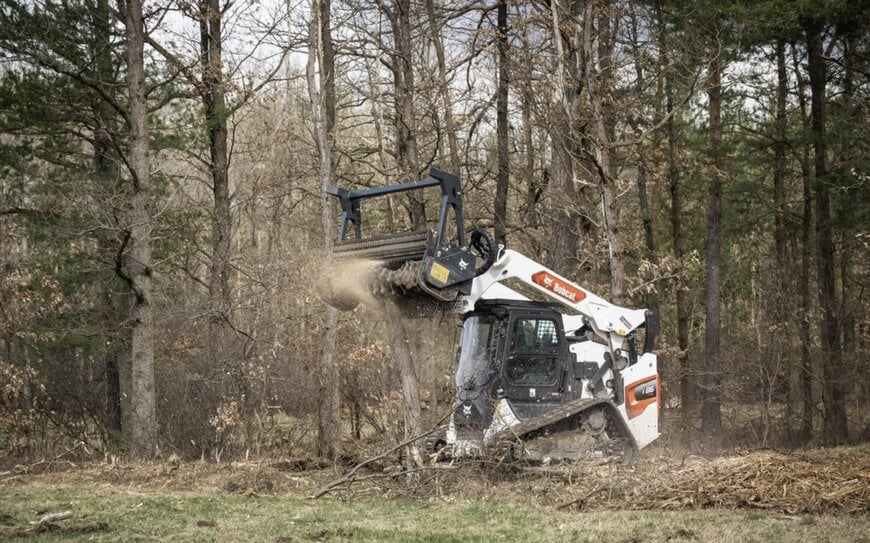
Rising wildfire frequency and scale are increasing the need for preventive land management across forestry and infrastructure interfaces. In this context, compact equipment is being deployed to manage combustible vegetation and maintain access routes. This approach is reflected in the use of forestry attachments and compact machines introduced by Bobcat Company for fire prevention applications.
Fire risk linked to vegetation load and regional exposure
Wildfire data from Spain illustrates the scale of the challenge. Approximately 336,345 hectares burned in August 2025 alone, with more than 33,359 hectares affected by late July. The majority of the burned area was concentrated in Galicia, Castilla, and Extremadura, indicating regional exposure patterns linked to vegetation density and climate conditions.
These figures highlight the role of vegetation as a primary fuel source. Preventive strategies therefore focus on reducing biomass accumulation through systematic clearing and the establishment of safety buffers in forested and peri-urban zones. This aligns with broader wildfire risk mitigation practices where fuel load management is a key parameter.
Vegetation clearing as a primary control mechanism
Mechanical clearing targets shrubs, undergrowth, and dry biomass that contribute to fire propagation. Equipment such as forestry mulchers, tree cutters, and stump grinders is used to fragment and remove vegetation, reducing the continuity of combustible material.
This process lowers the probability that ignition events escalate, as fragmented biomass reduces flame spread pathways. In interface zones between forests and built environments, clearing operations are used to create firebreaks and low-fuel strips that act as physical barriers to fire progression.
Compact machines enable these operations in constrained or uneven terrain where conventional heavy equipment cannot operate. Their size and maneuverability allow selective clearing between trees, limiting collateral damage to surrounding vegetation while maintaining targeted fuel reduction.
Equipment adaptability across terrain and task requirements
Fire prevention operations require multiple tasks, including clearing, material handling, and ground preparation. The use of interchangeable attachments enables a single carrier machine to perform these functions sequentially.
Quick coupling systems support rapid switching between tools, reducing downtime between operations. Attachments designed for dense vegetation operate under high-flow or Super-Flow hydraulic configurations, allowing performance to scale with machine capacity. Variable-displacement hydraulic motors further adapt tool output to available hydraulic power.
Excavator-based configurations extend reach into difficult areas such as ditches or steep terrain. When combined with self-leveling mulchers, these systems can maintain consistent cutting performance across uneven surfaces. The ability to operate attachments while the carrier machine is in motion increases operational efficiency compared to static-only configurations.
Maintaining access for firefighting operations
Beyond vegetation control, maintaining accessible routes is critical for emergency response. Forest tracks and access paths must remain clear to allow firefighting vehicles to reach affected areas without delay.
Compact loaders and mini excavators are used to open and maintain these routes, as well as to prepare cleared zones around residential or rural infrastructure. These activities form part of integrated wildfire management, where accessibility directly impacts response time and containment effectiveness.
Transport, cost, and deployment considerations
Compared to heavy machinery, compact equipment can typically be transported without specialized logistics, reducing deployment time and cost. This is relevant for distributed forestry operations where equipment must be moved between multiple sites.
Operational cost control is another factor. Equipment capable of performing multiple functions reduces the need for dedicated machines, lowering capital and maintenance requirements. Established service networks also support uptime through spare parts availability and operator training.
Preventive land management in a changing risk landscape
The scale of recent wildfire activity and the role of vegetation as a fuel source reinforce the importance of preventive land management. Mechanical clearing campaigns, particularly when implemented before peak fire seasons, reduce fuel loads and improve resilience.
Coordination with regional forestry authorities remains necessary to align with regulatory requirements for land clearing and fire prevention. Within this framework, compact equipment contributes to systematic vegetation management, supporting efforts to limit fire spread and reduce the likelihood of large-scale incidents.
Edited by Aishwarya Mambet, Induportals Editor, with AI assistance.
www.bobcat.com
Powered by
Induportals Media Publishing