Semi-Autonomous Shredder Feeding Integration
SENNEBOGEN GmbH demonstrates connected material handling technology for coordinated shredder feeding in recycling and biomass operations. www.sennebogen.com A semi-autonomous material handling system combining a battery-electric excavator and a mobile shredder was presented at IFAT 2026, illustrating how machine-to-machine communication can improve process stability and throughput in recycling and biomass applications. Integrated Machine Communication in Recycling Workflows At IFAT 2026 in Munich (May 4–7, 2026), SENNEBOGEN GmbH introduced a semi-autonomous feeding concept developed in collaboration with UNTHA shredding technology GmbH. The system connects a battery-powered material handler with a mobile shredder to enable real-time coordination during material input. The application targets recycling and biomass processing facilities, where consistent feed rates directly influence shredder efficiency, wear rates, and energy consumption. By integrating communication between machines, the system addresses variability in material characteristics such as density, geometry, and moisture content—factors that typically require continuous operator judgment. Real-Time Coordination Between Excavator and Shredder The technical core of the solution is direct signal exchange between the material handler and the shredder. Operational parameters—including shredder load state and fill level—are transmitted continuously, enabling responsive adjustments in feeding behavior. When the shredder reaches a predefined capacity threshold, the handler receives a signal to pause material input. In addition, geofenced control logic prevents grab release outside a defined drop zone above the shredder. This mechanism ensures controlled material placement and reduces spillage or uneven loading. Such synchronized operation contributes to process optimization by minimizing overload conditions and reducing idle cycles. In continuous processing environments, these improvements can increase throughput stability and reduce mechanical stress on shredding components. Battery-Electric Handler as a Connected Process Node The system centers on the SENNEBOGEN 826 G Electro Battery, part of the manufacturer’s G-series. Designed for material handling tasks, the machine combines a reach of up to 13 meters with load-handling capabilities suited for bulk and heterogeneous materials. Equipped with the SENcon control system, the handler functions as an active node within a connected process chain. It processes incoming machine data and provides operators with real-time feedback through the cabin interface. This supports decision-making in dynamic operating conditions and aligns with broader developments in the digital supply chain, where equipment increasingly operates as part of integrated, data-driven workflows. Operator Assistance and Process Stability In conventional setups, maintaining optimal shredder feeding depends heavily on operator experience. Variations in material composition and system load can lead to inconsistent input rates, increasing the risk of overfilling or underutilization. The semi-autonomous system augments operator input with real-time system feedback. By indicating when to increase, reduce, or pause feeding, the system helps maintain a balanced load. This reduces peak stresses on the shredder, limits downtime, and supports consistent processing performance. The result is a more predictable workflow, with measurable benefits in equipment utilization and maintenance intervals. Energy Concept and Operational Flexibility The 826 G Electro Battery operates with a battery-electric drive, enabling emission-free operation at the point of use. The modular battery system supports operating durations of up to seven hours, depending on load profiles and application conditions. Dual Power Management allows the machine to switch between battery operation and a wired grid connection, enabling flexibility across different site infrastructures. In the demonstrated setup, the shredder is powered independently via the UNTHA Power Core system, allowing both machines to operate without fixed grid dependency. This configuration supports deployment in locations with limited electrical infrastructure while maintaining low operational emissions and reduced noise levels. Implications for Connected Material Handling The semi-autonomous feeding demonstration illustrates how material handling equipment can be integrated into higher-level process automation systems. By combining real-time communication, operator assistance, and electrified drives, the system reflects a shift toward interconnected machinery within recycling and biomass facilities. Such developments contribute to improved process quality, reduced energy variability, and more efficient utilization of equipment capacity—key factors in advancing automated and data-driven industrial operations. Edited by an industrial journalist Sucithra Mani with AI assistance. www.sennebogen.c
 machineryasia
SENNEBOGEN GmbH demonstrates connected material handling technology for coordinated shredder feeding in recycling and biomass operations.
www.sennebogen.com
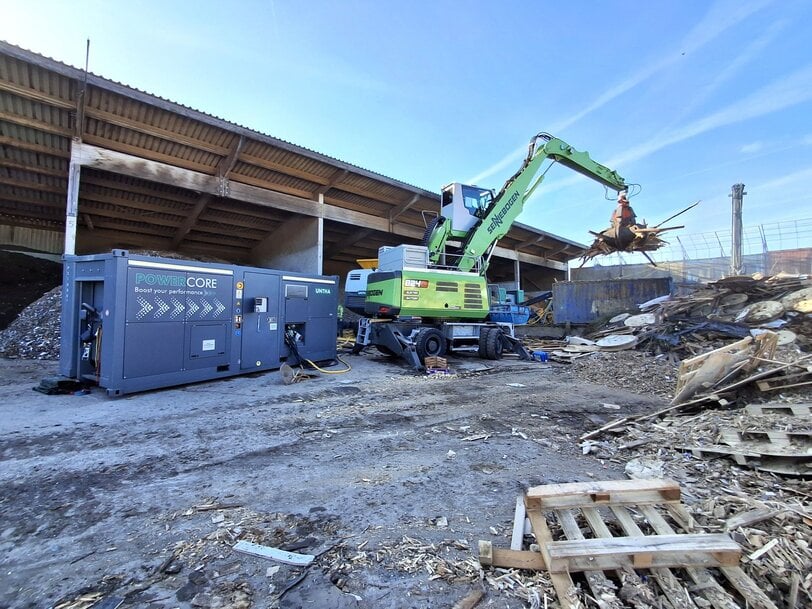
A semi-autonomous material handling system combining a battery-electric excavator and a mobile shredder was presented at IFAT 2026, illustrating how machine-to-machine communication can improve process stability and throughput in recycling and biomass applications.
Integrated Machine Communication in Recycling Workflows
At IFAT 2026 in Munich (May 4–7, 2026), SENNEBOGEN GmbH introduced a semi-autonomous feeding concept developed in collaboration with UNTHA shredding technology GmbH. The system connects a battery-powered material handler with a mobile shredder to enable real-time coordination during material input.
The application targets recycling and biomass processing facilities, where consistent feed rates directly influence shredder efficiency, wear rates, and energy consumption. By integrating communication between machines, the system addresses variability in material characteristics such as density, geometry, and moisture content—factors that typically require continuous operator judgment.
Real-Time Coordination Between Excavator and Shredder
The technical core of the solution is direct signal exchange between the material handler and the shredder. Operational parameters—including shredder load state and fill level—are transmitted continuously, enabling responsive adjustments in feeding behavior.
When the shredder reaches a predefined capacity threshold, the handler receives a signal to pause material input. In addition, geofenced control logic prevents grab release outside a defined drop zone above the shredder. This mechanism ensures controlled material placement and reduces spillage or uneven loading.
Such synchronized operation contributes to process optimization by minimizing overload conditions and reducing idle cycles. In continuous processing environments, these improvements can increase throughput stability and reduce mechanical stress on shredding components.
Battery-Electric Handler as a Connected Process Node
The system centers on the SENNEBOGEN 826 G Electro Battery, part of the manufacturer’s G-series. Designed for material handling tasks, the machine combines a reach of up to 13 meters with load-handling capabilities suited for bulk and heterogeneous materials.
Equipped with the SENcon control system, the handler functions as an active node within a connected process chain. It processes incoming machine data and provides operators with real-time feedback through the cabin interface. This supports decision-making in dynamic operating conditions and aligns with broader developments in the digital supply chain, where equipment increasingly operates as part of integrated, data-driven workflows.
Operator Assistance and Process Stability
In conventional setups, maintaining optimal shredder feeding depends heavily on operator experience. Variations in material composition and system load can lead to inconsistent input rates, increasing the risk of overfilling or underutilization.
The semi-autonomous system augments operator input with real-time system feedback. By indicating when to increase, reduce, or pause feeding, the system helps maintain a balanced load. This reduces peak stresses on the shredder, limits downtime, and supports consistent processing performance.
The result is a more predictable workflow, with measurable benefits in equipment utilization and maintenance intervals.
Energy Concept and Operational Flexibility
The 826 G Electro Battery operates with a battery-electric drive, enabling emission-free operation at the point of use. The modular battery system supports operating durations of up to seven hours, depending on load profiles and application conditions.
Dual Power Management allows the machine to switch between battery operation and a wired grid connection, enabling flexibility across different site infrastructures. In the demonstrated setup, the shredder is powered independently via the UNTHA Power Core system, allowing both machines to operate without fixed grid dependency.
This configuration supports deployment in locations with limited electrical infrastructure while maintaining low operational emissions and reduced noise levels.
Implications for Connected Material Handling
The semi-autonomous feeding demonstration illustrates how material handling equipment can be integrated into higher-level process automation systems. By combining real-time communication, operator assistance, and electrified drives, the system reflects a shift toward interconnected machinery within recycling and biomass facilities.
Such developments contribute to improved process quality, reduced energy variability, and more efficient utilization of equipment capacity—key factors in advancing automated and data-driven industrial operations.
Edited by an industrial journalist Sucithra Mani with AI assistance.
www.sennebogen.com
Powered by
Induportals Media Publishing