An Executive Order Cracks Down on False Country-of-Origin Claims
Legislation like the COOL Online Act is the next logical step in protecting the 'Made In USA' label.
 machineryasia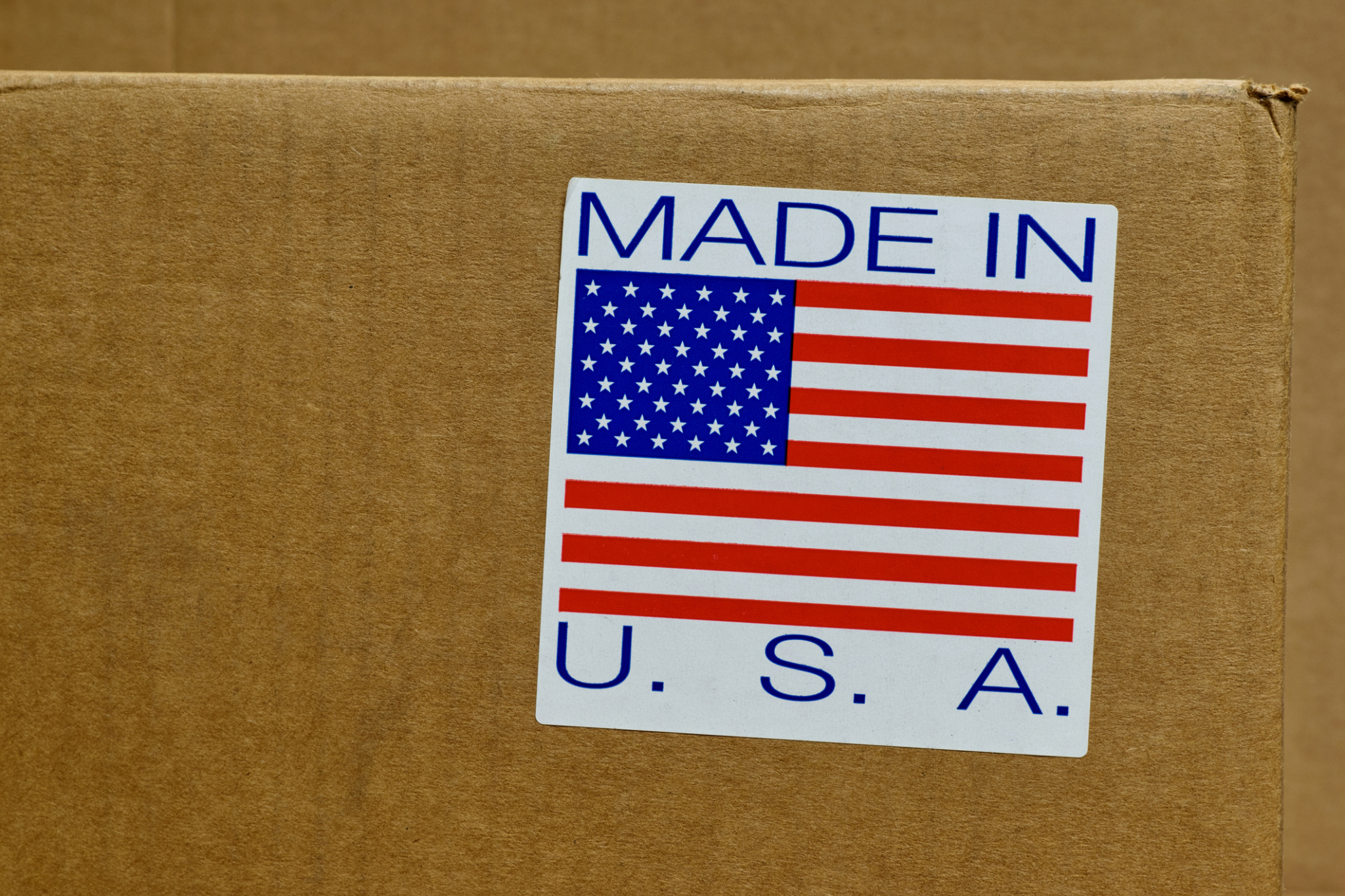
Legislation like the COOL Online Act is the next logical step in protecting the ‘Made In USA’ label.
Last week President Trump signed an executive order (EO) that, although you may not have heard about, could impact your shopping experience.
What is this executive order? It’s called “Ensuring Truthful Advertising of Products Claiming to be Made in America.” The order’s aim is to crack down on false country-of-origin claims. It directs the Federal Trade Commission (FTC) to “prioritize enforcement” against these claims.
Under FTC guidelines, to be labeled “Made in USA”, a product must be “all or virtually all” American-made. That means assembled, processed and finished here, with all or virtually all components being sourced from the U.S. This is a stringent standard, and rightfully so. Nearly four in five Americans prefer to buy American-made to support the economy, grow jobs and more. When a product is labeled “Made in USA”, shoppers should be able to trust that it has truly been made here in America.
Targeting deceptive bad actors taking advantage of shoppers’ desire to support American-made products is extremely important. Companies like Williams-Sonoma have come under fire in the past for their false Made in USA claims.
But false Made in USA claims aren’t the only way shoppers are being duped, which brings us to the second part of Trump’s executive order. It asks the FTC to consider if online platforms that don’t verify country-of-origin claims are also engaging in deceptive advertising. It also calls upon agencies to promote voluntary country-of-origin labeling.
When you shop in a brick-and-mortar store, you’ve probably noticed that each product has a country-of-origin label. This is required by law. But online shopping does not fall under the same requirement. That means that shoppers who want to find Made in USA options online often can’t know for sure if what they’re buying is actually American-made.
Americans are ready for change. A recent Morning Consult poll showed that 77% of Americans think online retailers should be required to display country-of-origin labels.
This is something the EO doesn’t do. It doesn’t require online retailers to be open and honest about country-of-origin labeling, and since it’s an executive order, it can easily be revoked.
There’s a bill in Congress, however, that solves these issues and builds upon the work done by the EO. It’s called the Country of Origin Labeling (COOL) Online Act. The bill was introduced by Sen. Tammy Baldwin (D-WI) and has bipartisan support — Vice President JD Vance worked with Baldwin to introduce it during his time in the Senate.
The COOL Online Act closes the online country-of-origin loophole by holding online products to the same standards as those sold in stores, requiring each to have a clearly marked label telling you where it was made. No more confusion, no more guesswork.
“The President made clear he’s on board, but a rule isn’t going to cut it,” said Senator Baldwin. “We need to make this law. I’m calling on him to immediately back my bill to protect Made in the USA products, increase transparency for online shoppers and support American businesses.”
The COOL Online Act is also endorsed by the Alliance for American Manufacturing (AAM). “Cracking down on false ‘Made in USA’ claims is an important step toward protecting consumers, and the administration’s Executive Order moves that effort in the right direction,” said AAM President Scott Paul. “Building on that momentum, passage of Senator Baldwin’s COOL Online Act would give consumers the same country-of-origin information online that they already receive in brick-and-mortar stores. This is a commonsense, bipartisan solution.”
We applaud this Executive Order for its important steps in ensuring that “Made in USA” is a label consumers can trust. We hope that the administration will continue to bolster these efforts by supporting the COOL Online Act.