Ethanol-powered machines deliver results and advancements in the field
At Agrishow 2026 in Brazil, Case IH showcased ethanol-powered harvesters, tractors, and wheel loaders to support decarbonization in the agricultural and energy sectors. www.casece.com Case IH, a CNH brand, presented the Austoft 9000 series harvester at Agrishow 2026 in Ribeirão Preto, SP. This harvester utilizes a Cursor 13 Otto cycle engine equipped with an emissions after-treatment system to control pollutant reduction. The technology, developed in Brazil, has undergone over 600 hours of operation and harvested more than 20,000 tons of sugarcane during field tests. This new phase expands validation to the model most frequently utilized in Brazilian sugar mills. Advancement of Renewable Fuel Tractors The Puma 230 ethanol tractor features a six-cylinder Otto cycle engine that complies with future MAR-2 regulations. Following its presentation at Agrishow 2025, the machine accumulated over 800 hours of operation during various stages of the sugarcane cycle. Case IH will begin the next validation phase in the second half of 2026 at a corn ethanol plant, where the tractor will be used for corn planting. Alternative Fuel Construction Equipment CASE Construction Equipment also demonstrated the 721E ethanol-powered wheel loader, the brand's first construction machine powered by alternative fuel. This concept machine is configured for applications involving low-density materials, such as sugarcane bagasse. Field testing for the 721E is scheduled to begin in the near future. Operational and Environmental Impact The adoption of ethanol as a primary fuel source is intended to reduce carbon emissions and operational costs within the sugarcane sector. Local production and availability of ethanol in Brazil facilitate logistics and supply predictability by allowing fuel to be utilized within the agricultural operation where it is produced. Additional Context The transition to ethanol-powered heavy machinery represents a significant shift toward "decentralized energy" in agriculture, particularly in regions like Brazil where sugarcane and corn ethanol production is robust. Unlike diesel, which often requires complex international supply chains, ethanol can be produced on-site or nearby, providing a "closed-loop" energy system for large-scale farming operations. Technically, adapting heavy-duty engines to run on ethanol involves moving from the Compression Ignition (Diesel) cycle to the Otto cycle (Spark Ignition). While ethanol has a lower energy density than diesel, its high octane rating allows for higher compression ratios, which can improve thermal efficiency. The inclusion of emissions after-treatment systems, such as Selective Catalytic Reduction (SCR) or particulate filters, further ensures these engines meet increasingly stringent environmental standards like MAR-2. This technology is critical for the "hard-to-abate" heavy machinery sector, where battery-electric solutions often struggle with the high power demands and long operating hours required during peak harvest seasons. Edited by Romila DSilva, Induportals Editor, with AI assistance. www.caseih.com Powered by Induportals Media Publishing
 machineryasia
At Agrishow 2026 in Brazil, Case IH showcased ethanol-powered harvesters, tractors, and wheel loaders to support decarbonization in the agricultural and energy sectors.
www.casece.com
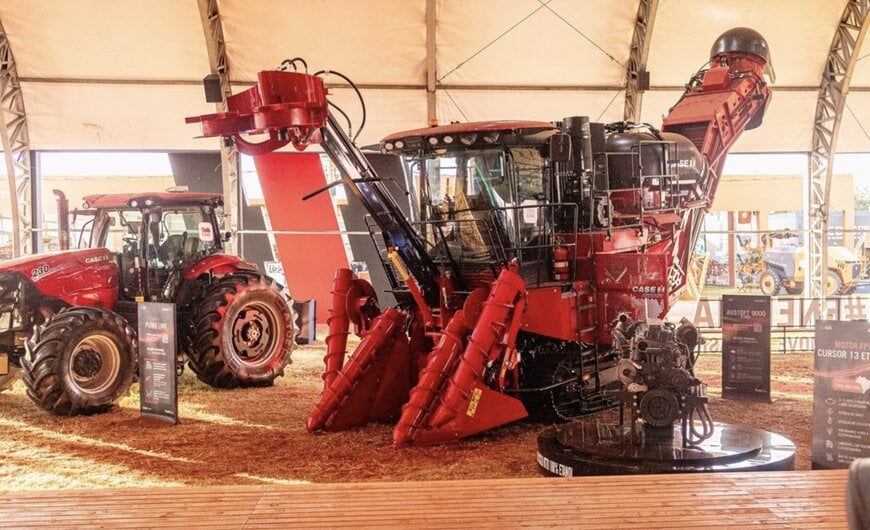
Case IH, a CNH brand, presented the Austoft 9000 series harvester at Agrishow 2026 in Ribeirão Preto, SP. This harvester utilizes a Cursor 13 Otto cycle engine equipped with an emissions after-treatment system to control pollutant reduction. The technology, developed in Brazil, has undergone over 600 hours of operation and harvested more than 20,000 tons of sugarcane during field tests. This new phase expands validation to the model most frequently utilized in Brazilian sugar mills.
Advancement of Renewable Fuel Tractors
The Puma 230 ethanol tractor features a six-cylinder Otto cycle engine that complies with future MAR-2 regulations. Following its presentation at Agrishow 2025, the machine accumulated over 800 hours of operation during various stages of the sugarcane cycle. Case IH will begin the next validation phase in the second half of 2026 at a corn ethanol plant, where the tractor will be used for corn planting.
Alternative Fuel Construction Equipment
CASE Construction Equipment also demonstrated the 721E ethanol-powered wheel loader, the brand's first construction machine powered by alternative fuel. This concept machine is configured for applications involving low-density materials, such as sugarcane bagasse. Field testing for the 721E is scheduled to begin in the near future.
Operational and Environmental Impact
The adoption of ethanol as a primary fuel source is intended to reduce carbon emissions and operational costs within the sugarcane sector. Local production and availability of ethanol in Brazil facilitate logistics and supply predictability by allowing fuel to be utilized within the agricultural operation where it is produced.
Additional Context
The transition to ethanol-powered heavy machinery represents a significant shift toward "decentralized energy" in agriculture, particularly in regions like Brazil where sugarcane and corn ethanol production is robust. Unlike diesel, which often requires complex international supply chains, ethanol can be produced on-site or nearby, providing a "closed-loop" energy system for large-scale farming operations.
Technically, adapting heavy-duty engines to run on ethanol involves moving from the Compression Ignition (Diesel) cycle to the Otto cycle (Spark Ignition). While ethanol has a lower energy density than diesel, its high octane rating allows for higher compression ratios, which can improve thermal efficiency. The inclusion of emissions after-treatment systems, such as Selective Catalytic Reduction (SCR) or particulate filters, further ensures these engines meet increasingly stringent environmental standards like MAR-2. This technology is critical for the "hard-to-abate" heavy machinery sector, where battery-electric solutions often struggle with the high power demands and long operating hours required during peak harvest seasons.
Edited by Romila DSilva, Induportals Editor, with AI assistance.
www.caseih.com
Powered by
Induportals Media Publishing