Epiroc COP M7 Improves DTH Drilling Efficiency
7-inch hammer bridges 6" and 8" range, increasing penetration rates by 27% while reducing fuel consumption and CO₂ emissions in 203 mm boreholes. www.epiroc.com In surface mining and large-diameter production drilling, selecting the correct down-the-hole (DTH) hammer directly affects penetration rate, fuel consumption and overall cost per meter drilled. At the Geita Gold Mine in northwestern Tanzania, drilling contractor Capital Limited evaluated alternatives to optimize 203 mm borehole production in hard, fractured rock with high groundwater presence. The result was the adoption of the COP M7 hammer from Epiroc, designed to close the performance gap between conventional 6" and 8" DTH tools. Bridging the 6"–8" hammer performance gap Capital Limited had been drilling 203 mm holes using a 6" hammer configuration. While operationally stable, the setup limited penetration performance and hole-cleaning efficiency. The introduction of the 7" COP M7 created an optimized annular space between the hammer and borehole wall, increasing air velocity for improved debris evacuation. Improved hole-cleaning velocity enhances drilling efficiency in broken formations by preventing cuttings regrind and reducing the likelihood of hole collapse. More efficient air usage also contributes to better energy transfer and consistent penetration performance. Field tests indicate that the COP M7 drills 27% faster than the M6 when using 203 mm drill bits. This increase in penetration rate translates directly into higher daily meterage and reduced cost per drilled meter. Patented air cycle and high-frequency piston design The COP M-series incorporates a patented air cycle and piston design that enables higher striking frequency compared to conventional DTH hammers. A higher impact frequency increases rock fragmentation efficiency while maintaining controlled energy transfer. The design allows the hammer to be shorter and lighter than comparable tools in its class, with approximately 30% lower weight. Reduced mass improves handling safety during assembly and maintenance and simplifies manual operations on site. Because the hammer operates more efficiently, fuel consumption at the rig level is reduced. Lower diesel usage contributes to decreased operating costs and reduced CO₂ emissions per drilled meter—an increasingly relevant metric for mining contractors reporting greenhouse gas performance. Performance in abrasive and water-rich formations The Geita Gold Mine presents a demanding combination of abrasive rock, fractured zones and significant groundwater ingress. Such conditions accelerate wear and increase mechanical stress on drill strings. To adapt the hammer to local conditions, a thicker barrel configuration was implemented to improve durability in abrasive ground. This iterative optimization reflects an engineering approach where field feedback informs mechanical refinements rather than relying solely on laboratory validation. Approximately 75% of Capital Limited’s fleet at Geita now operates with the COP M7, with plans for broader adoption based on sustained field performance. Integrated drill string optimization Performance gains were not attributed to the hammer alone. The COP M7 operates as part of a fully optimized drill string system, where rig parameters—including feed pressure and air supply—are calibrated to match hammer dynamics. Precise alignment between rig settings and hammer characteristics ensures maximum energy transfer efficiency and consistent penetration rates. This systems-level approach distinguishes incremental tool upgrades from integrated drilling performance optimization. Position within DTH hammer selection criteria In the 6"–8" DTH hammer category used for large-diameter production drilling, key evaluation criteria typically include: Penetration rate in specified bore diameters Air consumption efficiency Tool weight and handling safety Durability in abrasive formations Fuel consumption impact By positioning a 7" hammer between traditional 6" and 8" sizes, Epiroc addresses a previously unserved performance niche. The 27% higher penetration rate compared to a 6" configuration in 203 mm holes provides quantifiable differentiation, particularly in high-volume mining environments. For mining operators evaluating DTH drilling optimization strategies, the Geita deployment demonstrates how selecting an intermediate hammer size—combined with air-cycle and piston design improvements—can increase productivity while lowering fuel consumption and associated CO₂ emissions per meter drilled. 1 Air-consumption adjustable 2 Solid shank without foot valve 3 Always in-contact piston guide 4 Convex striking surface 5 Lubricated and air-cooled splines www.epiroc.com Powered by Induportals Media Publishing
 machineryasia
7-inch hammer bridges 6" and 8" range, increasing penetration rates by 27% while reducing fuel consumption and CO₂ emissions in 203 mm boreholes.
www.epiroc.com
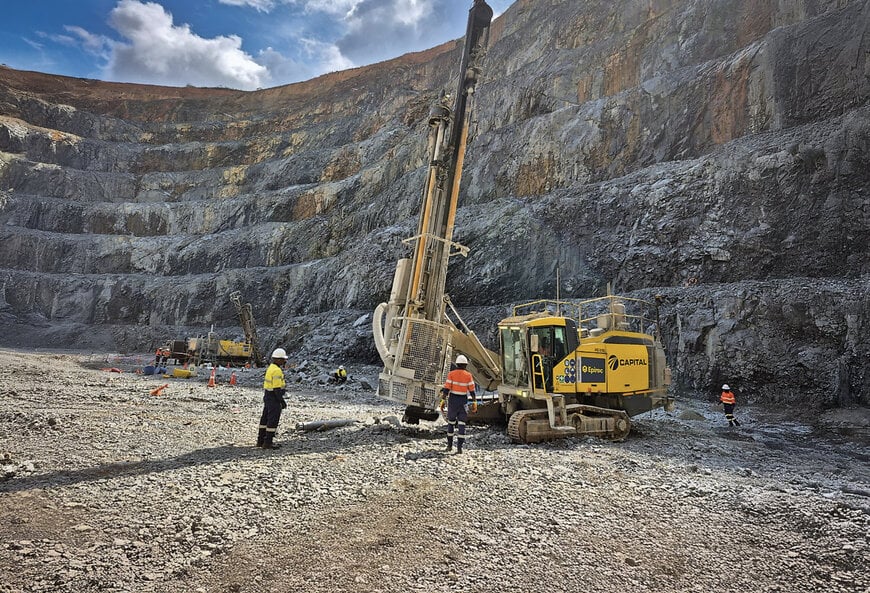
In surface mining and large-diameter production drilling, selecting the correct down-the-hole (DTH) hammer directly affects penetration rate, fuel consumption and overall cost per meter drilled. At the Geita Gold Mine in northwestern Tanzania, drilling contractor Capital Limited evaluated alternatives to optimize 203 mm borehole production in hard, fractured rock with high groundwater presence. The result was the adoption of the COP M7 hammer from Epiroc, designed to close the performance gap between conventional 6" and 8" DTH tools.
Bridging the 6"–8" hammer performance gap
Capital Limited had been drilling 203 mm holes using a 6" hammer configuration. While operationally stable, the setup limited penetration performance and hole-cleaning efficiency. The introduction of the 7" COP M7 created an optimized annular space between the hammer and borehole wall, increasing air velocity for improved debris evacuation.
Improved hole-cleaning velocity enhances drilling efficiency in broken formations by preventing cuttings regrind and reducing the likelihood of hole collapse. More efficient air usage also contributes to better energy transfer and consistent penetration performance.
Field tests indicate that the COP M7 drills 27% faster than the M6 when using 203 mm drill bits. This increase in penetration rate translates directly into higher daily meterage and reduced cost per drilled meter.
Patented air cycle and high-frequency piston design
The COP M-series incorporates a patented air cycle and piston design that enables higher striking frequency compared to conventional DTH hammers. A higher impact frequency increases rock fragmentation efficiency while maintaining controlled energy transfer.
The design allows the hammer to be shorter and lighter than comparable tools in its class, with approximately 30% lower weight. Reduced mass improves handling safety during assembly and maintenance and simplifies manual operations on site.
Because the hammer operates more efficiently, fuel consumption at the rig level is reduced. Lower diesel usage contributes to decreased operating costs and reduced CO₂ emissions per drilled meter—an increasingly relevant metric for mining contractors reporting greenhouse gas performance.
Performance in abrasive and water-rich formations
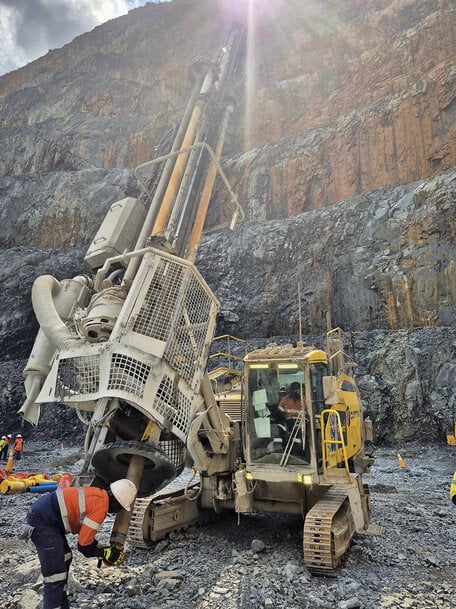
The Geita Gold Mine presents a demanding combination of abrasive rock, fractured zones and significant groundwater ingress. Such conditions accelerate wear and increase mechanical stress on drill strings.
To adapt the hammer to local conditions, a thicker barrel configuration was implemented to improve durability in abrasive ground. This iterative optimization reflects an engineering approach where field feedback informs mechanical refinements rather than relying solely on laboratory validation.
Approximately 75% of Capital Limited’s fleet at Geita now operates with the COP M7, with plans for broader adoption based on sustained field performance.
Integrated drill string optimization
Performance gains were not attributed to the hammer alone. The COP M7 operates as part of a fully optimized drill string system, where rig parameters—including feed pressure and air supply—are calibrated to match hammer dynamics.
Precise alignment between rig settings and hammer characteristics ensures maximum energy transfer efficiency and consistent penetration rates. This systems-level approach distinguishes incremental tool upgrades from integrated drilling performance optimization.
Position within DTH hammer selection criteria
In the 6"–8" DTH hammer category used for large-diameter production drilling, key evaluation criteria typically include:
- Penetration rate in specified bore diameters
- Air consumption efficiency
- Tool weight and handling safety
- Durability in abrasive formations
- Fuel consumption impact
By positioning a 7" hammer between traditional 6" and 8" sizes, Epiroc addresses a previously unserved performance niche. The 27% higher penetration rate compared to a 6" configuration in 203 mm holes provides quantifiable differentiation, particularly in high-volume mining environments.
For mining operators evaluating DTH drilling optimization strategies, the Geita deployment demonstrates how selecting an intermediate hammer size—combined with air-cycle and piston design improvements—can increase productivity while lowering fuel
consumption and associated CO₂ emissions per meter drilled.
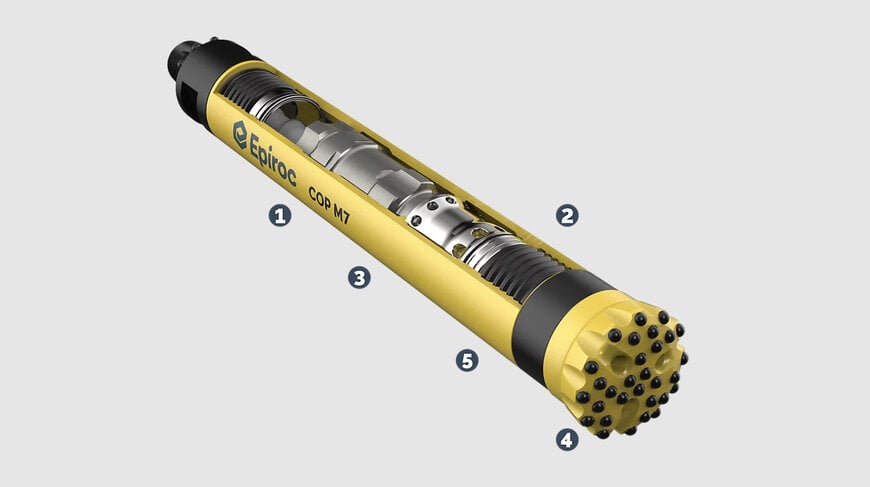
1 Air-consumption adjustable
2 Solid shank without foot valve
3 Always in-contact piston guide
4 Convex striking surface
5 Lubricated and air-cooled splines
www.epiroc.com
For mining operators evaluating DTH drilling optimization strategies, the Geita deployment demonstrates how selecting an intermediate hammer size—combined with air-cycle and piston design improvements—can increase productivity while lowering fuel
consumption and associated CO₂ emissions per meter drilled.
1 Air-consumption adjustable
2 Solid shank without foot valve
3 Always in-contact piston guide
4 Convex striking surface
5 Lubricated and air-cooled splines
www.epiroc.com
Powered by
Induportals Media Publishing