Battery-powered material handlers for recycling operations
SENNEBOGEN introduces modular battery systems for flexible recycling machinery, enabling emission-reduced operation and adaptable energy capacity across varying industrial applications. www.sennebogen.com Battery-powered material handlers are being introduced for recycling applications with modular energy systems and dual power operation, addressing the need for flexible, low-emission equipment in industrial material handling environments. Modular battery architecture for variable operating profiles SENNEBOGEN has expanded its portfolio of electrically powered material handlers previously limited to cable-connected systems by introducing a battery-powered G-Series designed for recycling applications. The development targets facilities requiring mobility across multiple job sites and variable duty cycles. The machines are based on a modular battery design that allows operation with one to four battery packs. This configuration supports adjustable energy capacity, enabling runtime of up to seven hours depending on load conditions and operational intensity. The modular approach also allows retrofitting of additional battery units, aligning machine capacity with evolving operational requirements and extending equipment lifecycle. Dual power management and charging flexibility A central feature of the system is its Dual Power Management capability, which allows the machines to operate both on battery power and through external electrical supply. This enables continuous operation without dependency on fixed infrastructure, a limitation commonly associated with cable-powered systems. Charging can occur during operation, reducing downtime and supporting continuous workflows in recycling environments. The system supports charging rates of up to 88 kW via a 125 A CEE industrial plug, enabling integration into standard industrial electrical infrastructure without the need for specialized charging systems. Operational adaptability in recycling environments The combination of modular battery capacity and dual power input supports use cases involving frequently changing job sites or variable shift durations. Machines can be deployed across different locations without reliance on fixed grid connections, while still maintaining the option for plug-in operation where available. This flexibility is particularly relevant for recycling facilities handling fluctuating material volumes or operating across distributed processing zones. The ability to adjust battery capacity over time also reduces the need for equipment replacement when operational demands change. Emissions reduction and industrial relevance The transition to battery-powered operation contributes to reduced operational emissions. According to the manufacturer, each machine can save approximately 60 tonnes of CO₂ annually, depending on usage intensity and operating hours. This positions the technology within broader efforts to decarbonize industrial processes and supports integration into a digital supply chain where emissions tracking and reporting are increasingly required. Position within the material handling sector Battery-electric material handling equipment is an established segment, particularly in indoor logistics and warehousing. However, in heavy-duty recycling applications, systems offering both modular battery scalability and simultaneous charging during operation remain less common. By combining adjustable battery configurations with dual power operation, the system introduces a hybrid operational model that bridges the gap between fixed electric infrastructure and fully mobile machinery. This approach aligns with industry trends toward electrification while maintaining the operational flexibility required in large-scale recycling environments. Edited by an industrial journalist Sucithra Mani with AI assistance. www.sennebogen.com Powered by Induportals Media Publishing
 machineryasia
SENNEBOGEN introduces modular battery systems for flexible recycling machinery, enabling emission-reduced operation and adaptable energy capacity across varying industrial applications.
www.sennebogen.com
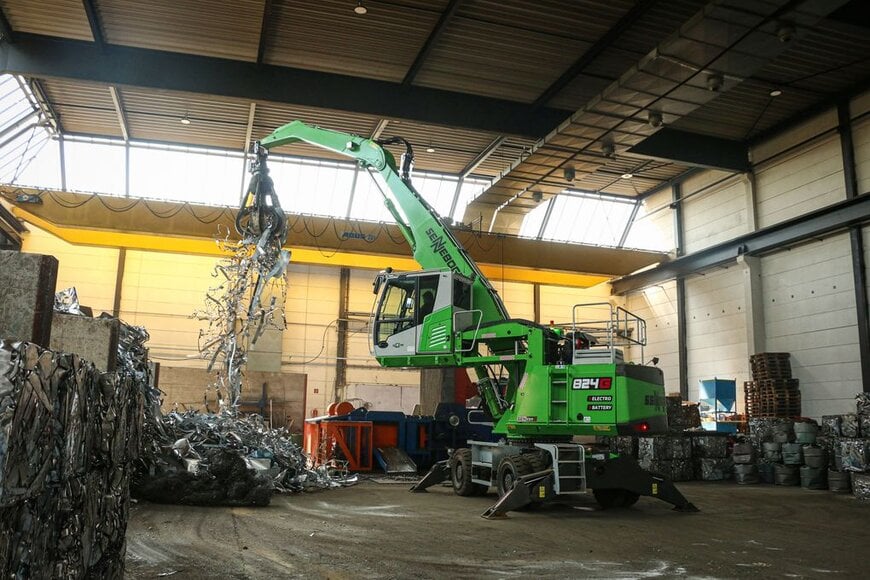
Battery-powered material handlers are being introduced for recycling applications with modular energy systems and dual power operation, addressing the need for flexible, low-emission equipment in industrial material handling environments.
Modular battery architecture for variable operating profiles
SENNEBOGEN has expanded its portfolio of electrically powered material handlers previously limited to cable-connected systems by introducing a battery-powered G-Series designed for recycling applications. The development targets facilities requiring mobility across multiple job sites and variable duty cycles.
The machines are based on a modular battery design that allows operation with one to four battery packs. This configuration supports adjustable energy capacity, enabling runtime of up to seven hours depending on load conditions and operational intensity. The modular approach also allows retrofitting of additional battery units, aligning machine capacity with evolving operational requirements and extending equipment lifecycle.
Dual power management and charging flexibility
A central feature of the system is its Dual Power Management capability, which allows the machines to operate both on battery power and through external electrical supply. This enables continuous operation without dependency on fixed infrastructure, a limitation commonly associated with cable-powered systems.
Charging can occur during operation, reducing downtime and supporting continuous workflows in recycling environments. The system supports charging rates of up to 88 kW via a 125 A CEE industrial plug, enabling integration into standard industrial electrical infrastructure without the need for specialized charging systems.
Operational adaptability in recycling environments
The combination of modular battery capacity and dual power input supports use cases involving frequently changing job sites or variable shift durations. Machines can be deployed across different locations without reliance on fixed grid connections, while still maintaining the option for plug-in operation where available.
This flexibility is particularly relevant for recycling facilities handling fluctuating material volumes or operating across distributed processing zones. The ability to adjust battery capacity over time also reduces the need for equipment replacement when operational demands change.
Emissions reduction and industrial relevance
The transition to battery-powered operation contributes to reduced operational emissions. According to the manufacturer, each machine can save approximately 60 tonnes of CO₂ annually, depending on usage intensity and operating hours. This positions the technology within broader efforts to decarbonize industrial processes and supports integration into a digital supply chain where emissions tracking and reporting are increasingly required.
Position within the material handling sector
Battery-electric material handling equipment is an established segment, particularly in indoor logistics and warehousing. However, in heavy-duty recycling applications, systems offering both modular battery scalability and simultaneous charging during operation remain less common.
By combining adjustable battery configurations with dual power operation, the system introduces a hybrid operational model that bridges the gap between fixed electric infrastructure and fully mobile machinery. This approach aligns with industry trends toward electrification while maintaining the operational flexibility required in large-scale recycling environments.
Edited by an industrial journalist Sucithra Mani with AI assistance.
www.sennebogen.com
Powered by
Induportals Media Publishing