40-Tonne Hydraulic Excavator for Quarrying and Demolition
JCB launches the 420X crawler excavator for intensive applications in quarrying, earthmoving, demolition, and aggregates production. www.jcb.com JCB has expanded its heavy equipment portfolio with the 420X hydraulic crawler excavator, a 40-tonne machine designed for demanding applications in earthmoving, quarrying, demolition, and mobile crushing operations. The machine integrates a 240 kW Stage V diesel engine, reinforced structural components, and hydraulic systems developed to increase lifting capacity, stability, and productivity in high-intensity jobsite environments. Reinforced structure for heavy-duty applications Developed from the 370X platform, the 420X has been engineered to handle large-scale excavation, crusher loading, and quarry extraction operations. The machine is equipped as standard with the “Standard Earthmoving Pro” package, which includes a 2.6 m³ heavy-duty bucket compared with the 2.34 m³ bucket used on the 370X model. This 10% increase in bucket capacity is supported by a reinforced boom and dipper arm designed for heavy-duty applications. The dipper arm is available in lengths of 2.63 m and 3.23 m. Additional wear strips have been added to the inner section of the arm, while thicker structural plates improve mechanical resistance across the front-end assembly. The hydraulic arm cylinder diameter has also been increased compared with the 370X, improving breakout performance, particularly when working with compact and high-density materials. Increased lifting capacity and stability Larger boom cylinders contribute to improved front lifting capacity. According to JCB, the 420X can lift more than 940 kg additional load at maximum reach compared with the smaller model. This increase improves excavation performance and enables the use of heavier demolition attachments. The undercarriage has been redesigned with increased track spacing, delivering an 11% improvement in side lifting capacity compared with the 370X. The chassis is also two track plates longer, improving front stability and performance when operating heavy attachments. Upper rollers have been repositioned and an additional lower roller has been added on each side to improve mobility on uneven terrain. Undercarriage tie-in points have also been optimized to reduce material accumulation beneath the X-frame. The machine uses 50-tonne-class travel motors, increasing tractive effort by 21% to reach 345 kN. Swing system and high-performance hydraulics The upper structure features a swing ring that is 40 mm larger with increased load capacity. This configuration improves durability during high-torque swing cycles, particularly in quarry face loading and stockpiling applications. The swing motor and gearbox have also been upgraded to increase swing torque while reducing operating noise levels. The hydraulic system benefits from increased flow provided by the six-cylinder Stage V diesel engine, which delivers 240 kW (321 hp) and maximum torque of 1,526 Nm. Higher engine speed compared with the 370X improves hydraulic performance during combined digging, lifting, and travel operations. The Auto Boost system is included as standard and temporarily increases hydraulic pressures when additional performance is required. Digital cab and operator interface Like other X Series models, the 420X is equipped with the JCB CommandPlus cab, designed to improve operator comfort and safety. The cab includes a heated and ventilated seat with electronic lumbar support together with the new JCB UX user interface. The system uses a configurable 10-inch full-color touchscreen display that allows quick access to frequently used functions through customizable shortcuts. Up to 25 user profiles can be stored to save preferences related to hydraulic controls and joystick settings. The X Series also incorporates a keyless start system. A short press activates or deactivates the display, while a longer press starts the engine. The cab includes standard ROPS/FOPS certification together with JCB’s 2-Go hydraulic isolation system. An HD 360-degree camera system is integrated into the UX display, while standard equipment includes 14 LED work lights to improve visibility on site. Positioning in the 40-tonne excavator market With the 420X, JCB strengthens its position in the 40-tonne hydraulic excavator segment for heavy earthmoving, quarrying, and demolition applications. The “Earthmoving Pro” and optional “Heavy Duty Pro” configurations are intended for operations requiring reinforced structures, high hydraulic performance, and stability for heavy attachment use. Additional Context: This section details technical specifications and competitive benchmarking not included in the original product announcement The 40-tonne hydraulic excavator segment is dominated by manufacturers including Caterpillar, Komatsu, Volvo Construction Equipment, and Hitachi Construction Machinery. Key technical criteria in this category include lifting capacity, breakout for
 machineryasia
JCB launches the 420X crawler excavator for intensive applications in quarrying, earthmoving, demolition, and aggregates production.
www.jcb.com
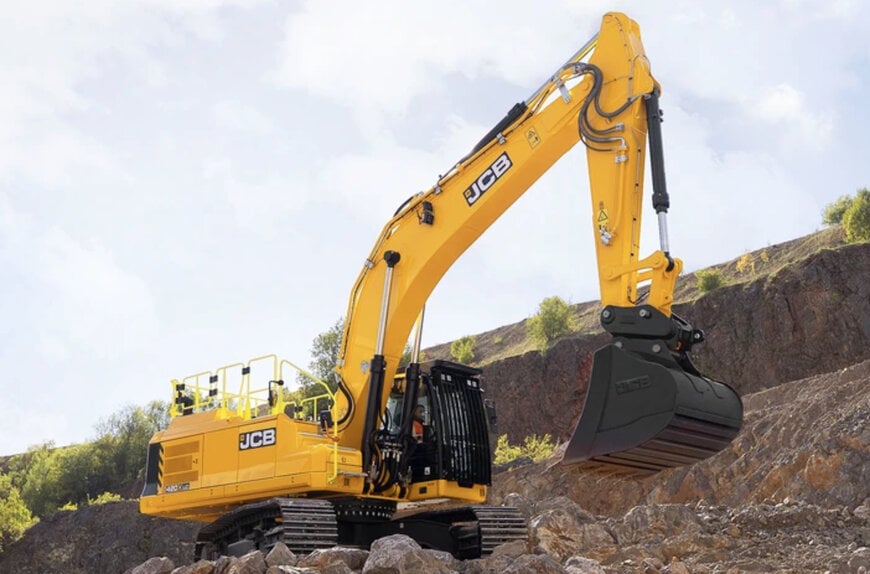
JCB has expanded its heavy equipment portfolio with the 420X hydraulic crawler excavator, a 40-tonne machine designed for demanding applications in earthmoving, quarrying, demolition, and mobile crushing operations. The machine integrates a 240 kW Stage V diesel engine, reinforced structural components, and hydraulic systems developed to increase lifting capacity, stability, and productivity in high-intensity jobsite environments.
Reinforced structure for heavy-duty applications
Developed from the 370X platform, the 420X has been engineered to handle large-scale excavation, crusher loading, and quarry extraction operations. The machine is equipped as standard with the “Standard Earthmoving Pro” package, which includes a 2.6 m³ heavy-duty bucket compared with the 2.34 m³ bucket used on the 370X model. This 10% increase in bucket capacity is supported by a reinforced boom and dipper arm designed for heavy-duty applications.
The dipper arm is available in lengths of 2.63 m and 3.23 m. Additional wear strips have been added to the inner section of the arm, while thicker structural plates improve mechanical resistance across the front-end assembly.
The hydraulic arm cylinder diameter has also been increased compared with the 370X, improving breakout performance, particularly when working with compact and high-density materials.
Increased lifting capacity and stability
Larger boom cylinders contribute to improved front lifting capacity. According to JCB, the 420X can lift more than 940 kg additional load at maximum reach compared with the smaller model. This increase improves excavation performance and enables the use of heavier demolition attachments.
The undercarriage has been redesigned with increased track spacing, delivering an 11% improvement in side lifting capacity compared with the 370X. The chassis is also two track plates longer, improving front stability and performance when operating heavy attachments.
Upper rollers have been repositioned and an additional lower roller has been added on each side to improve mobility on uneven terrain. Undercarriage tie-in points have also been optimized to reduce material accumulation beneath the X-frame.
The machine uses 50-tonne-class travel motors, increasing tractive effort by 21% to reach 345 kN.
Swing system and high-performance hydraulics
The upper structure features a swing ring that is 40 mm larger with increased load capacity. This configuration improves durability during high-torque swing cycles, particularly in quarry face loading and stockpiling applications. The swing motor and gearbox have also been upgraded to increase swing torque while reducing operating noise levels.
The hydraulic system benefits from increased flow provided by the six-cylinder Stage V diesel engine, which delivers 240 kW (321 hp) and maximum torque of 1,526 Nm. Higher engine speed compared with the 370X improves hydraulic performance during combined digging, lifting, and travel operations.
The Auto Boost system is included as standard and temporarily increases hydraulic pressures when additional performance is required.
Digital cab and operator interface
Like other X Series models, the 420X is equipped with the JCB CommandPlus cab, designed to improve operator comfort and safety. The cab includes a heated and ventilated seat with electronic lumbar support together with the new JCB UX user interface. The system uses a configurable 10-inch full-color touchscreen display that allows quick access to frequently used functions through customizable shortcuts. Up to 25 user profiles can be stored to save preferences related to hydraulic controls and joystick settings.
The X Series also incorporates a keyless start system. A short press activates or deactivates the display, while a longer press starts the engine.
The cab includes standard ROPS/FOPS certification together with JCB’s 2-Go hydraulic isolation system. An HD 360-degree camera system is integrated into the UX display, while standard equipment includes 14 LED work lights to improve visibility on site.
Positioning in the 40-tonne excavator market
With the 420X, JCB strengthens its position in the 40-tonne hydraulic excavator segment for heavy earthmoving, quarrying, and demolition applications. The “Earthmoving Pro” and optional “Heavy Duty Pro” configurations are intended for operations requiring reinforced structures, high hydraulic performance, and stability for heavy attachment use.
Additional Context: This section details technical specifications and competitive benchmarking not included in the original product announcement
The 40-tonne hydraulic excavator segment is dominated by manufacturers including Caterpillar, Komatsu, Volvo Construction Equipment, and Hitachi Construction Machinery. Key technical criteria in this category include lifting capacity, breakout force, undercarriage stability, and hydraulic efficiency.
In quarrying and demolition applications, 40-tonne machines typically use buckets ranging from 2.3 m³ to 3 m³ and engines delivering between 210 kW and 260 kW. Increased undercarriage width and longer ground contact length are commonly used to improve stability when operating hydraulic breakers and heavy demolition tools.
Digital operator management systems, configurable touchscreen interfaces, and perimeter vision systems are also becoming standard equipment in machines intended for high-intensity construction environments.
Edited by Maria Brueva, Induportals editor – adapted by AI.
www.jcb.com
Powered by
Induportals Media Publishing