What is USTR’s Overcapacity Investigation?
And why does it matter?
 machineryasia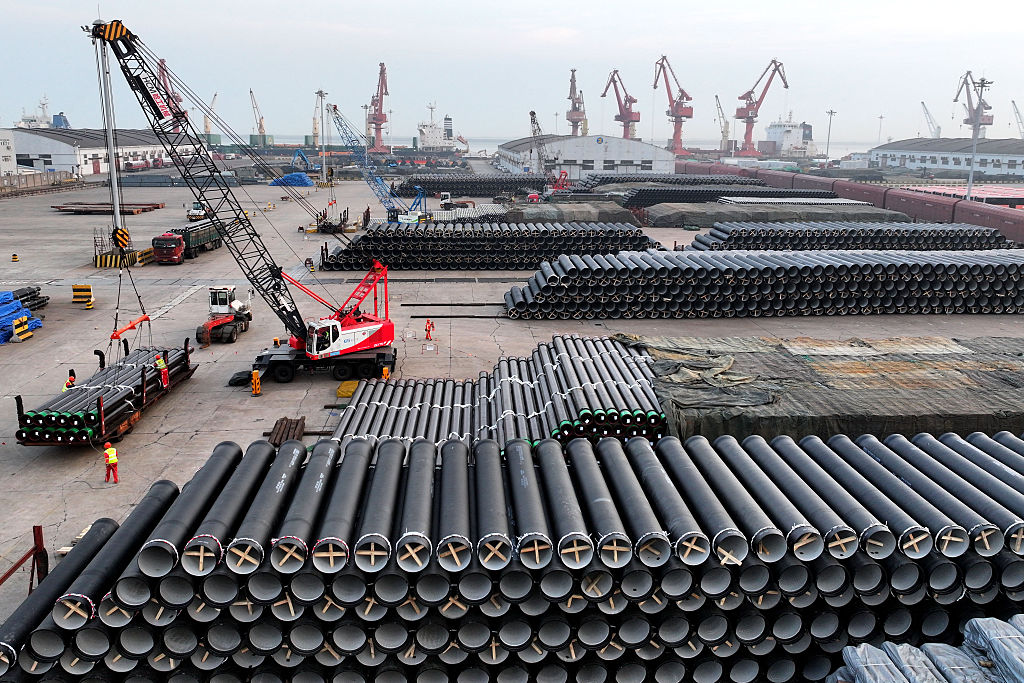
And why does it matter?
The Office of the United States Trade Representative (USTR) has launched a major investigation under Section 301 of the Trade Act of 1974 into global industrial overcapacity. The investigation will examine how foreign governments are driving production far beyond market demand and distorting global trade in ways that harm American workers and manufacturers.
In its notice initiating the investigation, USTR identified 16 economies whose policies and practices appear to contribute to structural excess capacity and production across a range of manufacturing sectors. That underscores that this is a global and systemic challenge, not one confined to a single country or industry.
In the coming weeks, the Alliance for American Manufacturing (AAM) be looking at how overcapacity affects specific industrial sectors mentioned in USTR’s notice.
But first: What is overcapacity?
A good description was laid down in a 2024 report by the Rhodium Group, which explained that “structural overcapacity happens when companies maintain or grow their unused capacity without worrying about making a profit (or a loss), often due to a lack of economic pressure to operate efficiently, like a hard budget constraint.”
The problem is when that capacity continues to be utilized, and industries produce far more than the market can absorb. In a functioning market, excess supply would typically lead to production cuts, consolidation or facility closures. But when governments intervene – through subsidies, state‑directed lending, preferential energy pricing or other forms of support – production can continue when demand does not.
The result is a glut of goods that must be exported somewhere. That surplus enters global markets at artificially low prices, suppressing returns, displacing market‑based producers and discouraging legitimate investment. Over time foreign overcapacity undermines America’s domestic industries, weakens their supply chains and puts good‑paying manufacturing jobs at risk.
This has been a well-documented problem for the U.S. manufacturing sector, and concern about overcapacity has been bipartisan and longstanding. Current U.S. Trade Representative Jamieson Greer has warned that many trading partners are “producing more goods than they can consume domestically,” and that this overproduction “displaces existing U.S. domestic production or prevents investment and expansion in U.S. manufacturing.” Likewise, former USTR Katherine Tai repeatedly emphasized during her tenure that persistent global overcapacity undermines fair competition and cannot be addressed solely through traditional product‑by‑product trade remedies.
Hence the Section 301 investigation. It gives USTR authority to investigate “whether foreign acts, policies or practices are unreasonable or discriminatory and burden or restrict U.S. commerce.” Unlike antidumping or countervailing duty laws, which focus on individual products and pricing behavior, Section 301 allows the U.S. government to step back and examine structural, economy‑wide practices that distort markets at scale.
In launching this probe, USTR signaled concern that overcapacity is being driven by government policies that encourage production untethered from demand and that push excess output into global markets. The inclusion of an illustrative list of sectors in the notice reinforces that this is a cross‑cutting issue, not one limited to a single industry.
AAM is here for it. Upon the investigation’s announcement, AAM President Scott Paul commented that “we commend the administration for initiating these investigations, which we hope will lead to meaningful action to defend American workers and manufacturers.”
As with prior Section 301 investigations, this process will unfold over months. There will be opportunities for public engagement before the agency determines its next steps. And, if USTR ultimately makes affirmative findings, the statute provides flexibility to respond, including through tariffs or other measures designed to restore fair competition.
But the ball is rolling. Unchecked overcapacity doesn’t just distort trade flows. It hollows out domestic industries, depresses investment, and increases U.S. dependence on foreign production for critical goods. It also makes it harder for American manufacturers to plan for the future, invest in new technologies, or compete on a level playing field.
Stay tuned for our look at overcapacity in specific sectors. Each has its own dynamics, but the underlying challenge is the same: Markets are being shaped by government policy rather than market demand.