Punit Gupta, Managing Director, Blaser Swisslube India, on data-driven machining, sustainable productivity and India’s journey towards global manufacturing leadership
1. The machine tool industry is undergoing rapid transformation. Which technological trends—such as AI, automation, digital manufacturing or precision engineering—do you believe will have the greatest impact over the next five years, and how is your organisation preparing for them? Over the next five years, I believe the greatest impact will come not from any … The post Punit Gupta, Managing Director, Blaser Swisslube India, on data-driven machining, sustainable productivity and India’s journey towards global manufacturing leadership appeared first on Machine Insider.
 machineryasia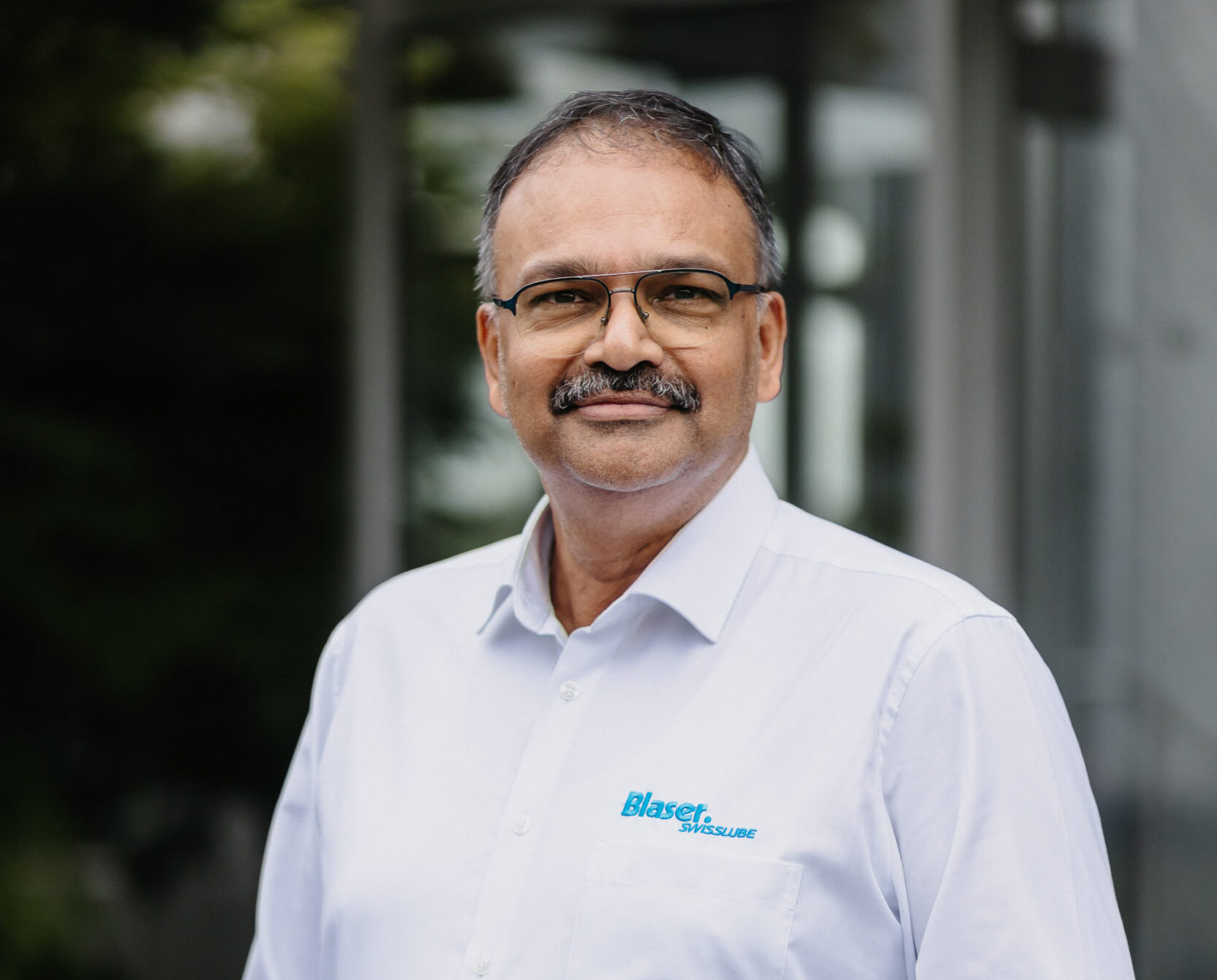
1. The machine tool industry is undergoing rapid transformation. Which technological trends—such as AI, automation, digital manufacturing or precision engineering—do you believe will have the greatest impact over the next five years, and how is your organisation preparing for them?
Over the next five years, I believe the greatest impact will come not from any single technology, but from the convergence of AI, connectivity, automation and advanced process engineering.
Manufacturing is moving from simply monitoring machines to understanding the complete machining process through data. The next step will be using this data to predict process behaviour, identify deviations earlier and continuously optimise productivity, quality and resource consumption.
For us, this means looking beyond the coolant as a consumable and treating it as a “Liquid Tool”—an integral part of the machining process. Digital solutions such as connected monitoring, combined with our application expertise, enable manufacturers to understand and optimise critical process parameters.
At the same time, AI will only deliver meaningful value when supported by reliable data and strong process knowledge.
Our focus is therefore on combining digital capabilities, advanced metalworking-fluid technology and application engineering to help customers extract greater potential from their machines and tools.
2. India aspires to become a global manufacturing hub. What are the biggest opportunities and challenges for the Indian machine tool industry in achieving global competitiveness, and what changes are still required?
India has a tremendous opportunity because the global manufacturing landscape is looking for resilient, competitive and diversified supply chains. Aerospace, defence, semiconductors, automotive, electric mobility, medical technology and precision engineering can become important growth engines for Indian manufacturing.
However, global competitiveness cannot be built on labour or purchase price alone. It requires consistent quality, process capability, productivity, delivery reliability and the ability to continuously innovate.
One of the biggest opportunities for India is to move from being primarily a cost-competitive manufacturing destination to becoming a technology- and productivity-driven manufacturing partner.
This requires closer integration between machine tool manufacturers, cutting-tool companies, metalworking-fluid specialists, automation providers, OEMs, academia and end users. We also need greater investment in skilled technical manpower and stronger adoption of data-driven manufacturing.
If we can build this mindset across the ecosystem, India has the potential not just to manufacture for the world, but to develop solutions for the world.
3. Innovation today extends beyond products. How is your organisation driving innovation across manufacturing processes, customer experience, sustainability, workforce development or digital transformation?
At Blaser, we believe innovation begins with understanding the customer’s manufacturing process rather than simply developing another product.
Our approach is based on combining product technology, application expertise, process knowledge and customer collaboration. Through our Liquid Tool philosophy, we look at how the metalworking fluid influences tool life, machining quality, machine availability, productivity, safety and overall process economics.
Digitalisation is increasingly strengthening this approach by enabling better monitoring and visibility of manufacturing processes.
Sustainability is another important dimension. A sustainable machining process is not simply about using less fluid; it is about reducing the overall resource consumption associated with manufacturing—through longer fluid life, longer tool life, improved process stability, reduced waste and better machine utilisation.
We also believe that technology is only as strong as the people using it. Therefore, developing application expertise and continuously building the capabilities of our teams remains a critical part of our innovation strategy.
Ultimately, our measure of innovation is not how sophisticated a technology appears, but also how much measurable value it creates for the customer.
4. Manufacturing success increasingly depends on collaboration across OEMs, suppliers, technology providers, academia and startups. How do you see partnerships shaping the future of manufacturing, and what role does your organisation play in this ecosystem?
The complexity of modern manufacturing makes collaboration essential. No single company can possess all the technologies, expertise and capabilities required to solve every manufacturing challenge.
The future will therefore be built around ecosystems rather than isolated products.
For example, the performance of a machining process depends on the interaction between the machine, cutting tool, workpiece material, parameters, coolant, filtration, automation and operator expertise. Optimising one element in isolation does not necessarily optimise the complete process.
This is where partnerships become extremely important.
Our role is to bring metalworking-fluid expertise and application knowledge into this ecosystem and work closely with machine-tool manufacturers, cutting-tool companies, OEMs and manufacturing customers. Joint trials, application testing, process optimisation and knowledge sharing can convert individual technologies into meaningful manufacturing solutions.
The strongest partnerships will be those where the participants are not simply selling to one another but solving a common customer problem together.
5. Looking ahead to 2030, what will define a successful machine tool company? Which capabilities, technologies or leadership qualities will differentiate the industry’s future leaders?
By 2030, I believe the definition of a successful machine tool company will have moved significantly beyond machine specifications.
The leaders will be companies that can demonstrate measurable customer outcomes—higher productivity, greater process reliability, better quality, lower energy and resource consumption, and a lower total cost of ownership.
Technology will obviously remain important. Connected machines, automation, AI, digital twins, advanced analytics and predictive maintenance will become increasingly mainstream. But technology alone will not create differentiation because technologies eventually become accessible across the industry.
The real differentiators will be application knowledge, speed of innovation, customer intimacy, ecosystem partnerships and the ability to convert data into actionable decisions.
Leadership will also need to become more collaborative. Future leaders must be willing to work across traditional industry boundaries and bring together machine builders, tool manufacturers, software companies, fluid specialists and customers.
In nutshell, the successful companies of 2030 will not simply sell machines. They will become long-term productivity partners for their customers.
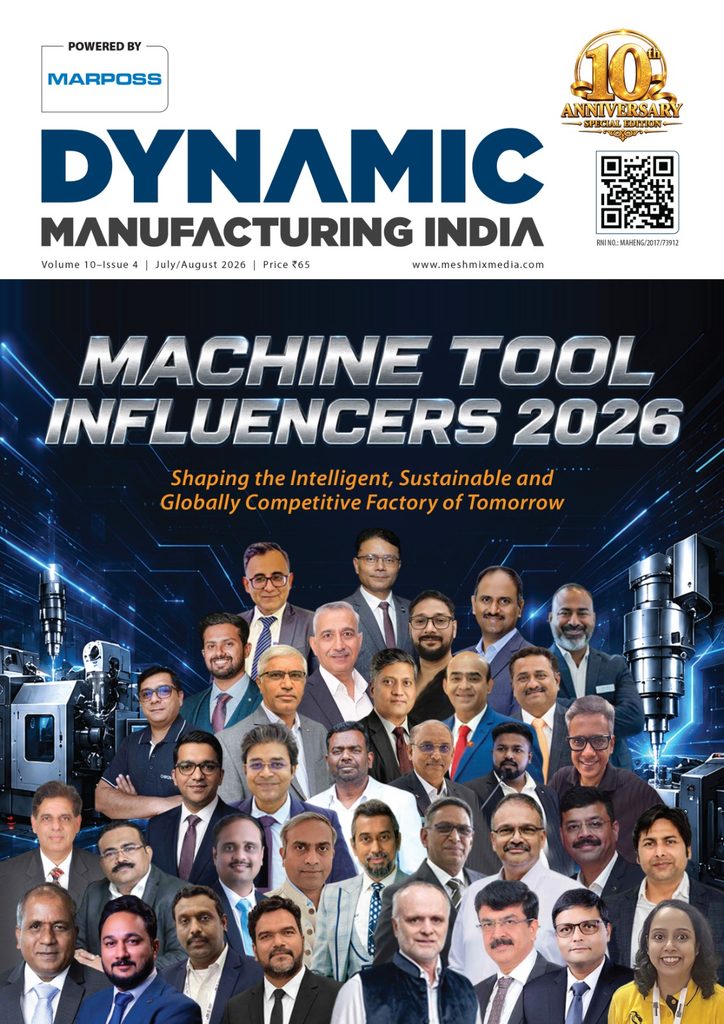
6. As one of the Machine Tool Influencers 2026, what message would you like to share with the next generation of manufacturing professionals and entrepreneurs who will shape India’s industrial future?
My message to the next generation is simple: stay curious, stay close to the shop floor and never stop learning.
Manufacturing is changing rapidly, but the fundamentals remain important. Understand how things actually work. Spend time with machines, operators, engineers and customers. Learn to connect technology with real-world problems.
Do not look at manufacturing only as an industry of machines and components. It is an industry of problem-solving, productivity and continuous improvement.
India has a unique opportunity over the coming decade. The next generation can play a role in building companies and technologies that compete globally—not merely by being more economical, but by being better, smarter and more sustainable.
And finally, I would encourage young professionals to think beyond their individual function. A great engineer understands business. A great business leader understands technology. A great entrepreneur understands the customer.
The future belongs to those who can connect these three.
Do Visit – https://blaser.com/
The post Punit Gupta, Managing Director, Blaser Swisslube India, on data-driven machining, sustainable productivity and India’s journey towards global manufacturing leadership appeared first on Machine Insider.