Movitec uses rock drilling to build high-altitude road in Chile
Epiroc drilling solution enables safe rock removal without explosives near astronomical site. www.epiroc.com Earthmoving contractor Movitec is constructing a high-altitude access road on Chajnantor Mountain in northern Chile, at an elevation of over 5,600 metres. The road will support the transport of a seven-metre telescope mirror to the future Tokyo Atacama Observatory, a scientific installation funded by the University of Tokyo. The project is located near the Atacama Large Millimeter Array (ALMA), one of the world’s most advanced astronomical observatories. This proximity imposes strict operational constraints, particularly regarding vibration and environmental disturbance. In addition to regulatory limitations, the project faces severe environmental challenges, including low oxygen levels, sub-zero temperatures and extreme weather conditions that can halt operations for extended periods. Constraints on conventional rock removal methods The geology of the site includes large rock formations that must be removed to create a stable and smooth road surface. However, the use of conventional blasting techniques is prohibited due to the risk of interference with nearby telescope operations. This restriction required Movitec to adopt an alternative excavation method capable of breaking rock efficiently without generating shockwaves or vibrations. Drilling solution for non-explosive rock fragmentation To meet these requirements, Movitec deployed the PowerROC T25 DC drilling rig from Epiroc. The machine is used in combination with plasma blasting technology, a method that fragments rock using pulsed electrical energy rather than explosives. The drilling rig creates holes approximately 51 mm in diameter and up to two metres deep. Water is then injected into the hole, and an electrical discharge is applied, causing the rock to fracture into small fragments. This approach allows controlled material removal without affecting sensitive nearby infrastructure. Reliable operation in high-altitude conditions Operating at extreme altitude presents additional technical challenges. Low temperatures can cause hydraulic fluids and fuels to freeze, while reduced air pressure can affect machine performance. According to Movitec, the drilling rig has maintained stable operation under these conditions. The equipment has demonstrated reliable startup performance even at temperatures between –15 °C and –20 °C and has not experienced pressure loss during operation at high altitude. The machine’s hydraulic direct control system and reduced reliance on electrical components contribute to its robustness in harsh environments. Productivity and project progress The drilling solution enables efficient rock removal while maintaining compliance with environmental constraints. Combined with the plasma blasting process, it allows continuous progress on the road without the delays associated with traditional blasting restrictions. At the time of reporting, the project was approximately 70% complete. The road must meet strict requirements for width and smoothness to ensure safe transport of sensitive scientific equipment to the summit. Supporting complex infrastructure in sensitive environments The project illustrates how alternative rock fragmentation methods, combined with robust drilling equipment, can enable construction in environments where conventional techniques are not feasible. For Movitec, the use of a non-explosive drilling approach ensures both operational efficiency and compliance with the unique environmental and scientific requirements of the site, supporting the development of critical infrastructure for advanced astronomical research. Edited by Romila DSilva, Induportals Editor, with AI assistance. www.epiroc.com Powered by Induportals Media Publishing
 machineryasia
Epiroc drilling solution enables safe rock removal without explosives near astronomical site.
www.epiroc.com
Earthmoving contractor Movitec is constructing a high-altitude access road on Chajnantor Mountain in northern Chile, at an elevation of over 5,600 metres. The road will support the transport of a seven-metre telescope mirror to the future Tokyo Atacama Observatory, a scientific installation funded by the University of Tokyo.
The project is located near the Atacama Large Millimeter Array (ALMA), one of the world’s most advanced astronomical observatories. This proximity imposes strict operational constraints, particularly regarding vibration and environmental disturbance.
In addition to regulatory limitations, the project faces severe environmental challenges, including low oxygen levels, sub-zero temperatures and extreme weather conditions that can halt operations for extended periods.
Constraints on conventional rock removal methods
The geology of the site includes large rock formations that must be removed to create a stable and smooth road surface. However, the use of conventional blasting techniques is prohibited due to the risk of interference with nearby telescope operations.
This restriction required Movitec to adopt an alternative excavation method capable of breaking rock efficiently without generating shockwaves or vibrations.
Drilling solution for non-explosive rock fragmentation
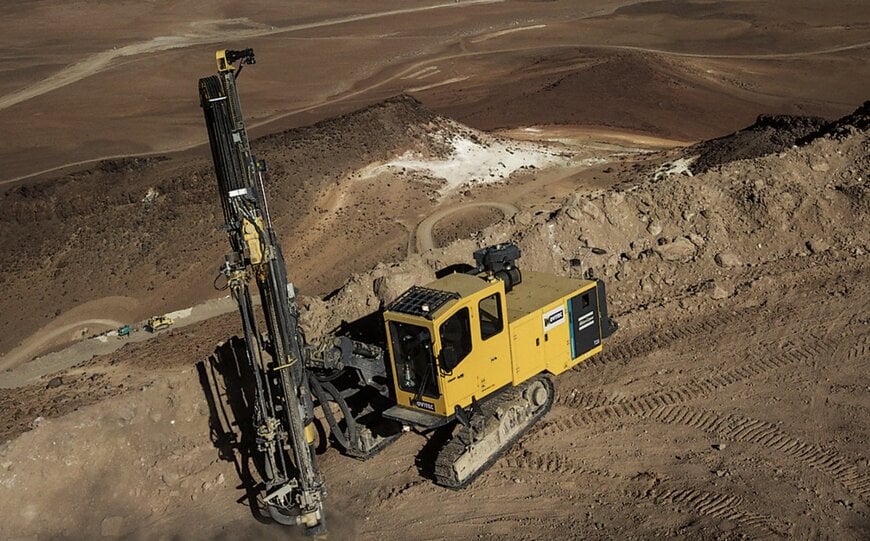
To meet these requirements, Movitec deployed the PowerROC T25 DC drilling rig from Epiroc. The machine is used in combination with plasma blasting technology, a method that fragments rock using pulsed electrical energy rather than explosives.
The drilling rig creates holes approximately 51 mm in diameter and up to two metres deep. Water is then injected into the hole, and an electrical discharge is applied, causing the rock to fracture into small fragments. This approach allows controlled material removal without affecting sensitive nearby infrastructure.
Reliable operation in high-altitude conditions
Operating at extreme altitude presents additional technical challenges. Low temperatures can cause hydraulic fluids and fuels to freeze, while reduced air pressure can affect machine performance.
According to Movitec, the drilling rig has maintained stable operation under these conditions. The equipment has demonstrated reliable startup performance even at temperatures between –15 °C and –20 °C and has not experienced pressure loss during operation at high altitude.
The machine’s hydraulic direct control system and reduced reliance on electrical components contribute to its robustness in harsh environments.
Productivity and project progress
The drilling solution enables efficient rock removal while maintaining compliance with environmental constraints. Combined with the plasma blasting process, it allows continuous progress on the road without the delays associated with traditional blasting restrictions.
At the time of reporting, the project was approximately 70% complete. The road must meet strict requirements for width and smoothness to ensure safe transport of sensitive scientific equipment to the summit.
Supporting complex infrastructure in sensitive environments
The project illustrates how alternative rock fragmentation methods, combined with robust drilling equipment, can enable construction in environments where conventional techniques are not feasible.
For Movitec, the use of a non-explosive drilling approach ensures both operational efficiency and compliance with the unique environmental and scientific requirements of the site, supporting the development of critical infrastructure for advanced astronomical research.
Edited by Romila DSilva, Induportals Editor, with AI assistance.
www.epiroc.com
Powered by
Induportals Media Publishing