Manufacturing Jobs Need Certainty, Not More Whiplash
LAS VEGAS, Nevada – On the floor of CONEXPO-CON/AGG 2026, the Association of Equipment Manufacturers (AEM) staged a press conference that felt less like a victory lap and more like a status report from an industry trying to keep its footing. The headline, in AEM’s own words, is that U.S. equipment manufacturing looks “selectively strong.” […] Manufacturing Jobs Need Certainty, Not More Whiplash published on The HeavyQuip Magazine.
 machineryasia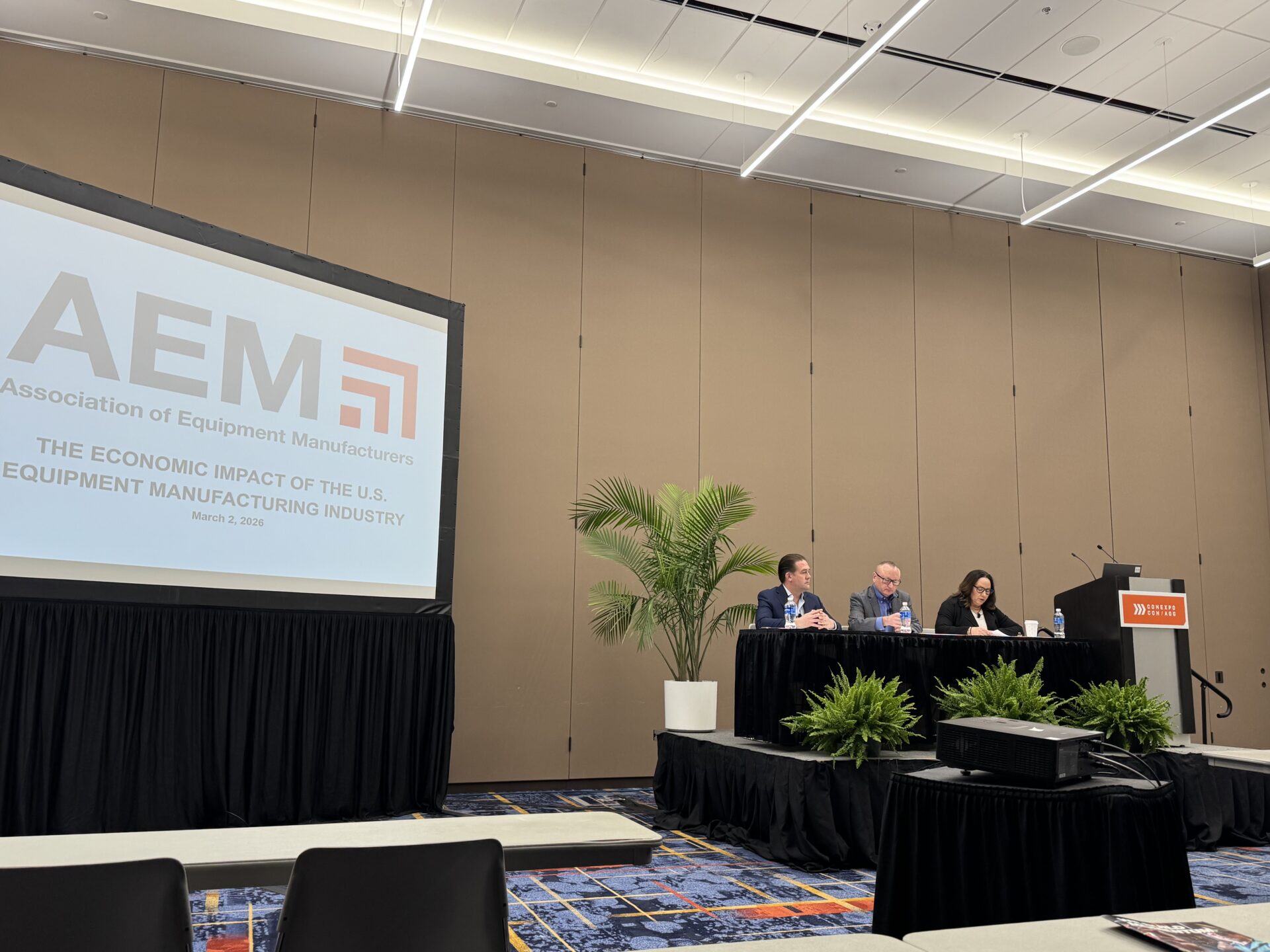
LAS VEGAS, Nevada – On the floor of CONEXPO-CON/AGG 2026, the Association of Equipment Manufacturers (AEM) staged a press conference that felt less like a victory lap and more like a status report from an industry trying to keep its footing.
The headline, in AEM’s own words, is that U.S. equipment manufacturing looks “selectively strong.” Construction equipment, in particular, is holding up better than other segments. But the subtext, repeated in different ways through prepared remarks and Q&A, was sharper: jobs and investment do not thrive in an environment where policy keeps changing the rules mid-game.
AEM anchored the event around the release of its triennial economic impact study, commissioned by the association and prepared by S&P Global Market Intelligence. The report is designed to put hard numbers behind a message AEM has been pressing for years: off-highway equipment manufacturing is not a niche. It is a national economic pillar that ripples across suppliers, dealers, logistics, and local communities.
AEM’s published national figures for 2025 are substantial:
• 2.218 million jobs supported (direct, indirect, and induced)
• Average annual pay: $105,000, which AEM says is about 50% above the national average
• The broader equipment manufacturing footprint supporting 9.5% of all U.S. manufacturing jobs 
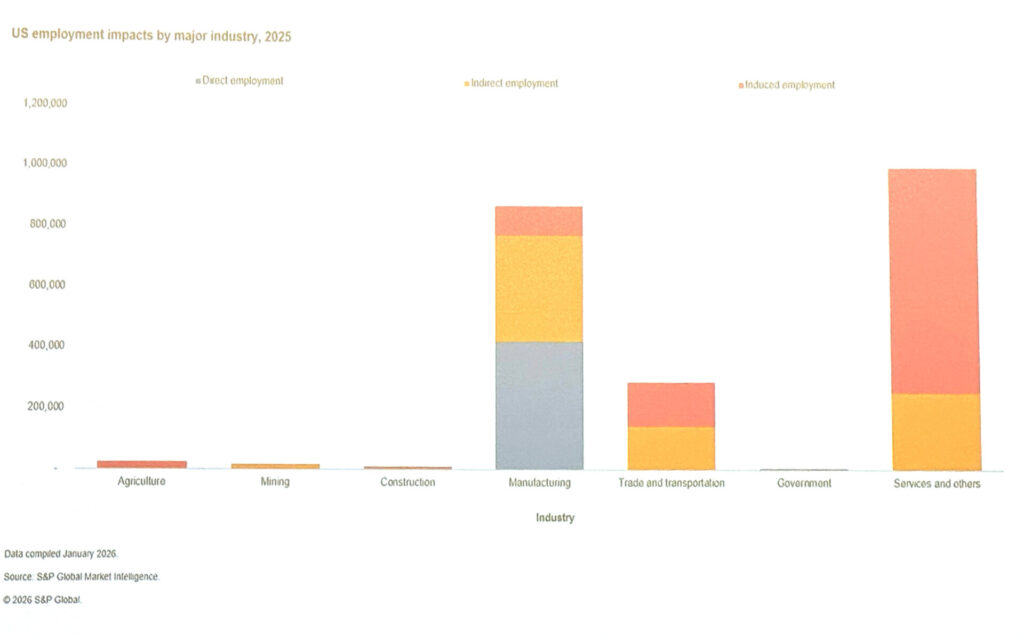
AEM tried to hold in Las Vegas: celebrate resilience, but call out policy uncertainty as the factor that could quietly cap the industry’s next growth cycle.
“Equipment manufacturers build, power, and feed the world”
AEM leaned on its most quotable framing early, putting the economic impact in plain terms for policymakers and the broader public.
“Equipment manufacturers build, power, and feed the world,” said Brian Bieller, Chair of AEM’s Government and Public Affairs Committee and President of BOMAG Americas. He tied the report’s findings to the policy debates already lining up in Washington, arguing that the economic footprint should make equipment manufacturing impossible to ignore in discussions about infrastructure, trade, workforce, and tax policy. 
AEM President and CEO Megan Tanel reinforced the same point with a slightly different emphasis, stressing scale and durability.
“America’s off-highway equipment industry is a powerful economic engine,” Tanel said, pointing to the industry’s role in jobs, labor income, and GDP contribution. She also framed the moment as a test of adaptability rather than comfort. 
That tone matched the broader market story AEM was trying to tell. The report describes strong growth in 2023, followed by cooling in 2024 and 2025, with construction equipment outperforming other equipment segments. Multiple trade publications carrying AEM’s release highlighted the same core narrative and figures, including total sales activity and the 2025 pay benchmark. 
Construction demand: cooling overall, but not uniform
The press conference opened with a market overview that tracked the construction cycle through recent years. The speaker pointed to strong momentum in 2023, followed by a clear deceleration in 2024 and further softness in 2025.
In the transcript, the presenter described how non-residential and infrastructure spending “tailed off” after 2023, before pivoting to one detail that matters to equipment demand: the balance between renovation and new work.
“The share of billings from renovation activity is 45%, close to the 53% peak in 2021,” the speaker said, noting that renovation typically requires less heavy iron than new construction, so the mix of design activity can change how equipment demand shows up on the ground.
Then came a more optimistic counterweight. Data centers and industrial buildouts were highlighted as pockets of strength, tied to the ongoing wave of digital infrastructure and federally-incentivized projects.
Whether every percentage in that live readout lands exactly is less important than the direction of the message AEM wanted to land: overall construction is not falling off a cliff, but demand is increasingly defined by where the money is still flowing, and that has implications for both equipment categories and hiring stability.
The jobs problem is not pay. It is pipelines.
One of the most important moments in the Q&A came when a reporter pressed AEM on workforce development in a digital era, including reskilling for new technologies. AEM’s answer was practical and regional.
AEM described workforce as “very regional,” and positioned itself as a coordinator and amplifier: connecting members with local partners, pushing best practices across OEMs, and helping manufacturers communicate the technology story in a way that attracts new entrants.
In plain language, AEM is trying to fix the perception gap. These are high-pay jobs, often with strong benefits, but they are still competing with other industries for the same talent pool. AEM’s broader workforce initiative also sits outside the show, with the association running a dedicated Workforce Solutions program and resources aimed at recruitment, retention, and training pathways. 
There was also a consistent theme that fits what many OEMs have been saying on show floors: technology is making equipment easier to operate, safer, and more productive, which can help companies integrate less experienced workers while they build skills over time. It is not a silver bullet, but it is part of the staffing equation.
Tariffs: Everyone is looking for some sort of certainty
The most candid language of the press conference arrived when reporters turned to trade policy and tariffs. One question referenced long-term investment planning and asked whether uncertainty is making companies hesitate. AEM did not dance around it. The response was direct, and it captured what many executives have been saying privately for months.
“Every member of AEM is looking for some sort of certainty,” an AEM leader said. “That’s been the biggest challenge probably [for] forecast. How do you run a business when there’s such uncertainty with what your costs are going to be and where everything is coming from.”
That quote matters because it is not a philosophical complaint. It is operational. If you do not have confidence in future input costs, trade access, or retaliatory exposure in export markets, you delay investments. You get conservative on hiring. You sweat every capital decision twice. AEM also used the press conference to explain why “tariffs are only about imports” is not how manufacturers experience them in practice.
“Tariffs directly impact imports, not exports,” one speaker said, before adding the second-order effect: “countries… have retaliated, increasing their tariffs on U.S. produced goods and thus impacting U.S. exports as well.”
For equipment makers with global dealer networks and export-dependent product lines, this is not an abstract concern. Retaliatory tariffs land on machines, components, and service parts, often in markets where competition is already tight.
Is reshoring really happening, or is industry stuck in wait-and-see?
HeavyQuip Magazine’s own question, according to the transcript, went straight to the heart of the current U.S. policy narrative: if the point of tougher trade measures is to restore manufacturing capacity, is it actually working?
“Tariffs are essentially a wet blanket,” the AEM representative said, describing them as weighing down “capital investments, expansion of manufacturing capacity and growth overall. If that was the goal of the tariffs, we have not seen that.”
That is a strong statement for a national trade association, and it shows how difficult the current balancing act has become. AEM is pro-manufacturing. It is pushing a national strategy for competitiveness. But it is also telling policymakers, in public, that punitive trade tools are not delivering the manufacturing renaissance their proponents promised.
AEM has made similar points in past policy statements, arguing that manufacturers need “certainty in the trade environment” to justify domestic investment and warning that tariff escalation can hurt the industry and its customers. 
Infrastructure and policy: AEM wants long-term signals, not short-term wins
AEM’s policy messaging around the press conference also connected equipment jobs to long-term infrastructure funding and the legislative framework that sustains multi-year project pipelines.
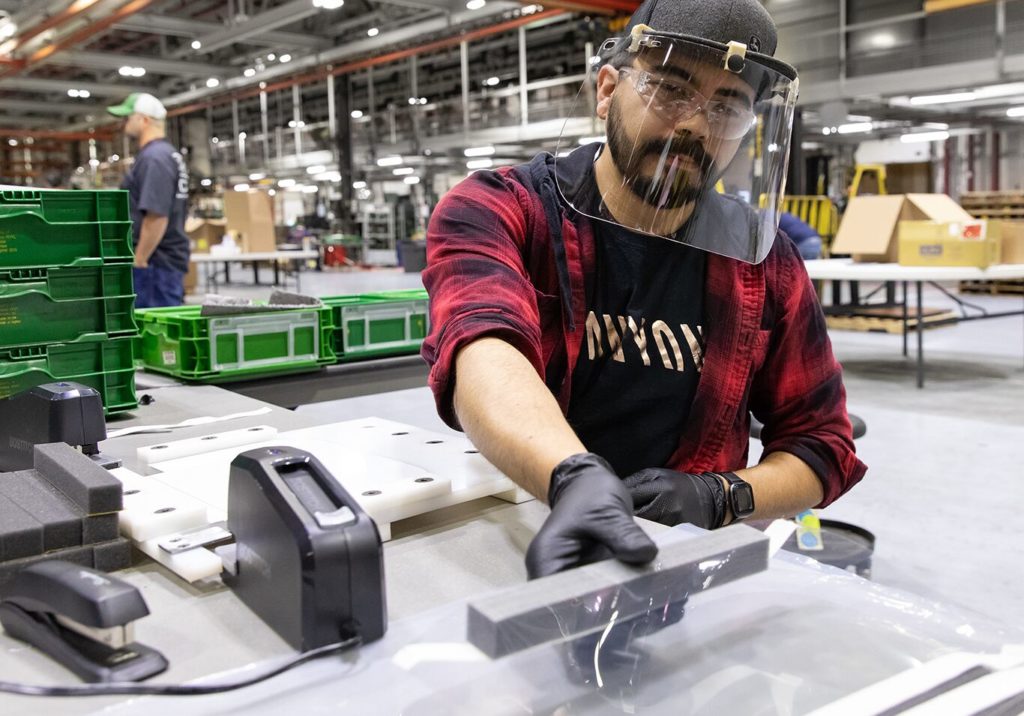
In the transcript, one AEM speaker underscored how infrastructure is not only demand-side fuel for equipment sales, but also part of the manufacturing-side logistics reality.
So much of the industry’s production footprint sits in “rural communities,” the speaker noted, far from major ports and terminals, where parts and workforce access can be challenging. That is why, in AEM’s framing, predictable infrastructure investment supports both ends of the value chain: it drives equipment demand and it helps sustain the domestic manufacturing base that supplies it.
Outside the press conference, AEM has been explicit about its broader pro-manufacturing agenda for 2026, listing priority areas that include infrastructure, rural America, workforce, trade, tax, immigration, technology, and the environment. 
AI and automation: not a job-killer story, at least not the one AEM is telling
A reporter asked about AI and whether it risks displacing workers. AEM’s response was clear and consistent with what many OEMs are showing in booths: safety, productivity, and support for operators, not a wholesale replacement of people.
“Automation and AI… [are] not to cut jobs,” one speaker said. Another added a practical point that often gets lost in broader tech narratives: “somebody still has to… do the programming.”
AEM framed the technology shift as a workforce evolution problem, not a workforce elimination problem. That stance fits the reality many manufacturers face: there are plenty of jobs open, and the bigger constraint is getting enough trained people to fill them.
Resilience is not a strategy
There is a reason AEM’s Senior Vice President of Government and Industry Relations Kip Eideberg used such sharp language in the prepared release.
“America’s equipment manufacturers have weathered every storm thrown at them, but resilience alone is not a growth strategy,” Eideberg said. He called for “smart and sensible trade policies,” infrastructure funding, modernised regulations, and permitting reform, adding: “When equipment manufacturers succeed, America succeeds.” 
That line captured the entire press conference. AEM is trying to defend the sector’s scale and relevance with hard economic evidence, while warning that uncertainty is becoming a structural drag. The message to policymakers was not subtle: if you want the jobs, the pay, and the industrial capacity, you have to stop making it harder to plan.
Manufacturing Jobs Need Certainty, Not More Whiplash published on The HeavyQuip Magazine.