House Select Committee Examines the Security of a Pharmaceutical Supply Chain Dominated by China
"That's not a trade policy problem. That's a medical readiness problem and it's a national security problem."
 machineryasia
“That’s not a trade policy problem. That’s a medical readiness problem and it’s a national security problem.”
The House Select Committee on Competition with China held a hearing last week at which witnesses examined the dominance Chinese manufacturers have over the global pharmaceutical supply chain. China’s grip on the drug supply is not news and neither is the Alliance for American Manufacturing’s (AAM) calls for reshoring that production. The federal government is increasingly taking it to heart, though.
The Trump administration last year by executive order directed federal agencies to prioritize the purchase of American-made pharmaceuticals and medical equipment. Sen. Rick Scott, who chairs a special committee in the U.S. Senate focused on aging, introduced legislation to extend country-of-origin labeling requirements to drugs – which would be in line with recommendations from the National Academies. AAM has endorsed similar legislation that Scott has co-sponsored – the COOL Online Act, which would require products sold online to be held to the same labeling requirements that items sold in brick-and-mortar store must meet.
And now comes the China committee hearing, in which members of Congress pressed an assembled panel of experts to detail this pharmaceutical problem that lawmakers must grapple with. The entire hearing can be viewed online and it’s worth a watch for those new to the subject. However, a statement made by Rep. Neal Dunn (R-Fla.) was remarkable in that it stated the problem plainly.
“I want to start with something I know about firsthand – not from a briefing, but from 35 years of practicing medicine,” said Rep. Dunn, who was a doctor before he served in Congress. “When a patient is on the table and you reach for a drug, you need that drug to be there. You need to know where it came from. You need to know that it works, and there’s no time for supply chain discussions at that point when somebody’s bleeding out. The clinical reality is exactly what this hearing is about, except the patient on the table is now the United States of America.”
We’ve handed the Chinese Communist Party (CCP) the instrument tray. I’ve spent much of my career in two institutions, medicine and the Army, institutions that take readiness seriously. You don’t wait until a crisis to build your supply chain; you harden it in advance, you know your vulnerabilities and you never let a strategic adversary control your logistics. On all three counts I think we have failed in pharmaceuticals in America, and this committee has an obligation to say so plainly.
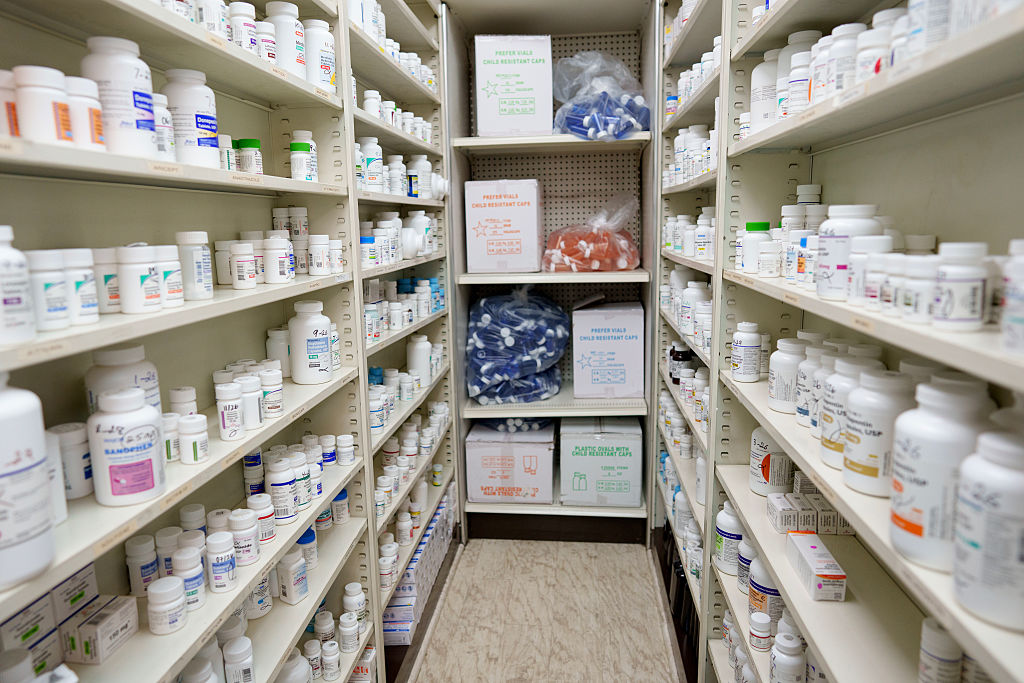
Here are some of the facts that we have stumbled upon in the last few years. About 90% of the drugs Americans take are generics. The active pharmaceutical ingredients (APIs) in those drugs – the molecules that actually do the work, if you will – are overwhelmingly manufactured in or are dependent upon China. And for generic antibiotics roughly 90% of API supply originates in or flows through Chinese manufacturing. For Heparin, a blood thinner I have frequently used over the years, essentially all global processing happens in China. All of it.
That’s not a trade policy problem. That’s a medical readiness problem and it’s a national security problem. And in in a conflict scenario or even a targeted export restriction, Americans are going to die because of this.
I want this committee to understand this hearing is not about the supply chain uh vulnerabilities. We’ve already accepted how serious those are. It’s about where China’s going next. China is executing a deliberate patient strategy to move up the pharmaceutical value chain. In 2020, Chinese communists were involved in the virtually 0% in 2020 of major global drug licensing deals. Today, they’re involved nearly half. In 2014, China ran fewer than 2,000 clinical trials. In 2023, they ran over 11,000. As a physician who knows how long it takes to build genuine clinical trial infrastructure, those numbers don’t happen by accident. They happen by design. And that’s how the CCP is working. They’ve done this with rare earths, solar, energy, batteries, electric vehicles, all these critical sectors. They dominate and they subsidize and they move up the supply chain until they own the whole stack.
China’s goal is not to be a supplier to our pharma companies. Their goal is to replace our pharma companies. And based on the trajectory we’re on, they’re well-positioned to do just exactly that. As someone who spent his career in both medicine and in military service, I can tell you this kind of vulnerability does not announce itself until it’s too late. We don’t find out we have a supply chain problem when everything is fine; we find out when we’re in a crisis and the shelves are empty.
You can watch the entire hearing here.