Heavy Equipment Hydraulic Optimization and Operator Assistance Systems
Wacker Neuson expands compact construction equipment capabilities by integrating digital hydraulic controls and automated driver aids across material handling and earthmoving machinery. www.wackerneuson.co.uk The ongoing optimization of construction workflows centers on combining electrohydraulic control architectures with standardized digital interfaces to increase efficiency in earthmoving, infrastructure development, and municipal civil engineering. Through the introduction of the EW135 wheeled excavator alongside the WL750p and WL950p wheel loaders, heavy machinery engineering shifts focus toward closed-loop operator assistance and reduced hydraulic energy loss. Electrohydraulic Control and Standardized Attachment Interfaces The EW135 wheeled excavator expands medium-tonnage fleet capabilities by replacing traditional mechanical linkages with an electrohydraulic pilot control system. This system allows operators to store tailored control profiles for specific implements and tasks, regulating hydraulic flow and pressure precisely at the tool interface. By incorporating Machines in Construction 4.0 (MiC 4.0) bus standards, the machine standardizes data communication between the carrier and diverse hydraulic attachments, minimizing setup delays and configuration mismatches on site. Mechanical stability and lift performance are addressed via structural architecture. The excavator employs a fixed articulated boom configuration without a swing console, eliminating mechanical play and torsional yield points common to pivot systems. This direct mounting minimizes pressure drop across the main control block and directs maximum hydraulic power to the boom cylinders, increasing vertical lifting capacity during trench shoring and pipe-laying applications. On-site spatial safety is managed through sensor integration. An Active Working Signal alerts nearby personnel to operational status, while automatic braking routines engage when hazardous proximity conditions are registered. The machine incorporates a 10-inch human-machine interface coupled to an overload warning system, displaying live load charts, side-view feeds, and rear cameras to maintain 360-degree situational awareness across travel speeds reaching 35 km/h. Load-Sensing Hydraulics and Continuous Traction Drives In bulk material handling and logistics, the WL750p and WL950p wheel loaders address hydraulic power loss through variable displacement load-sensing pumps coupled to post-compensated flow-sharing valves. This hydraulic configuration decouples flow delivery from load pressure, allowing concurrent boom elevation and bucket tilt cycles without speed degradation or pressure drops across work circuits. Tractive output is delivered via the Power Drive continuous hydrostatic transmission, which supplies uninterrupted drawbar pull up to 40 km/h without mechanical gear shifts. Automated assistance systems reduce operator fatigue during repetitive cycles, utilizing automated bucket repositioning routines, programmable lift height limiters, and integrated loading assistants that meter bucket fill factors. Operator inputs are consolidated via a jog dial and multi-function joystick interface, isolating primary control channels within an ergonomic cabin layout. According to Fred Cordes, Managing Director of Wacker Neuson Sales Germany, machine design strategies increasingly prioritize automated assistance systems that mitigate operational errors while maintaining continuous output across varying site constraints. Additional Context This section details technical specifications and competitive benchmarking not included in the original product announcement. The mid-size wheeled excavator segment (10 to 15 metric tons) benchmarks heavily against established platforms such as the Liebherr A 913 Compact and the Volvo EWR130E. A key technical divergence is boom mounting: standard compact excavators frequently retain swing consoles to facilitate tight urban excavation along structural walls, which introduces mechanical deflection and limits safe lifting limits over the front. By utilizing a fixed articulated boom directly pinned to the upper frame, the EW135 sacrifices side-wall offset reach in favor of lifting capacities and structural rigidity comparable to standard 14-ton mono-boom crawler architectures. In the mid-size wheel loader category, hydrostatic transmissions operating up to 40 km/h match standard performance thresholds established by competitors such as the Kramer 8145 and the Volvo L45H. The inclusion of flow-sharing load-sensing hydraulics directly addresses parasitic power draw during high-load aggregate rehandling, where open-center hydraulic architectures often cause bucket stall during simultaneous steering and lifting maneuvers. Furthermore, standardizing MiC 4.0 communication provides plug-and-play CAN-bus interoperability for smart attachments, an open industry protocol designed to replace proprietary hydraulic tool-recognition system
 machineryasia
Wacker Neuson expands compact construction equipment capabilities by integrating digital hydraulic controls and automated driver aids across material handling and earthmoving machinery.
www.wackerneuson.co.uk
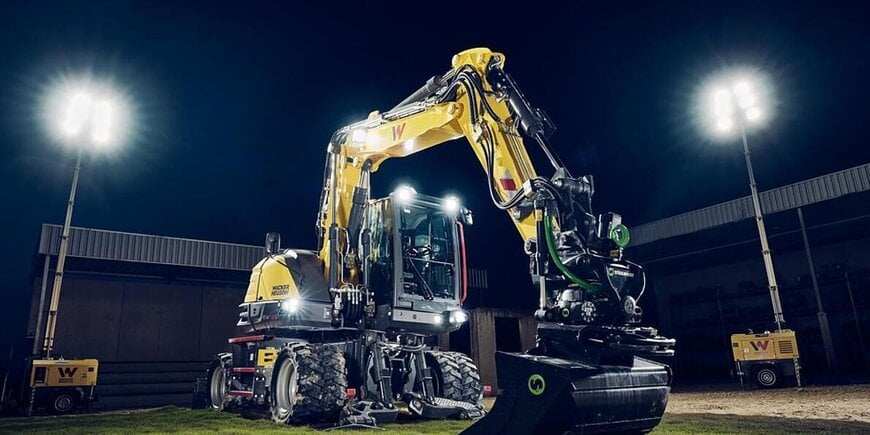
The ongoing optimization of construction workflows centers on combining electrohydraulic control architectures with standardized digital interfaces to increase efficiency in earthmoving, infrastructure development, and municipal civil engineering. Through the introduction of the EW135 wheeled excavator alongside the WL750p and WL950p wheel loaders, heavy machinery engineering shifts focus toward closed-loop operator assistance and reduced hydraulic energy loss.
Electrohydraulic Control and Standardized Attachment Interfaces
The EW135 wheeled excavator expands medium-tonnage fleet capabilities by replacing traditional mechanical linkages with an electrohydraulic pilot control system. This system allows operators to store tailored control profiles for specific implements and tasks, regulating hydraulic flow and pressure precisely at the tool interface. By incorporating Machines in Construction 4.0 (MiC 4.0) bus standards, the machine standardizes data communication between the carrier and diverse hydraulic attachments, minimizing setup delays and configuration mismatches on site.
Mechanical stability and lift performance are addressed via structural architecture. The excavator employs a fixed articulated boom configuration without a swing console, eliminating mechanical play and torsional yield points common to pivot systems. This direct mounting minimizes pressure drop across the main control block and directs maximum hydraulic power to the boom cylinders, increasing vertical lifting capacity during trench shoring and pipe-laying applications.
On-site spatial safety is managed through sensor integration. An Active Working Signal alerts nearby personnel to operational status, while automatic braking routines engage when hazardous proximity conditions are registered. The machine incorporates a 10-inch human-machine interface coupled to an overload warning system, displaying live load charts, side-view feeds, and rear cameras to maintain 360-degree situational awareness across travel speeds reaching 35 km/h.
Load-Sensing Hydraulics and Continuous Traction Drives
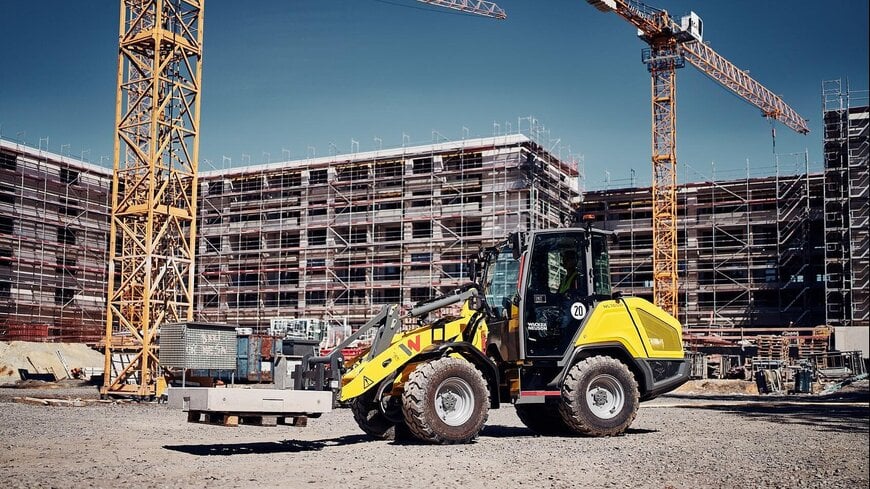
In bulk material handling and logistics, the WL750p and WL950p wheel loaders address hydraulic power loss through variable displacement load-sensing pumps coupled to post-compensated flow-sharing valves. This hydraulic configuration decouples flow delivery from load pressure, allowing concurrent boom elevation and bucket tilt cycles without speed degradation or pressure drops across work circuits.
Tractive output is delivered via the Power Drive continuous hydrostatic transmission, which supplies uninterrupted drawbar pull up to 40 km/h without mechanical gear shifts. Automated assistance systems reduce operator fatigue during repetitive cycles, utilizing automated bucket repositioning routines, programmable lift height limiters, and integrated loading assistants that meter bucket fill factors. Operator inputs are consolidated via a jog dial and multi-function joystick interface, isolating primary control channels within an ergonomic cabin layout.
According to Fred Cordes, Managing Director of Wacker Neuson Sales Germany, machine design strategies increasingly prioritize automated assistance systems that mitigate operational errors while maintaining continuous output across varying site constraints.
Additional Context
This section details technical specifications and competitive benchmarking not included in the original product announcement.
The mid-size wheeled excavator segment (10 to 15 metric tons) benchmarks heavily against established platforms such as the Liebherr A 913 Compact and the Volvo EWR130E. A key technical divergence is boom mounting: standard compact excavators frequently retain swing consoles to facilitate tight urban excavation along structural walls, which introduces mechanical deflection and limits safe lifting limits over the front. By utilizing a fixed articulated boom directly pinned to the upper frame, the EW135 sacrifices side-wall offset reach in favor of lifting capacities and structural rigidity comparable to standard 14-ton mono-boom crawler architectures.
In the mid-size wheel loader category, hydrostatic transmissions operating up to 40 km/h match standard performance thresholds established by competitors such as the Kramer 8145 and the Volvo L45H. The inclusion of flow-sharing load-sensing hydraulics directly addresses parasitic power draw during high-load aggregate rehandling, where open-center hydraulic architectures often cause bucket stall during simultaneous steering and lifting maneuvers. Furthermore, standardizing MiC 4.0 communication provides plug-and-play CAN-bus interoperability for smart attachments, an open industry protocol designed to replace proprietary hydraulic tool-recognition systems.
Edited by Evgeny Churilov, Induportals Media - Adapted by AI.
www.wackerneuson.co.uk
Powered by
Induportals Media Publishing