Fibre cranes improve uptime in construction projects
Liebherr’s Fibre technology is deployed across global construction sites to reduce downtime, improve repairability, and increase lifting efficiency. www.liebherr.com Tower cranes are critical assets in construction, infrastructure, and industrial projects, where continuous lifting operations directly influence project timelines and cost efficiency. One of the main operational challenges is downtime linked to rope damage, inspection requirements, and replacement procedures. In conventional systems, steel ropes must often be fully replaced after damage, requiring several hours of installation work and typically resulting in up to a full day of downtime. This not only interrupts site operations but also increases maintenance costs and spare part requirements. To overcome these limitations, Liebherr developed Fibre crane technology, integrating high-performance fibre ropes with optimised crane design. The objective was to enhance uptime, simplify maintenance processes, and improve lifting efficiency while maintaining operational reliability across diverse site conditions. Technical solution and implementation The Fibre solution replaces traditional steel ropes with advanced fibre ropes engineered for durability, flexibility, and reduced weight. The system is designed not only as a material substitution but as a complete operational improvement, enabling new maintenance and repair approaches. Since its introduction to the market, Fibre technology has moved from a development concept to a widely deployed solution, with nearly 400 cranes operating globally. These cranes are used across a broad range of applications, including urban construction, bridge building, industrial plant installation, and maritime infrastructure projects. Projects in Europe, South America, and the Caribbean demonstrate the scalability of the solution. Fibre cranes are used in confined urban environments, large-scale industrial construction such as steel plants, and coastal regions where resistance to corrosion is essential. An important aspect of implementation is system flexibility. Cranes equipped with Fibre technology can be converted back to steel rope and vice versa, allowing operators to adopt the technology gradually without compromising existing fleet strategies. Selection rationale: Maintenance efficiency and performance The primary reason for adopting Fibre technology lies in its ability to significantly reduce downtime through improved repairability. Unlike steel ropes, which typically require full replacement after damage, fibre ropes can often be repaired directly on site using optimised stitching methods and specialised materials. This repair capability is complemented by the option to shorten the rope, extending its usable life and avoiding unnecessary replacements. As a result, maintenance interventions become faster and less resource-intensive. In addition to maintenance advantages, the fibre rope contributes to improved crane performance. Its lower weight simplifies handling and installation, while also enabling higher load capacities. Compared to conventional systems, load capacity increases of up to 40% can be achieved, supporting more efficient lifting operations. The material properties also improve resilience under real site conditions. Fibre ropes are less susceptible to corrosion, making them suitable for maritime environments, and they demonstrate better tolerance to typical site hazards such as contact with concrete edges. Results: Quantifiable improvements in uptime and lifecycle Operational data from cranes in service highlights measurable gains in maintenance efficiency and availability. On-site repair rates have increased significantly, rising from around 50% to approximately 80%. When combined with rope shortening, up to 90% of rope damage cases can now be resolved directly on site. The failure rate of fibre ropes remains below 2%, contributing to a level of uptime that is not achievable with traditional steel rope systems. This reduction in unexpected failures directly supports project continuity and reduces operational risk. Another key improvement is the extension of service life to up to 14 years, covering both operational use and storage. This longer lifecycle enhances asset utilisation and provides greater investment security for crane owners and rental companies. By eliminating the need for frequent rope replacements and reducing downtime, the solution also lowers maintenance costs and minimises the need for spare parts inventory. Operational impact across global projects The deployment of Fibre cranes across multiple regions confirms their suitability for a wide range of applications. In infrastructure projects such as bridge construction, the technology supports precise and continuous lifting operations. In industrial environments, including steel plant construction, it enables efficient handling of heavy loads within constrained spaces. Urban construction projects benefit from imp
 machineryasia
Liebherr’s Fibre technology is deployed across global construction sites to reduce downtime, improve repairability, and increase lifting efficiency.
www.liebherr.com
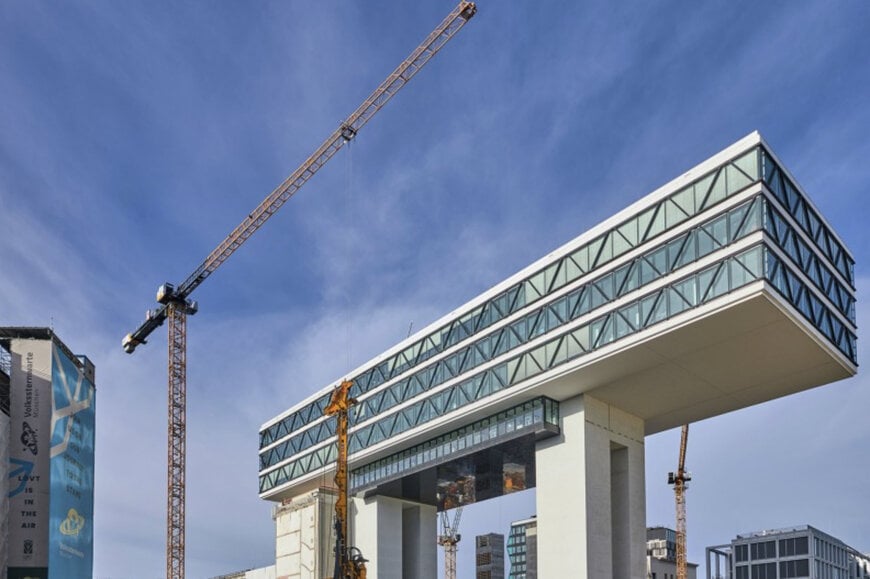
Tower cranes are critical assets in construction, infrastructure, and industrial projects, where continuous lifting operations directly influence project timelines and cost efficiency. One of the main operational challenges is downtime linked to rope damage, inspection requirements, and replacement procedures.
In conventional systems, steel ropes must often be fully replaced after damage, requiring several hours of installation work and typically resulting in up to a full day of downtime. This not only interrupts site operations but also increases maintenance costs and spare part requirements.
To overcome these limitations, Liebherr developed Fibre crane technology, integrating high-performance fibre ropes with optimised crane design. The objective was to enhance uptime, simplify maintenance processes, and improve lifting efficiency while maintaining operational reliability across diverse site conditions.
Technical solution and implementation
The Fibre solution replaces traditional steel ropes with advanced fibre ropes engineered for durability, flexibility, and reduced weight. The system is designed not only as a material substitution but as a complete operational improvement, enabling new maintenance and repair approaches.
Since its introduction to the market, Fibre technology has moved from a development concept to a widely deployed solution, with nearly 400 cranes operating globally. These cranes are used across a broad range of applications, including urban construction, bridge building, industrial plant installation, and maritime infrastructure projects.
Projects in Europe, South America, and the Caribbean demonstrate the scalability of the solution. Fibre cranes are used in confined urban environments, large-scale industrial construction such as steel plants, and coastal regions where resistance to corrosion is essential.
An important aspect of implementation is system flexibility. Cranes equipped with Fibre technology can be converted back to steel rope and vice versa, allowing operators to adopt the technology gradually without compromising existing fleet strategies.
Selection rationale: Maintenance efficiency and performance
The primary reason for adopting Fibre technology lies in its ability to significantly reduce downtime through improved repairability. Unlike steel ropes, which typically require full replacement after damage, fibre ropes can often be repaired directly on site using optimised stitching methods and specialised materials.
This repair capability is complemented by the option to shorten the rope, extending its usable life and avoiding unnecessary replacements. As a result, maintenance interventions become faster and less resource-intensive.
In addition to maintenance advantages, the fibre rope contributes to improved crane performance. Its lower weight simplifies handling and installation, while also enabling higher load capacities. Compared to conventional systems, load capacity increases of up to 40% can be achieved, supporting more efficient lifting operations.
The material properties also improve resilience under real site conditions. Fibre ropes are less susceptible to corrosion, making them suitable for maritime environments, and they demonstrate better tolerance to typical site hazards such as contact with concrete edges.
Results: Quantifiable improvements in uptime and lifecycle
Operational data from cranes in service highlights measurable gains in maintenance efficiency and availability. On-site repair rates have increased significantly, rising from around 50% to approximately 80%. When combined with rope shortening, up to 90% of rope damage cases can now be resolved directly on site.
The failure rate of fibre ropes remains below 2%, contributing to a level of uptime that is not achievable with traditional steel rope systems. This reduction in unexpected failures directly supports project continuity and reduces operational risk.
Another key improvement is the extension of service life to up to 14 years, covering both operational use and storage. This longer lifecycle enhances asset utilisation and provides greater investment security for crane owners and rental companies.
By eliminating the need for frequent rope replacements and reducing downtime, the solution also lowers maintenance costs and minimises the need for spare parts inventory.
Operational impact across global projects
The deployment of Fibre cranes across multiple regions confirms their suitability for a wide range of applications. In infrastructure projects such as bridge construction, the technology supports precise and continuous lifting operations. In industrial environments, including steel plant construction, it enables efficient handling of heavy loads within constrained spaces.
Urban construction projects benefit from improved handling and reduced maintenance interruptions, while maritime applications leverage the corrosion resistance of fibre ropes. This versatility demonstrates that the technology is not limited to specific niches but can be applied across the broader construction ecosystem.
Feedback from operators and rental companies further indicates a shift toward wider adoption, with several organisations progressively converting their fleets to Fibre-based systems in response to the operational benefits achieved.
Conclusion
Fibre crane technology represents a practical advancement in lifting systems by addressing one of the most critical challenges in construction operations: downtime. Through improved repairability, extended service life, and enhanced lifting performance, the solution enables more efficient and reliable crane operations.
Its successful deployment across global projects and varied environments demonstrates that Fibre technology is evolving from an innovation into a standard solution for modern tower crane applications.
Edited by an industrial journalist Sucithra Mani with AI assistance.
www.liebherr.com
Powered by
Induportals Media Publishing