JCB Introduces DualTech VT and SS670 Transmissions
JCB Powertrain expands OEM powertrain portfolio with new transmission technologies showcased at Conexpo 2026 in Las Vegas. www.jcb.com JCB Powertrain has revealed two new transmission technologies aimed at OEM applications, broadening its powertrain solutions for off-highway and construction machinery. The announcements, timed with CONEXPO-CON/AGG 2026 — North America’s largest construction trade show in Las Vegas from March 3–7, 2026 — position the company’s evolving drivetrain offerings for enhanced productivity and efficiency across diverse machine types. Integrated Powertrain Solutions for OEMs The central highlight of JCB Powertrain’s showcase is a new derivative of the DualTech VT transmission, engineered to combine hydrostatic and powershift drive modes within a single unit. DualTech VT retains hydrostatic drive up to 25 kph, enabling precise low-speed control for yard work, loading, and handling, and transitions to a direct mechanical drive for efficient travel up to 40 kph — making it suited to machines requiring both low-speed maneuverability and higher-speed capability. This inline layout, adapted from JCB’s market-leading variable transmission platform, is optimized for traditional wheeled machine architectures. Alongside DualTech VT, JCB introduced the SS670 Synchro-Shuttle transmission as the next generation of its Synchro-Shuttle design. The SS670 replaces legacy models (SS600, SS700, SS750) and incorporates enhancements such as an updated W300 torque converter and newer synchronizer technology. These changes aim to improve shift quality and reduce churning losses, supporting simpler and more cost-effective driveline configurations for a range of off-highway applications. Mechanisms and Performance Attributes DualTech VT’s dual-mode operation leverages hydrostatic drive for controlled operation in the low range and a seamless engagement of mechanical drive for higher-speed travel, effectively merging two drivetrain paradigms into one unit. Integration of Spring Applied Hydraulic Retract (SAHR) and cable park brake options further enhances driveline package optimization for OEM integration. The SS670’s architectural refinements, rooted in decades of in-house transmission development at JCB’s UK facilities, focus on efficiency and durability. Its mechanical layout supports higher volume production while delivering performance improvements over its predecessors. Applications and Use Cases JCB Powertrain positions both transmission technologies for a broad set of OEM machine applications. DualTech VT is especially suitable where low-speed precision handling — such as loading and material placement — must be combined with more efficient roading capability without separate driveline systems. The SS670 is aimed at traditional off-highway vehicles including site dumpers, backhoe loaders, and rough-terrain forklifts, where straightforward mechanical transmissions are preferred. These technologies join JCB’s existing offerings, including Powershift (PS900) and hydrostatic (TG172) options, as part of a holistic drivetrain ecosystem that spans engines, axles, and transmission components for OEM powertrain packages covering construction, agriculture, and municipal equipment. Strategic Implications By making advanced powertrain components available to third-party OEMs, JCB Powertrain aligns with broader industry trends toward modular and integrated drivetrain solutions, where customizable powertrain configurations can enable manufacturers to differentiate end-product performance — for example, in efficiency, control, or serviceability — without investing in in-house transmission development. Competitive Context While similar dual-mode transmissions exist in the off-highway domain, JCB’s DualTech VT aims to balance the benefits of hydrostatic and mechanical drives within a compact architecture suited to conventional wheeled platforms. Objective benchmarks, such as transition speed thresholds (25 kph hydrostatic to 40 kph mechanical) and brake integration options, offer measurable criteria for comparison with other hybrid transmission systems. Outlook at CONEXPO-CON/AGG 2026 JCB’s showcase at CONEXPO-CON/AGG 2026 underscores the company’s strategic emphasis on powertrain innovation as a differentiator in the OEM supply chain. With a technology portfolio that spans traditional diesel engines to hydrogen combustion engines and diversified transmission systems, the company anticipates broader adoption of these solutions across construction and material-handling machinery platforms. www.jcb.com Powered by Induportals Media Publishing
 machineryasia
JCB Powertrain expands OEM powertrain portfolio with new transmission technologies showcased at Conexpo 2026 in Las Vegas.
www.jcb.com
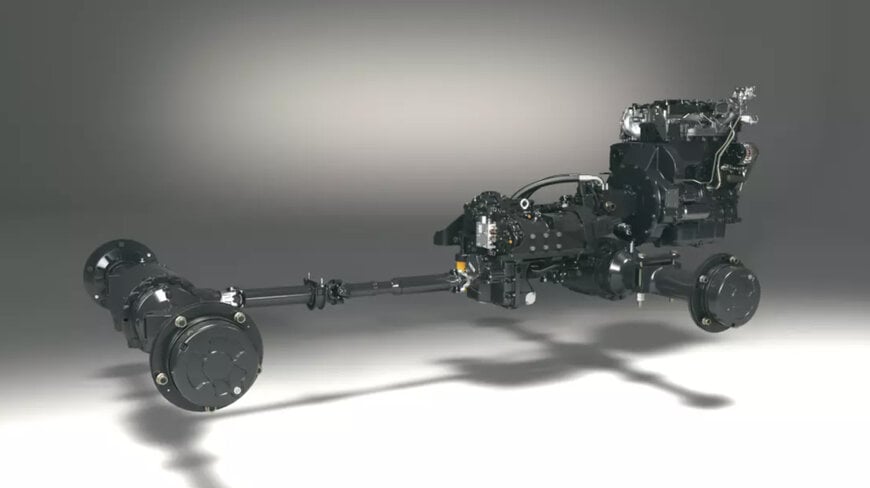
JCB Powertrain has revealed two new transmission technologies aimed at OEM applications, broadening its powertrain solutions for off-highway and construction machinery. The announcements, timed with CONEXPO-CON/AGG 2026 — North America’s largest construction trade show in Las Vegas from March 3–7, 2026 — position the company’s evolving drivetrain offerings for enhanced productivity and efficiency across diverse machine types.
Integrated Powertrain Solutions for OEMs
The central highlight of JCB Powertrain’s showcase is a new derivative of the DualTech VT transmission, engineered to combine hydrostatic and powershift drive modes within a single unit. DualTech VT retains hydrostatic drive up to 25 kph, enabling precise low-speed control for yard work, loading, and handling, and transitions to a direct mechanical drive for efficient travel up to 40 kph — making it suited to machines requiring both low-speed maneuverability and higher-speed capability. This inline layout, adapted from JCB’s market-leading variable transmission platform, is optimized for traditional wheeled machine architectures.
Alongside DualTech VT, JCB introduced the SS670 Synchro-Shuttle transmission as the next generation of its Synchro-Shuttle design. The SS670 replaces legacy models (SS600, SS700, SS750) and incorporates enhancements such as an updated W300 torque converter and newer synchronizer technology. These changes aim to improve shift quality and reduce churning losses, supporting simpler and more cost-effective driveline configurations for a range of off-highway applications.
Mechanisms and Performance Attributes
DualTech VT’s dual-mode operation leverages hydrostatic drive for controlled operation in the low range and a seamless engagement of mechanical drive for higher-speed travel, effectively merging two drivetrain paradigms into one unit. Integration of Spring Applied Hydraulic Retract (SAHR) and cable park brake options further enhances driveline package optimization for OEM integration.
The SS670’s architectural refinements, rooted in decades of in-house transmission development at JCB’s UK facilities, focus on efficiency and durability. Its mechanical layout supports higher volume production while delivering performance improvements over its predecessors.
Applications and Use Cases
JCB Powertrain positions both transmission technologies for a broad set of OEM machine applications. DualTech VT is especially suitable where low-speed precision handling — such as loading and material placement — must be combined with more efficient roading capability without separate driveline systems. The SS670 is aimed at traditional off-highway vehicles including site dumpers, backhoe loaders, and rough-terrain forklifts, where straightforward mechanical transmissions are preferred.
These technologies join JCB’s existing offerings, including Powershift (PS900) and hydrostatic (TG172) options, as part of a holistic drivetrain ecosystem that spans engines, axles, and transmission components for OEM powertrain packages covering construction, agriculture, and municipal equipment.
Strategic Implications
By making advanced powertrain components available to third-party OEMs, JCB Powertrain aligns with broader industry trends toward modular and integrated drivetrain solutions, where customizable powertrain configurations can enable manufacturers to differentiate end-product performance — for example, in efficiency, control, or serviceability — without investing in in-house transmission development.
Competitive Context
While similar dual-mode transmissions exist in the off-highway domain, JCB’s DualTech VT aims to balance the benefits of hydrostatic and mechanical drives within a compact architecture suited to conventional wheeled platforms. Objective benchmarks, such as transition speed thresholds (25 kph hydrostatic to 40 kph mechanical) and brake integration options, offer measurable criteria for comparison with other hybrid transmission systems.
Outlook at CONEXPO-CON/AGG 2026
JCB’s showcase at CONEXPO-CON/AGG 2026 underscores the company’s strategic emphasis on powertrain innovation as a differentiator in the OEM supply chain. With a technology portfolio that spans traditional diesel engines to hydrogen combustion engines and diversified transmission systems, the company anticipates broader adoption of these solutions across construction and material-handling machinery platforms.
www.jcb.com
Powered by
Induportals Media Publishing