Electric Material Handler for Industrial Bulk Operations
Liebherr presented the LH 60 M Industry E electric material handler at CONEXPO-CON/AGG 2026 for emission-free material handling in recycling, timber, port, and waste industries. www.liebherr.com Liebherr introduced the LH 60 M Industry E, an electrically powered material handler designed for heavy-duty industrial material handling. The machine integrates an electric drive system, hydraulic energy recovery, and modular attachments to deliver diesel-equivalent handling performance while enabling low-noise, emission-free operation. Presentation at CONEXPO-CON/AGG 2026 Liebherr presented the LH 60 M Industry E at CONEXPO-CON/AGG (March 3 - 7 2026 ), held in Las Vegas, United States, where the company demonstrated developments in electric heavy equipment for industrial applications. The machine expands Liebherr’s portfolio of electric material handling equipment designed for environments where reduced noise emissions and elimination of exhaust gases are operational requirements. Typical sectors include scrap processing, port logistics, timber yards, and waste management facilities. With an operating weight between 56.5 and 65 tonnes, the LH 60 M Industry E targets heavy-duty bulk material handling operations where machines operate continuously and require high lifting capacity and reach. Electric Drive System and Energy Recovery The LH 60 M Industry E uses a 180 kW electric motor to power the main working movements, including lifting, slewing, and boom operation. A secondary 15 kW electric motor supplies auxiliary systems, allowing energy consumption to be distributed between primary and support functions. To improve energy efficiency, the system integrates Liebherr’s Energy Recovery Cylinder (ERC) technology. The system captures hydraulic energy generated during boom lowering and other load cycles and returns it to the hydraulic system. Combined with the electric drive architecture, the machine achieves a total system output of 334 kW, enabling working speeds comparable to diesel-powered material handlers. This configuration allows the electric machine to deliver similar productivity levels to conventional combustion-engine machines while operating without direct emissions. Frequency Converter and Power Supply Integration The drive system uses frequency converter technology to regulate motor speed according to operational demand. This allows the LH 60 M Industry E to adapt to different industrial power supply networks. Controlled motor startup through the converter eliminates high inrush current peaks, reducing electrical stress on the power infrastructure and limiting mechanical load on hydraulic components. This contributes to smoother machine operation and reduced wear. The exhibition machine at CONEXPO-CON/AGG was equipped with a 25-meter trailing cable for power supply. Optional cable systems include self-winding cables with lengths of 50 or 100 meters, enabling flexible machine positioning within large industrial sites. Maintenance and Operating Efficiency Electric drive technology reduces maintenance requirements compared with diesel-powered machines. The LH 60 M Industry E does not require fuel filters, oil filters, or regular engine oil changes, eliminating several routine service tasks. The machine combines electric drive components with robust hydraulic systems designed for extended service intervals. Maintenance accessibility supports faster inspections and servicing, which can reduce machine downtime in high-utilization environments such as recycling plants and port terminals. Reduced mechanical wear and simplified service procedures contribute to lower lifecycle operating costs for operators running equipment in continuous shifts. Attachment Configurations for Multiple Industries The LH 60 M Industry E supports a range of attachments for different material streams. For timber handling, the machine can be equipped with GMH 50 or GMH 80 wood grabs, enabling efficient log and timber loading. For bulk material handling, Liebherr offers GMZ 50 and GMZ 80 bulk material grabs with capacities ranging from 2.0 to 8.0 m³, depending on the configuration. These are used in scrap yards, port terminals, and recycling operations. Additional configurations include multi-tine grabs (GMM 80-4 and GMM 80-5) available in open, semi-closed, and closed designs for handling mixed scrap, recyclables, or industrial waste streams. Electric Material Handling in Industrial Environments Electric material handling equipment is increasingly deployed in industrial facilities where noise reduction and emission-free operation are required. Applications include indoor recycling facilities, urban waste processing sites, and port terminals operating under environmental regulations. By combining electric drive technology, hydraulic energy recovery, and configurable attachments, the Liebherr LH 60 M Industry E enables heavy-duty material handling while maintaining the productivity expected from diesel-powered equipm
 machineryasia
Liebherr presented the LH 60 M Industry E electric material handler at CONEXPO-CON/AGG 2026 for emission-free material handling in recycling, timber, port, and waste industries.
www.liebherr.com
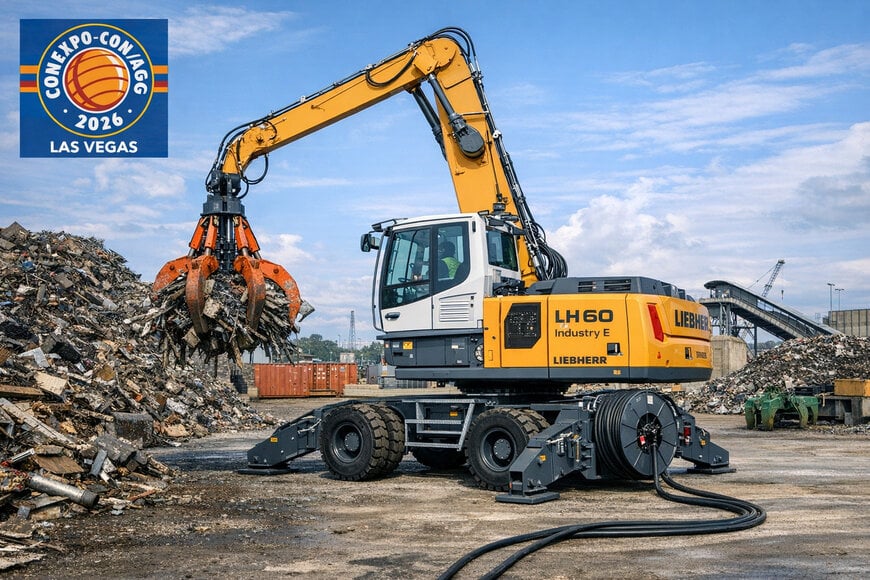
Liebherr introduced the LH 60 M Industry E, an electrically powered material handler designed for heavy-duty industrial material handling. The machine integrates an electric drive system, hydraulic energy recovery, and modular attachments to deliver diesel-equivalent handling performance while enabling low-noise, emission-free operation.
Presentation at CONEXPO-CON/AGG 2026
Liebherr presented the LH 60 M Industry E at CONEXPO-CON/AGG (March 3 - 7 2026 ), held in Las Vegas, United States, where the company demonstrated developments in electric heavy equipment for industrial applications.
The machine expands Liebherr’s portfolio of electric material handling equipment designed for environments where reduced noise emissions and elimination of exhaust gases are operational requirements. Typical sectors include scrap processing, port logistics, timber yards, and waste management facilities.
With an operating weight between 56.5 and 65 tonnes, the LH 60 M Industry E targets heavy-duty bulk material handling operations where machines operate continuously and require high lifting capacity and reach.
Electric Drive System and Energy Recovery
The LH 60 M Industry E uses a 180 kW electric motor to power the main working movements, including lifting, slewing, and boom operation. A secondary 15 kW electric motor supplies auxiliary systems, allowing energy consumption to be distributed between primary and support functions.
To improve energy efficiency, the system integrates Liebherr’s Energy Recovery Cylinder (ERC) technology. The system captures hydraulic energy generated during boom lowering and other load cycles and returns it to the hydraulic system. Combined with the electric drive architecture, the machine achieves a total system output of 334 kW, enabling working speeds comparable to diesel-powered material handlers.
This configuration allows the electric machine to deliver similar productivity levels to conventional combustion-engine machines while operating without direct emissions.
Frequency Converter and Power Supply Integration
The drive system uses frequency converter technology to regulate motor speed according to operational demand. This allows the LH 60 M Industry E to adapt to different industrial power supply networks.
Controlled motor startup through the converter eliminates high inrush current peaks, reducing electrical stress on the power infrastructure and limiting mechanical load on hydraulic components. This contributes to smoother machine operation and reduced wear.
The exhibition machine at CONEXPO-CON/AGG was equipped with a 25-meter trailing cable for power supply. Optional cable systems include self-winding cables with lengths of 50 or 100 meters, enabling flexible machine positioning within large industrial sites.
Maintenance and Operating Efficiency
Electric drive technology reduces maintenance requirements compared with diesel-powered machines. The LH 60 M Industry E does not require fuel filters, oil filters, or regular engine oil changes, eliminating several routine service tasks.
The machine combines electric drive components with robust hydraulic systems designed for extended service intervals. Maintenance accessibility supports faster inspections and servicing, which can reduce machine downtime in high-utilization environments such as recycling plants and port terminals.
Reduced mechanical wear and simplified service procedures contribute to lower lifecycle operating costs for operators running equipment in continuous shifts.
Attachment Configurations for Multiple Industries
The LH 60 M Industry E supports a range of attachments for different material streams.
For timber handling, the machine can be equipped with GMH 50 or GMH 80 wood grabs, enabling efficient log and timber loading.
For bulk material handling, Liebherr offers GMZ 50 and GMZ 80 bulk material grabs with capacities ranging from 2.0 to 8.0 m³, depending on the configuration. These are used in scrap yards, port terminals, and recycling operations.
Additional configurations include multi-tine grabs (GMM 80-4 and GMM 80-5) available in open, semi-closed, and closed designs for handling mixed scrap, recyclables, or industrial waste streams.
Electric Material Handling in Industrial Environments
Electric material handling equipment is increasingly deployed in industrial facilities where noise reduction and emission-free operation are required. Applications include indoor recycling facilities, urban waste processing sites, and port terminals operating under environmental regulations.
By combining electric drive technology, hydraulic energy recovery, and configurable attachments, the Liebherr LH 60 M Industry E enables heavy-duty material handling while maintaining the productivity expected from diesel-powered equipment in industrial bulk handling operations.
www.liebherr.com
Powered by
Induportals Media Publishing