Japan’s Heaviest Lifts Get a Local Route for Mammoet’s Ring Cranes
An MOU between Mammoet Japan and Tokyo Juki creates a local framework to deploy 1,600 t to 6,000 t ring cranes on Japanese energy and industrial projects. Japan’s Heaviest Lifts Get a Local Route for Mammoet’s Ring Cranes published on The HeavyQuip Magazine.
 machineryasia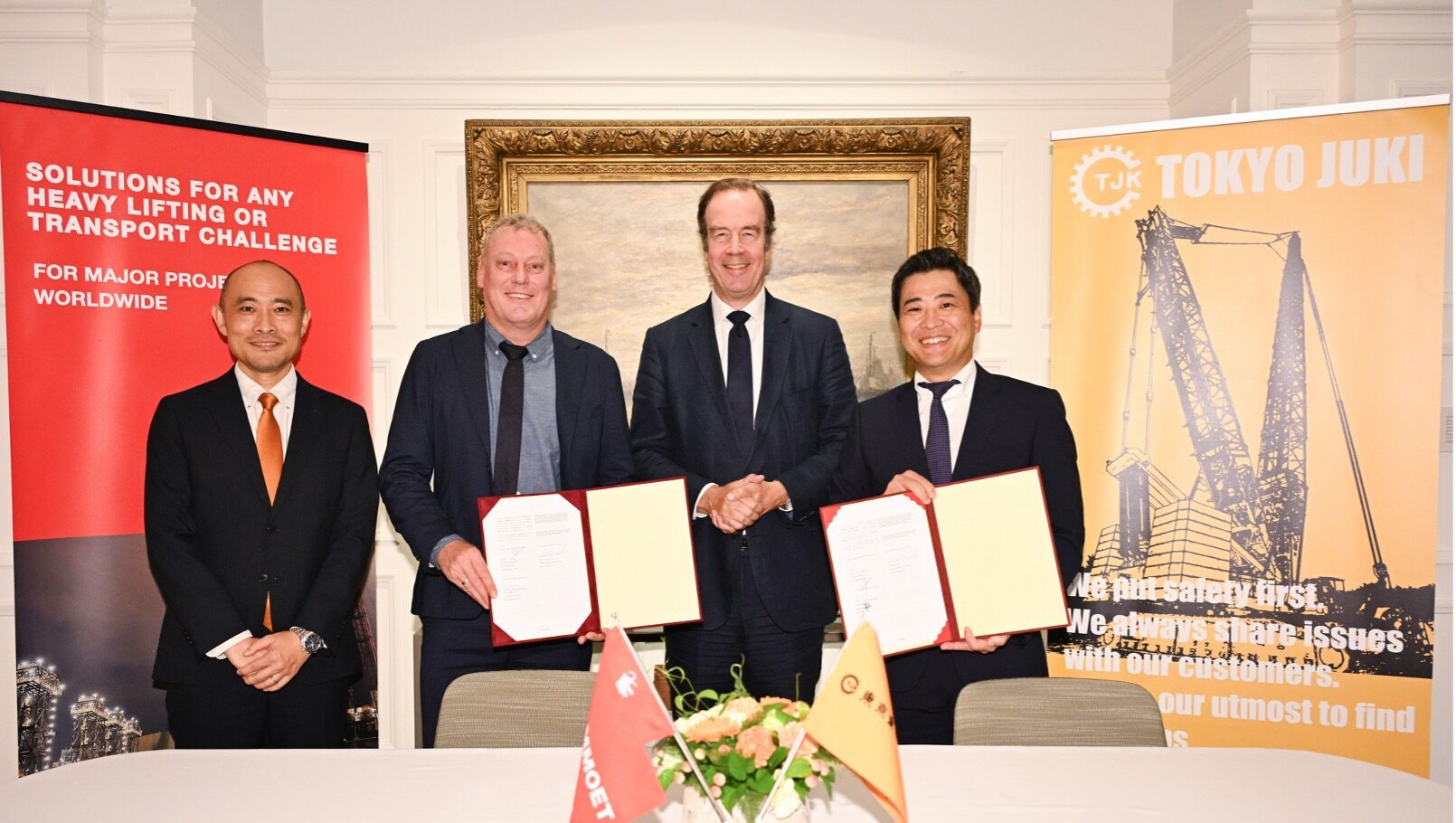
An MOU with domestic crane supplier Tokyo Juki gives Mammoet Japan a way to deploy 1,600 t to 6,000 t ring cranes under Japanese rules, with offshore wind and nuclear in view
As industrial projects move to bigger components and more modular construction, lifting needs in Japan are outgrowing the capacity readily available there. Bringing specialist cranes in from abroad is possible, but it requires extensive local compliance, statutory certification and site expertise.
Mammoet Japan’s answer is a partnership. It has signed a Memorandum of Understanding with Tokyo Juki Co., Ltd., a leading domestic crane supplier, to create a practical framework for deploying Mammoet’s specialist equipment in line with Japanese regulations and site practice.
What ring cranes change
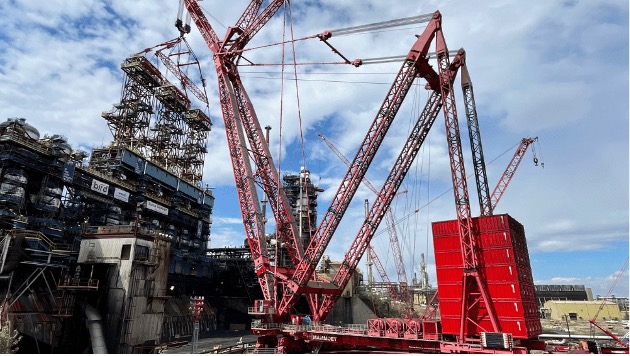
Mammoet’s ring cranes range from 1,600 t to 6,000 t capacity. They lift larger components at greater reach while occupying a relatively small footprint. That opens options across a project, from installing large industrial modules to marshalling, pre-assembling and loading out offshore wind components.
Fewer, larger lifts also mean fewer on-site assembly activities, simpler interfaces and less work at height, which Mammoet says brings more certainty on schedule and total installed cost.
The key, according to the companies, is timing. If this capacity is known during early planning, project owners can consider heavier, more modular construction methods before designs, fabrication strategies and site layouts are fixed. That is when a different lifting approach can save the most money.
Target applications include offshore wind, nuclear construction and maintenance, infrastructure, industrial facilities and the integration or refurbishment of offshore production units.
Two complementary partners
“Japan is preparing for projects that will require greater lifting capacity and new approaches to construction. This cooperation creates a practical route for bringing Mammoet’s specialist equipment and engineering capabilities to Japanese project sites, supported by the local knowledge and resources needed to put them to work.”
Said Yusuke Kakinuma, Representative Director of Mammoet Japan K.K.
Tokyo Juki, founded in 1963, rents a wide range of construction equipment from nine bases across Japan and has recently worked on offshore wind projects at Akita Port and Hibikinada Port.
“We expect this to enable Tokyo Juki to expand into new areas of business involving ultra-heavy lifting, such as offshore wind and nuclear power projects.”
Said Taku Tsuruoka, President of Tokyo Juki.
For Japan’s offshore wind build-out in particular, port-side capacity to handle ever larger turbine components is a known constraint. A local route to ring cranes addresses part of that bottleneck.
Japan’s Heaviest Lifts Get a Local Route for Mammoet’s Ring Cranes published on The HeavyQuip Magazine.