How Jay Wood Industry is Redefining Tradition Through Innovation
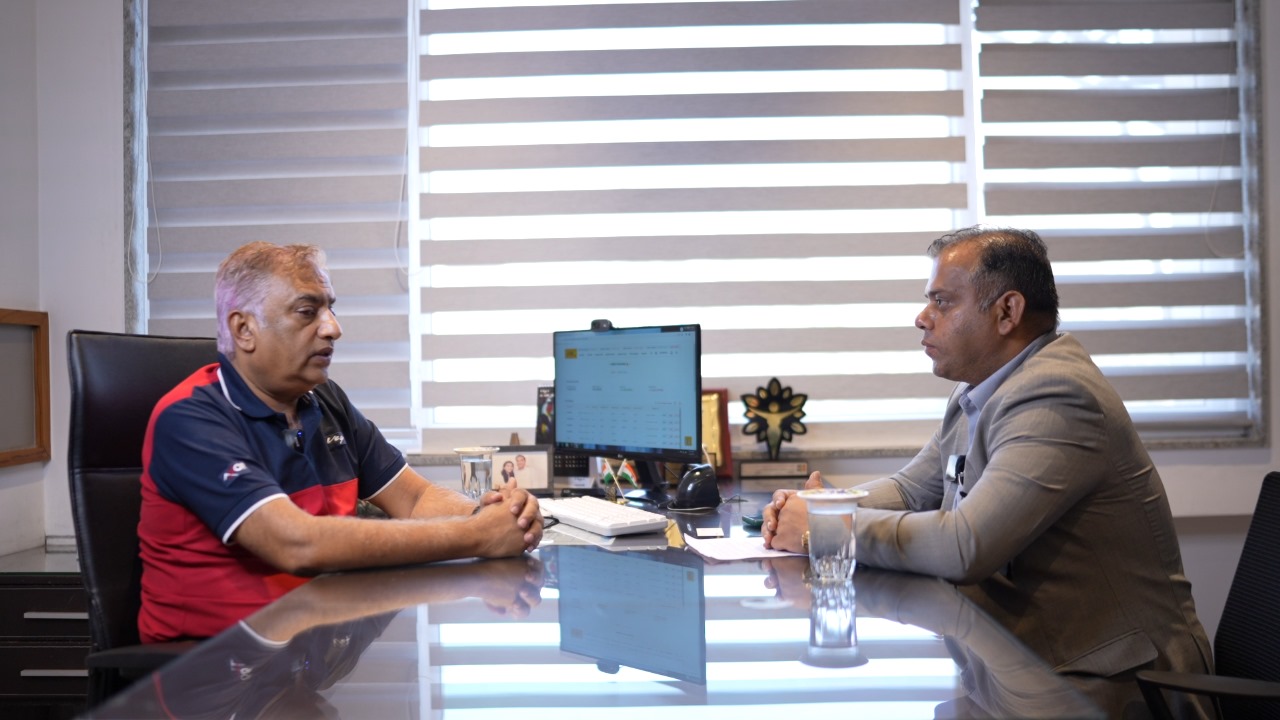
– In an era where manufacturing is often defined by speed, scale, and automation, Jay Wood Industry stands apart by blending heritage craftsmanship with cutting-edge innovation. At the heart of this transformation is Mr. Jay Deepak Shah, a leader who believes that wood is not just a raw material but a living narrative of culture, … The post How Jay Wood Industry is Redefining Tradition Through Innovation appeared first on Machine Insider.
 machineryasia
– In an era where manufacturing is often defined by speed, scale, and automation, Jay Wood Industry stands apart by blending heritage craftsmanship with cutting-edge innovation. At the heart of this transformation is Mr. Jay Deepak Shah, a leader who believes that wood is not just a raw material but a living narrative of culture, sustainability, and design.
From sourcing timber with ecological responsibility to reimagining traditional woodworking through modern technology, Jay Wood Industry has built a reputation that stretches beyond products—it’s about values, people, and a vision for the future.
As India emerges as a global manufacturing hub, Mr. Shah’s approach reflects a new kind of leadership: one that honours tradition, empowers artisans, and invests in sustainability without compromise. His story is not just about building a successful business, but about crafting a legacy that connects roots to the future—where every grain of wood carries a story of innovation, resilience, and purpose.

- What inspired you to enter the wood industry, and how has your personal journey shaped the philosophy of Jay Wood Industry?
When I took over the family business in 2010 as a third-generation entrepreneur, I knew I wasn’t just inheriting a company. I was carrying forward a legacy that began in 1966 with my father’s vision of being the largest Indian manufacturer of quality wooden pallets. What started as a modest enterprise built on trust and craftsmanship has grown into Jay Wood Industry, a name that today stands for innovation, sustainability and reliability in the wooden pallet manufacturing space.
For me, this journey has always been about more than business. I’ve always believed in a larger purpose that goes beyond profit to create meaningful impact through sustainable practices, strong relationships and continuous innovation. The wood industry is traditional in many ways, but it holds incredible potential for transformation, and that challenge has always inspired me.
Since I stepped in, my focus has been on building an organisation that respects its legacy while embracing the future. We brought several firsts to the Indian industry, from setting up the country’s first fully automatic pallet line in 2018 to becoming the first licensed manufacturer and seller of EPAL CP Pallets the following year. These milestones were not just about growth; they marked a shift in mindset from conventional manufacturing to global standards of excellence.
A defining moment for me was when Jay Wood became the first company in India to produce PEFC-certified pallets and achieve self-control rights (level 2). It reinforced our commitment to sustainability and responsible sourcing.

I’ve always tried to blend a global perspective with Indian values. Our philosophy at Jay Wood Industry, “Move the Impossible,” reflects that belief. It’s about pushing boundaries, staying true to our ethics and constantly finding smarter, greener and more efficient ways to serve our customers.
At the heart of everything we do lies one simple truth I’ve learned over the years. When you believe nothing is impossible, even wood can move the world.
- Looking back, what was the turning point that transformed Jay Wood Industry from a business into a brand with purpose?
For me, the real turning point came when we stopped viewing packaging as a product and began seeing it as a responsibility. Over the past decade, the conversation surrounding packaging has undergone a complete transformation. It’s no longer just about cost or convenience. It’s about compliance, climate impact and competitiveness. What was once treated as a backend function is now at the centre of global trade, and that shift reshaped the way we at Jay Wood Industry saw our role in the ecosystem.
When I took over, I knew we had the legacy and craftsmanship of a trusted manufacturer. But I wanted to give it a deeper meaning and build a brand with a purpose that stood for sustainability, innovation and integrity. Our decision to pioneer certified wooden pallets in India was never just a business decision. It was a clear statement of intent. From introducing heat-treatment technology for export compliance to investing in solar-powered production, every milestone has reflected one simple belief — progress should never come at the cost of the planet.
We chose wood consciously. Not just because it performs exceptionally well, but because it represents balance. It’s renewable, repairable and fits naturally into the principles of a circular economy. With PEFC-certified sourcing, every pallet we make is traceable back to responsibly managed forests. That’s something I take great pride in. Knowing that what we create doesn’t just move goods but also moves us closer to a more sustainable future gives real meaning to what we do.

My own learning journey has shaped this transformation too. In 2023, I was selected for the Partnering in Business with Germany programme by the Federal Ministry for Economic Affairs and Climate Action. That experience opened my eyes to how deeply sustainability is built into global business practices. And now, as part of the Stanford Seed Transformation Program (Class of 2026), I’m learning how to scale impact, not just profits, by building organisations that think long-term and lead with empathy.
Today, Jay Wood Industry stands at the intersection of legacy and innovation. It’s where craftsmanship meets conscience. We’re not just solving India’s packaging challenges. We’re shaping the future of eco-friendly logistics. What began as a family business has grown into a brand with purpose, one that truly believes in moving the world responsibly, one pallet at a time.
- How is Jay Wood Industry integrating technology and innovation into a sector that’s often seen as traditional?
The wooden packaging sector has always been seen as a traditional and low-tech space, but I’ve never believed that any industry is beyond reinvention. At Jay Wood Industry, technology isn’t just a support system. It sits at the core of how we drive precision, efficiency and sustainability.
When I took over, one of my priorities was to automate processes that had remained manual for years. We built India’s first fully automated pallet line and introduced advanced machinery for auto corner cutting, auto branding, auto stacking and our signature Chamfering Machine. What once took 12 hours of manual effort now takes just one. This shift allowed us to scale production to over 600,000 pallets a year without increasing our environmental footprint, proving that innovation and sustainability can move together.
For us, innovation goes beyond automation. It’s about building intelligence into everything we do. Every system is designed to deliver precision and consistency, reducing human error and maintaining global-standard quality. Our Taloja plant is fully powered by solar energy, making production efficient and environmentally responsible.
Once operational excellence was in place, we turned to design innovation. Our pallets are engineered for durability, adaptability and repairability. They’re built to serve different industry requirements while remaining strong and reusable. Instead of discarding damaged pallets, we repair and return them to the supply chain, extending their life and reducing waste.
Every Jay Wood pallet is heat-treated to comply with ISPM #15 standards, and our ISO 9001:2015 certification reflects the rigour behind every process. For me, innovation isn’t just about speed. It’s about making things better, smarter and more sustainable.
At Jay Wood Industry, we’re not just adapting to technology. We’re using it to reimagine what’s possible in wood manufacturing. By aligning automation, design and purpose, we’ve transformed a traditional product into a future-ready solution that moves the world responsibly.
- Sustainability is a common word today – but what does it really mean in your day-to-day operations and decisions?
Sustainability for me is not just a trend or a checkbox, but it’s a mindset. It shapes every decision we make, from sourcing materials to designing, producing, and even thinking about waste. Over the years, sustainability has moved from being a nice-to-have to a business imperative. It now defines how Indian manufacturers compete, operate and grow in a global marketplace that values responsibility as much as reliability.
We welcome this shift because it aligns perfectly with our philosophy. For exporters like us, environmentally responsible practices are not just about compliance; they are about credibility. They help us gain access to international markets and build long-term trust across global supply chains. We’ve woven sustainability into every layer of our operations. All our wood comes from PEFC-certified forests in Europe, ensuring traceability and responsible forestry. Our Taloja facility runs entirely on solar power, generating around 97.5 kWh each day — a small but meaningful step toward reducing our carbon footprint.
Sustainability also drives our product design. Our pallets are built for reuse, repair and circularity, extending their lifecycle and ensuring that even at the end of use, they are repurposed into value-added goods instead of being discarded. This approach allows us to contribute to India’s manufacturing growth while staying aligned with global ESG standards.
As India’s first EPAL-certified CP pallet manufacturer, we have learned that sustainable manufacturing is not just the right thing to do; it is the smartest business strategy. It makes us more resilient, relevant and responsible in a world that increasingly values purpose over profit. For me, sustainability is not a department or a policy, it is a way of thinking, a way of building and most importantly, a way of moving forward
- Can you share specific steps your company has taken to ensure ethical sourcing and long-term ecological impact?
At Jay Wood Industry, ethical sourcing and ecological responsibility are not just policies; they guide every decision we make. On the materials side, we are committed to using PEFC-certified wood from responsibly managed forests in Europe, ensuring full traceability while supporting global forest conservation. This certification gives our buyers confidence that the wood they rely on comes from sustainable sources, which is increasingly important in today’s ESG-focused procurement environment.
We chose wood because it combines environmental and operational advantages. It has a lower carbon footprint than many alternatives, is naturally biodegradable, and can be repaired or reused multiple times. These qualities make it ideal for circular economy models, which sit at the heart of our sustainability strategy.
Beyond sourcing, we actively work to extend the lifecycle of our pallets through refurbishment, modular designs, and innovative repair methods. Alongside using renewable energy in our facilities and designing products for durability, this approach ensures that every pallet preserves product integrity while contributing to measurable sustainability goals.
By combining certified materials, energy efficiency, and circular design, we have developed packaging solutions that balance operational excellence with environmental stewardship. This alignment has helped us gain adoption in global markets and positioned Jay Wood Industry as a trusted partner for clients who are building greener, regulation-compliant, and future-ready supply chains.
- Beyond machines and processes, the wood industry relies heavily on human skill. How do you nurture craftsmanship and support your workforce?
I’ve always believed that while automation and machinery boost efficiency, it’s the skills and expertise of our workforce that truly ensure high-quality output. In the wood manufacturing sector, nurturing craftsmanship is essential, and at JWI, we do this through structured training programs, hands-on guidance, and continuous skill development.
Our employees learn to operate automated production lines and specialised equipment such as chamfering and heat-treatment machines while applying quality standards aligned with ISPM-15, EPAL, and ISO 9001:2015 certifications. Beyond technical training, we encourage them to take part in process improvement initiatives and problem-solving discussions, fostering a culture of ownership, collaboration, and innovation.
Health, safety, and well-being are equally important. By combining strict safety protocols with skill-building opportunities, we ensure our teams are not only competent and efficient but also engaged and motivated. This focus on people complements our technological and sustainability efforts, keeping craftsmanship at the heart of every pallet we produce.
- What role do you see Indian manufacturing playing on the global stage, especially in an industry so closely tied to tradition and culture?
I see Indian manufacturing steadily strengthening its position on the global stage. Currently, India holds around 2.8% of the global manufacturing share and is aiming for US$1 trillion in exports by FY2026.[1] Sectors like wood manufacturing, deeply rooted in tradition and craftsmanship, are now combining artisanal expertise with modern technologies, sustainability practices, and international quality standards to meet evolving global expectations.
India’s wooden pallet industry is experiencing strong and sustained growth. The market is projected to grow from USD 935.6 million in 2025 to USD 1,656.5 million by 2032.[2] Demand is rising across FMCG, automotive, pharmaceuticals, chemicals, and agriculture, and India currently ranks among the top three pallet markets in Asia, just behind China and Japan.
Several factors are driving this surge. Industries are increasingly replacing single-use plastics with wooden pallets for their durability, reusability, sustainability, and cost efficiency. Wood’s flexibility allows customisation in size, strength, and design to meet the needs of different sectors. Compliance with environmental and sustainability standards in developed markets has made certified wooden pallets a preferred choice. Rapid industrialisation, expanding e-commerce, and growing demand for efficient logistics, warehousing, and cold-chain infrastructure are further fueling this trend.
The growth of exports, especially in chemicals and pharmaceuticals, has increased the need for standardised, durable pallets that ensure precise storage and safe transportation, reinforcing India’s positive outlook in this segment. By combining traditional skills with innovation, automation, and circular economy practices, Indian manufacturers are positioning themselves as reliable, future-ready partners for global supply chains. This demonstrates that heritage and modernity can coexist to drive competitiveness, sustainability, and international credibility.
- How do you balance preserving heritage with embracing global trends in design and manufacturing?
Balancing heritage with global trends in pallet manufacturing for me means holding on to the hands-on skills and technical expertise needed to produce durable, high-quality wooden pallets while embracing modern efficiencies and sustainability practices. At Jay Wood Industry, our experienced operators and craftsmen ensure precision in assembly, heat treatment, and structural integrity, while advanced technologies like automated cutting, stacking, and chamfering systems improve speed, consistency, and compliance with international standards.
This approach allows us to produce pallets that are strong, reusable, and export-ready, meeting the strict requirements of sectors like pharmaceuticals, chemicals, FMCG, and automotive. By combining traditional manufacturing know-how with automation, certified sourcing, and circular economy principles, we ensure our pallets are not only operationally reliable but also aligned with global sustainability and logistics trends.
- What advice would you give young entrepreneurs who want to build sustainable businesses in traditional sectors?
For young entrepreneurs looking to build sustainable businesses in traditional sectors, I would say the key is to respect legacy while thinking ahead. Traditional industries come with established practices, but sustainability requires reimagining materials, processes, and business models. Start by identifying areas where environmental responsibility can also improve efficiency, whether in energy use, waste reduction, or circular product design.
Invest in technology and automation to scale efficiently without compromising quality, and make sure sustainability is built into the business model from the start, not treated as an afterthought. Certifications and adherence to global standards can boost credibility and open doors to international markets.
Equally important is investing in people. Train and nurture your workforce to embrace new practices while valuing their hands-on expertise. And finally, be patient but persistent. Sustainable transformation may require upfront investment, but the long-term benefits in cost savings, brand trust, and market relevance are well worth it.
- Finally, when you think about the “legacy” of Jay Wood Industry, what do you want it to stand for 50 years from now?
When I think about the legacy of Jay Wood Industry 50 years from now, I want it to be remembered as a pioneering force in sustainable, efficient, and future-ready industrial logistics. Beyond being a leading manufacturer of wooden pallets, I want our legacy to reflect a business that embeds sustainability, circularity, and operational excellence into everything we do – truly creating Pallets of Purpose.
My goal is for Jay Wood Industry to set the benchmark for standardised, reusable, and compliant packaging solutions, showing that environmental responsibility and business efficiency can go hand in hand. By promoting certified pallets, reuse, traceability, and circular models, I hope we can transform industry practices so that sustainability becomes the norm rather than the exception.
I also want our legacy to reflect innovation and adaptability and expanding operations with new manufacturing units, integrating backwards into in-house pallet production, scaling solar-powered facilities, and leveraging automation and data-driven planning. These efforts will ensure the company remains resilient, scalable, and aligned with global best practices while honouring the craftsmanship, expertise, and quality standards that have defined us.
Finally, I aspire for Jay Wood Industry to be remembered as a company that empowered its people, clients, and partners, enabling smoother, more efficient operations across supply chains and demonstrating that long-term profitability and environmental stewardship can coexist. At its core, our legacy is about building a smarter, greener, and circular business that continues to raise the bar for logistics in India and beyond.

The post How Jay Wood Industry is Redefining Tradition Through Innovation appeared first on Machine Insider.