High-Capacity Inclined Vibrating Screens with Variable Elliptical Motion
Metso Corporation expanded its European aggregate processing portfolio by introducing a series of high-capacity inclined screens engineered to optimize secondary and tertiary sorting operations. www.metso.com Achieving precise material classification while optimizing footprint is a critical constraint in aggregate processing plants. Conventional circular motion screens maintain a constant stroke and speed across the entire deck, which often results in uneven material bed depth and compromised separation efficiency. The implementation of variable elliptical motion technology addresses this limitation by actively modifying the acceleration and stroke profile along the screening deck. At the feed end, high-speed motion rapidly thins the incoming material bed to drive immediate throughput. As the material progresses toward the discharge end, the motion transitions to a slower, high-amplitude stroke that increases retention time and ensures precise separation of near-size fractions. Process Optimization and Equipment Integration The mechanical design of these inclined screens allows for a throughput increase of up to 20% within the same structural footprint compared to conventional circular motion alternatives, effectively providing the processing capacity of a 20% larger screen deck. This performance enhancement is specifically configured to match the high-tonnage output of advanced cone crushers, preventing recirculation bottlenecks within the digital supply chain of quarry operations. The structural and maintenance characteristics of the system include: An adjustable installation angle ranging from 18° to 22° to adapt to varying material moisture and density requirements. Compliance with EN1009 safety standards, incorporating optimized deck spacing to facilitate safer and more ergonomic technician access during maintenance interventions. A modular vibrating mechanism utilizing standardized components to shorten replacement cycles and limit unplanned downtime. Configuration options in 2- and 3-deck formats, supported by diagnostic tools and digital monitoring software for real-time performance visibility and predictive maintenance scheduling. The initial series includes the 402, 403, 702, and 703 models, which are manufactured at a dedicated screening center in Oradea, Romania, to optimize regional supply chain logistics and reduce lead times for capital equipment and wear components across Europe. The technology was exhibited at the Hillhead trade show in Buxton, United Kingdom, from June 24 to 26, 2026, where technical specialists demonstrated its operational capabilities within localized aggregate data ecosystems. Additional Context: Technical Specifications and Competitive Benchmarking The evaluation of variable elliptical motion technology against alternative screening methodologies demonstrates distinct operational trade-offs across key performance metrics. Throughput and Stratification Efficiency Variable elliptical motion delivers up to 20% higher throughput relative to standard circular motion within an identical footprint. In comparison, horizontal triple-shaft oval motion provides high stratification capabilities and comparable high throughput, but it requires significantly higher structural mass. Standard inclined circular motion screens remain the baseline industrial standard, though they are highly prone to material blinding under high-moisture or sudden surge-feed conditions. Material Retention Profiles The dynamic kinematics of variable elliptical motion utilize a high-velocity profile at the feed end that smoothly transitions into a high-accuracy, high-retention stroke at the discharge zone. Conversely, horizontal triple-shaft systems maintain a uniform oval stroke across the entire length of the deck. Standard inclined circular motion units exhibit a linear decrease in travel speed as bed depth varies, which inherently reduces fine-cut separation accuracy. Installation Footprints and Power Requirements Variable elliptical motion screens leverage an inclined footprint featuring an 18° to 22° installation angle, which utilizes gravity to assist material travel down the deck. This contrast with horizontal setups (operating at 0° to 5°), which drastically reduce vertical plant height requirements but demand much higher drive power to move material forward mechanically. Standard inclined systems operate on fixed or narrow-range angles that rely heavily on a combination of gravity and a constant mechanical stroke. Maintenance and Drive Kinematics From a mechanical maintenance perspective, variable elliptical systems employ modular dual- or multi-axis eccentric mechanisms equipped with specialized phase-shifting weights to adjust motion dynamically. Horizontal triple-shaft designs require complex triple-shaft gearboxes that necessitate precise mechanical synchronization and high lubrication volumes. Standard circular motion units rely on single-shaft eccentric mechanisms; while mechanical
 machineryasia
Metso Corporation expanded its European aggregate processing portfolio by introducing a series of high-capacity inclined screens engineered to optimize secondary and tertiary sorting operations.
www.metso.com
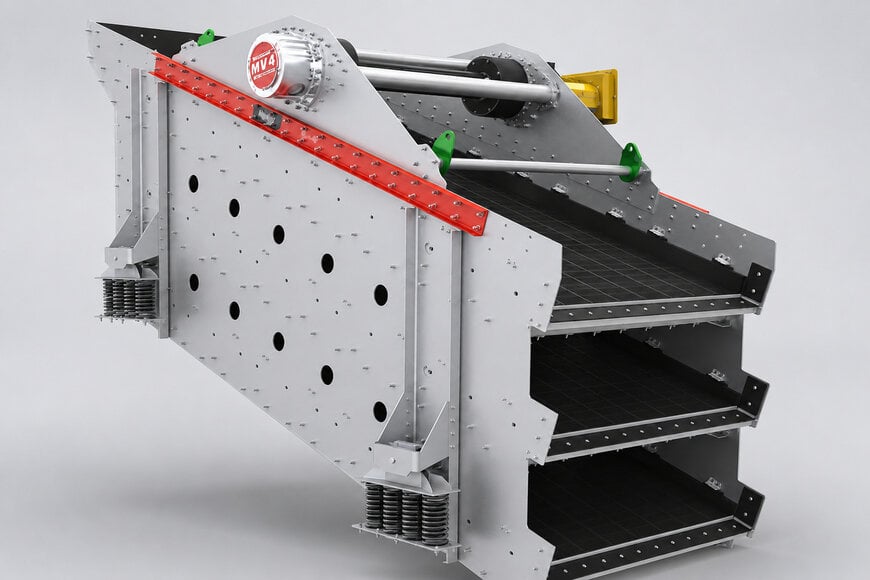
Achieving precise material classification while optimizing footprint is a critical constraint in aggregate processing plants. Conventional circular motion screens maintain a constant stroke and speed across the entire deck, which often results in uneven material bed depth and compromised separation efficiency. The implementation of variable elliptical motion technology addresses this limitation by actively modifying the acceleration and stroke profile along the screening deck. At the feed end, high-speed motion rapidly thins the incoming material bed to drive immediate throughput. As the material progresses toward the discharge end, the motion transitions to a slower, high-amplitude stroke that increases retention time and ensures precise separation of near-size fractions.
Process Optimization and Equipment Integration
The mechanical design of these inclined screens allows for a throughput increase of up to 20% within the same structural footprint compared to conventional circular motion alternatives, effectively providing the processing capacity of a 20% larger screen deck. This performance enhancement is specifically configured to match the high-tonnage output of advanced cone crushers, preventing recirculation bottlenecks within the digital supply chain of quarry operations.
The structural and maintenance characteristics of the system include:
- An adjustable installation angle ranging from 18° to 22° to adapt to varying material moisture and density requirements.
- Compliance with EN1009 safety standards, incorporating optimized deck spacing to facilitate safer and more ergonomic technician access during maintenance interventions.
- A modular vibrating mechanism utilizing standardized components to shorten replacement cycles and limit unplanned downtime.
- Configuration options in 2- and 3-deck formats, supported by diagnostic tools and digital monitoring software for real-time performance visibility and predictive maintenance scheduling.
The initial series includes the 402, 403, 702, and 703 models, which are manufactured at a dedicated screening center in Oradea, Romania, to optimize regional supply chain logistics and reduce lead times for capital equipment and wear components across Europe. The technology was exhibited at the Hillhead trade show in Buxton, United Kingdom, from June 24 to 26, 2026, where technical specialists demonstrated its operational capabilities within localized aggregate data ecosystems.
Additional Context: Technical Specifications and Competitive Benchmarking
The evaluation of variable elliptical motion technology against alternative screening methodologies demonstrates distinct operational trade-offs across key performance metrics.
Throughput and Stratification Efficiency
Variable elliptical motion delivers up to 20% higher throughput relative to standard circular motion within an identical footprint. In comparison, horizontal triple-shaft oval motion provides high stratification capabilities and comparable high throughput, but it requires significantly higher structural mass. Standard inclined circular motion screens remain the baseline industrial standard, though they are highly prone to material blinding under high-moisture or sudden surge-feed conditions.
Material Retention Profiles
The dynamic kinematics of variable elliptical motion utilize a high-velocity profile at the feed end that smoothly transitions into a high-accuracy, high-retention stroke at the discharge zone. Conversely, horizontal triple-shaft systems maintain a uniform oval stroke across the entire length of the deck. Standard inclined circular motion units exhibit a linear decrease in travel speed as bed depth varies, which inherently reduces fine-cut separation accuracy.
Installation Footprints and Power Requirements
Variable elliptical motion screens leverage an inclined footprint featuring an 18° to 22° installation angle, which utilizes gravity to assist material travel down the deck. This contrast with horizontal setups (operating at 0° to 5°), which drastically reduce vertical plant height requirements but demand much higher drive power to move material forward mechanically. Standard inclined systems operate on fixed or narrow-range angles that rely heavily on a combination of gravity and a constant mechanical stroke.
Maintenance and Drive Kinematics
From a mechanical maintenance perspective, variable elliptical systems employ modular dual- or multi-axis eccentric mechanisms equipped with specialized phase-shifting weights to adjust motion dynamically. Horizontal triple-shaft designs require complex triple-shaft gearboxes that necessitate precise mechanical synchronization and high lubrication volumes. Standard circular motion units rely on single-shaft eccentric mechanisms; while mechanically simple, these units lack any capacity for dynamic kinetic adjustments along the screen body.
While horizontal triple-shaft oval motion screens excel in heavy-duty scalping and low-profile installations due to their high g-force capabilities, they typically demand a higher structural weight and complex mechanical synchronization. Conversely, variable elliptical motion utilizes a gravity-assisted inclined deck combined with a varying kinetic stroke. This mechanical arrangement achieves equivalent fine-cut separation accuracy and throughput optimization without the structural weight penalties and severe power requirements typical of horizontal systems.
Edited by Sucithra Mani, Induportals editor – adapted by AI.
www.metso.com
Additional Context: Technical Specifications and Competitive Benchmarking
The evaluation of variable elliptical motion technology against alternative screening methodologies demonstrates distinct operational trade-offs across key performance metrics.
Throughput and Stratification Efficiency
Variable elliptical motion delivers up to 20% higher throughput relative to standard circular motion within an identical footprint. In comparison, horizontal triple-shaft oval motion provides high stratification capabilities and comparable high throughput, but it requires significantly higher structural mass. Standard inclined circular motion screens remain the baseline industrial standard, though they are highly prone to material blinding under high-moisture or sudden surge-feed conditions.
Material Retention Profiles
The dynamic kinematics of variable elliptical motion utilize a high-velocity profile at the feed end that smoothly transitions into a high-accuracy, high-retention stroke at the discharge zone. Conversely, horizontal triple-shaft systems maintain a uniform oval stroke across the entire length of the deck. Standard inclined circular motion units exhibit a linear decrease in travel speed as bed depth varies, which inherently reduces fine-cut separation accuracy.
Installation Footprints and Power Requirements
Variable elliptical motion screens leverage an inclined footprint featuring an 18° to 22° installation angle, which utilizes gravity to assist material travel down the deck. This contrast with horizontal setups (operating at 0° to 5°), which drastically reduce vertical plant height requirements but demand much higher drive power to move material forward mechanically. Standard inclined systems operate on fixed or narrow-range angles that rely heavily on a combination of gravity and a constant mechanical stroke.
Maintenance and Drive Kinematics
From a mechanical maintenance perspective, variable elliptical systems employ modular dual- or multi-axis eccentric mechanisms equipped with specialized phase-shifting weights to adjust motion dynamically. Horizontal triple-shaft designs require complex triple-shaft gearboxes that necessitate precise mechanical synchronization and high lubrication volumes. Standard circular motion units rely on single-shaft eccentric mechanisms; while mechanically simple, these units lack any capacity for dynamic kinetic adjustments along the screen body.
While horizontal triple-shaft oval motion screens excel in heavy-duty scalping and low-profile installations due to their high g-force capabilities, they typically demand a higher structural weight and complex mechanical synchronization. Conversely, variable elliptical motion utilizes a gravity-assisted inclined deck combined with a varying kinetic stroke. This mechanical arrangement achieves equivalent fine-cut separation accuracy and throughput optimization without the structural weight penalties and severe power requirements typical of horizontal systems.
Edited by Sucithra Mani, Induportals editor – adapted by AI.
www.metso.com
Powered by
Induportals Media Publishing