Progress in the Race for Critical Minerals
With recent executive orders and Congressional attention, are meaningful supply chain shifts on the horizon?
 machineryasia
With recent executive orders and Congressional attention, are meaningful supply chain shifts on the horizon?
Critical minerals make modern life possible. Without cesium, we would not have GPS; without indium, LCD television and computer screens could not be produced; and the batteries that power our devices rely on a combination of minerals to function. Aluminum alone can be found in almost every sector of the economy, from soda cans to MRAP vehicles. The U.S. military relies on critical minerals to build the defense equipment and systems that protect American soldiers and safeguard our nation.
Despite the overwhelming importance of critical minerals to the American economy and national security, the U.S. relies on imports for 100% of its consumption of 13 minerals and is at least 50% import reliant for 20 others. China dominates the global critical minerals market and has already used American vulnerabilities in mineral supply chains as leverage in trade negotiations (an outcome the Alliance for American Manufacturing warned about over a decade ago in a 2013 report). Thankfully, policymakers in Washington are finally waking up to the dangerous position of American industrial supply chains after decades of offshoring minerals production.
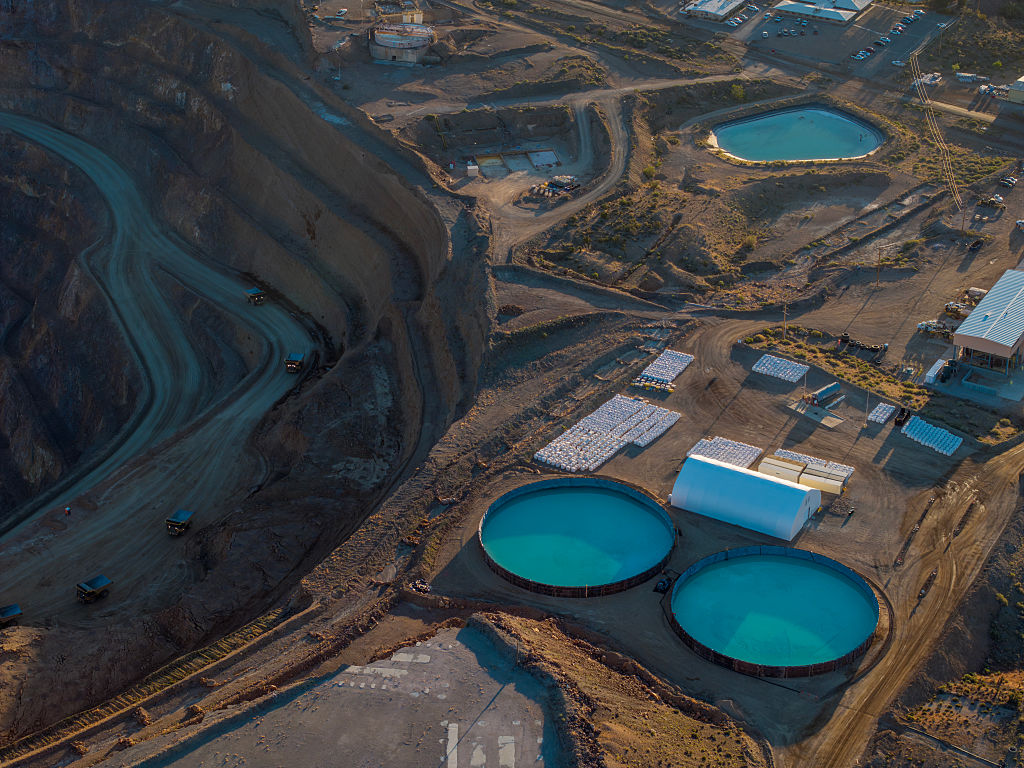
Mining and processing minerals may be the foundation of global industrial production, but it is a sector with high barriers to entry for private enterprise. Mines and processing facilities are highly capital-intensive. These ventures require large up-front investments and often incur high ongoing operational costs. Many minerals can only be produced as byproducts of mining and processing another, more abundant mineral, and pricing tends to be highly volatile. This makes it difficult for companies to accurately calculate their break-even costs and attract investors.
The other obvious constraint on critical minerals production is geology: Some minerals can only be found in useable concentrations in a limited number of locations around the world. Fortunately, the United States has significant untapped critical-mineral resources of its own. A recently released USGS mapping initiative identified 1,271 critical minerals deposits across 41 states and Puerto Rico, a third of which have no history of extraction. Assistant Secretary of the Interior Andrea Travnicek said:
“The United States is abundant in many of the critical minerals needed to drive advanced manufacturing and protect our defense industrial base… we have an extraordinary domestic mineral endowment. Nine of the ten critical minerals at greatest risk for supply chain disruption, including four rare-earth elements, are present in the U.S.”
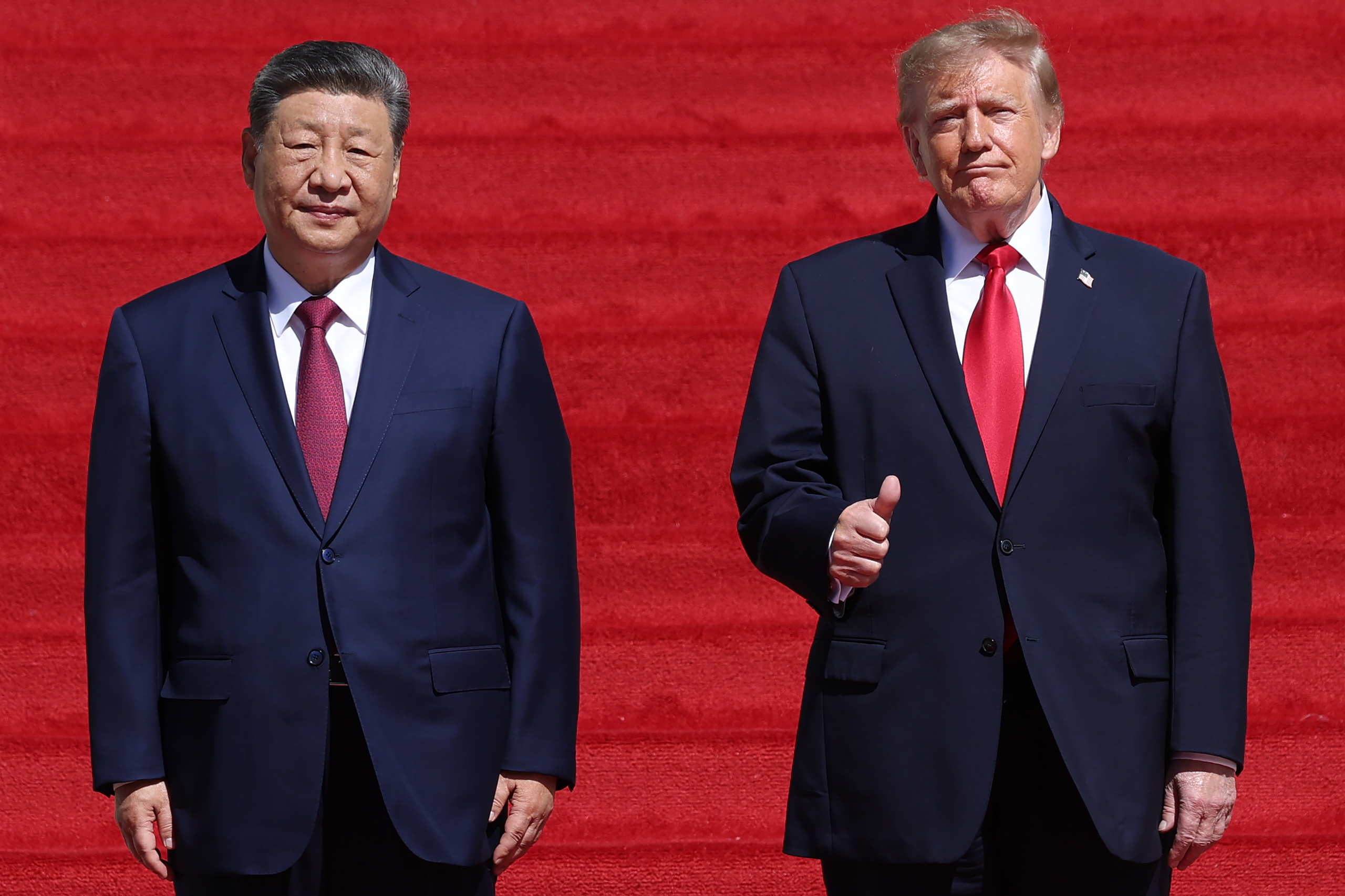
The Trump administration opened the door to greater cooperation with allies and trading partners as one approach to reducing U.S. dependence on China for critical minerals. In February, Secretary of State Marco Rubio hosted the inaugural Critical Minerals Ministerial, a summit that hosted representatives from 54 countries and the European Commission and resulted in 11 new bilateral critical minerals frameworks or MOUs. Rubio also announced the launch of the Forum on Resource Geostrategic Engagement (FORGE), successor to the Minerals Security Partnership and a potential basis for the creation of a plurilateral coalition that can counter adversarial market manipulation.
Diversifying supply through trusted allies can help reduce immediate vulnerabilities to China, but it should complement, rather than substitute for, rebuilding domestic mining, processing, and manufacturing capacity. The Trump administration has made early commitments to domestic industry with two executive orders. The first, Immediate Measures to Increase American Mineral Production, was released shortly after Trump’s inauguration in 2025 and aimed to speed up timelines for new mining projects. This was followed by the Unleashing America’s Offshore Critical Minerals and Resources E.O., which encourages the development of seabed mining projects.
The Trump administration has also taken steps to provide a buffer for domestic industry against disruptions in the supply of critical minerals. Project Vault, an initiative to establish a U.S. Strategic Critical Minerals Reserve, was announced in February. In June, a Presidential Determination pursuant to Section 101 of the Defense Production Act was released that allows export restrictions to be imposed on recoverable critical minerals so they can be recycled in the U.S.
Congress, too, is increasingly focused on America’s critical minerals vulnerabilities. Lawmakers in both parties have introduced a range of proposals aimed at strengthening domestic mineral production, processing, and supply-chain security, with some of those efforts garnering sufficient support to pass through the House of Representatives. Taken together, there appears to be significant political momentum behind critical minerals- but is it enough?
There are already signs of a revival in domestic critical minerals capacity. Just this week, Phoenix Tailings announced plans to construct one of the largest processing facilities outside China in upstate New York, a project supported by a $500 million conditional loan commitment from the U.S. Department of Defense. Other conditional loans agreements have been announced for a variety of other projects, including but not limited to $1.4 billion with Sila Nanotechnologies to enhance battery production, $400 million with Sunrise Energy Metals to expand scandium mining operations, $150 million with Niron Magnetics, Inc., to scale domestic rare-earth free magnet production, and $725 million with Energy Fuels, Inc., to support a new rare earth separation and metallization facility. MP Materials is planning to invest more than $1.25 billion in a large-scale expansion of its rare-earth magnet manufacturing capacity in North Texas. The Department of the Interior recently finalized the details for the first U.S. deep sea mining lease auction for available acreage in the American Samoa Outer Continental Shelf.
These projects are promising, but policymakers must remember that this is only the first step in reducing U.S. dependence on Chinese-controlled critical mineral supply chains, which Beijing has spent more than a decade solidifying. Building secure and resilient alternatives, ideally in the United States, will require a whole-of-supply-chain approach. Encouraging the development of different projects, from upstream mines and midstream processors to downstream component and end-use manufacturers, is crucial to creating a sustainable domestic industry. China currently controls refining for about 90% of rare earth elements and controls over half of the processing capacity for most critical minerals. Extracting minerals from American soil is only one piece of the puzzle and must be followed by processing in American facilities to meaningfully break China’s chokehold on critical minerals production.
Achieving this goal will also take long-term planning and consistency. Companies need to see stable market signals before committing the enormous resources required to start a critical minerals operation. Where federal funding, financing, and purchasing commitments are used to create those market signals, policymakers should ensure they are building lasting productive capacity in the United States rather than simply replacing dependence on China with dependence on other foreign sources.
Large investments and ambitious new projects are reason for optimism, but this is going to take patience. Our leaders must remain steadfast in their commitments to critical minerals development. Long-term, sustainable American mineral independence will depend on it.