Factory-Integrated Machine Control for G8 Excavators
Leica Geosystems and Liebherr integrate sensor-based 2D and 3D machine control into Generation 8 excavators to streamline commissioning and enable scalable digital construction workflows. leica-geosystems.com Leica Geosystems and Liebherr have expanded their collaboration to deliver factory-integrated machine control across most Generation 8 (G8) crawler and mobile excavators. The solution combines a pre-installed sensor chain with 2D guidance as standard and an ex-factory upgrade path to 3D control, targeting earthmoving, infrastructure, and utility construction applications. Integration at the Factory Level The collaboration between Leica Geosystems and Liebherr Group embeds Leica’s sensor chain directly into Liebherr’s G8 crawler and mobile excavators during production. This configuration provides contractors with calibrated machine control functionality upon delivery, eliminating the need for aftermarket hardware installation and reducing commissioning downtime. The integrated sensor chain forms the technical foundation for multiple on-board systems, including 2D machine guidance, weighing systems, and bucket fill assist functions. Operators access 2D guidance directly through the Liebherr in-cab display, unifying the machine interface and reducing the need for additional monitors. By integrating sensors, wiring, and software at the factory, the system supports consistent calibration standards and reduces variability compared with retrofit installations. Production has started, with first deliveries scheduled for spring 2026. From 2D Standard to 3D Machine Control Most new G8 crawler and mobile excavators will be delivered with 2D machine control as standard equipment. The system supports depth and slope control based on predefined references, which is typically used in trenching, grading, and foundation preparation. Customers can specify either a 3D-ready configuration or full 3D machine control ex-factory. The 3D-ready option allows future activation without additional structural modifications, reducing machine downtime during upgrades. Full 3D functionality includes semi-automatic control features, dual GNSS configurations, and integration with Leica’s MC1 3D platform. The 3D configuration enables real-time positioning of the bucket relative to digital terrain models using GNSS and sensor fusion. In infrastructure and large-scale earthworks, this allows operators to execute design data directly from the cab, supporting integration into a broader digital supply chain. Data generated by the excavator can be aligned with BIM models and shared within a connected automotive data ecosystem where construction overlaps with mobility infrastructure projects. Application Areas and Technical Relevance The system is designed for contractors in road construction, rail infrastructure, commercial building, and utility installation. In these applications, precise excavation depth and slope control are required to meet design tolerances and reduce rework. Factory integration ensures that: Sensors are pre-installed and protected within the machine architecture. Software compatibility between machine interface and control system is validated before delivery. Upgrade paths to 3D are predefined, avoiding extensive retrofit work. For fleet operators, this approach standardizes machine control capabilities across multiple units, supporting training efficiency and long-term service planning. Demonstration at ConExpo: The integrated solution is being presented at CONEXPO-CON/AGG in Las Vegas (North Hall, N12545), where live demonstrations of the MC1 3D machine www.leica-geosystems.com Powered by Induportals Media Publishing
 machineryasia
Leica Geosystems and Liebherr integrate sensor-based 2D and 3D machine control into Generation 8 excavators to streamline commissioning and enable scalable digital construction workflows.
leica-geosystems.com
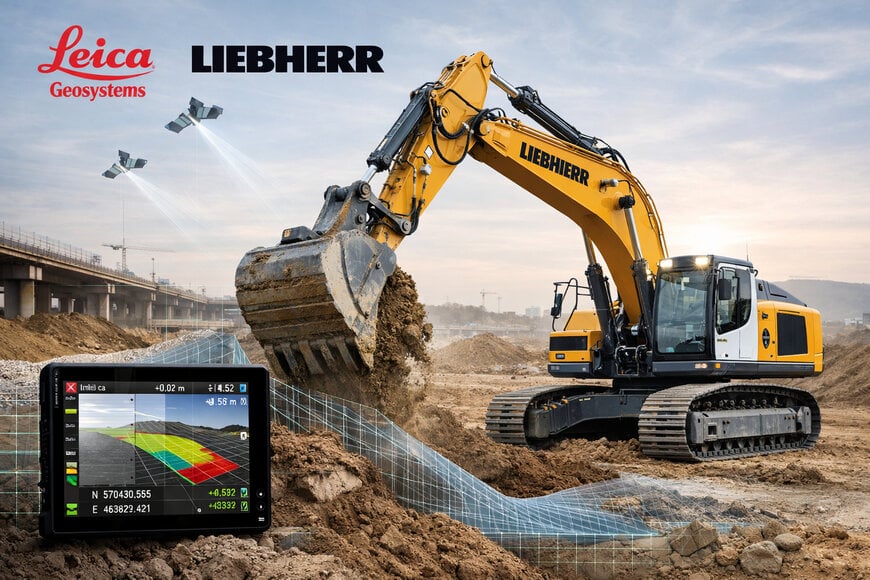
Leica Geosystems and Liebherr have expanded their collaboration to deliver factory-integrated machine control across most Generation 8 (G8) crawler and mobile excavators. The solution combines a pre-installed sensor chain with 2D guidance as standard and an ex-factory upgrade path to 3D control, targeting earthmoving, infrastructure, and utility construction applications.
Integration at the Factory Level
The collaboration between Leica Geosystems and Liebherr Group embeds Leica’s sensor chain directly into Liebherr’s G8 crawler and mobile excavators during production. This configuration provides contractors with calibrated machine control functionality upon delivery, eliminating the need for aftermarket hardware installation and reducing commissioning downtime.
The integrated sensor chain forms the technical foundation for multiple on-board systems, including 2D machine guidance, weighing systems, and bucket fill assist functions. Operators access 2D guidance directly through the Liebherr in-cab display, unifying the machine interface and reducing the need for additional monitors.
By integrating sensors, wiring, and software at the factory, the system supports consistent calibration standards and reduces variability compared with retrofit installations. Production has started, with first deliveries scheduled for spring 2026.
From 2D Standard to 3D Machine Control
Most new G8 crawler and mobile excavators will be delivered with 2D machine control as standard equipment. The system supports depth and slope control based on predefined references, which is typically used in trenching, grading, and foundation preparation.
Customers can specify either a 3D-ready configuration or full 3D machine control ex-factory. The 3D-ready option allows future activation without additional structural modifications, reducing machine downtime during upgrades. Full 3D functionality includes semi-automatic control features, dual GNSS configurations, and integration with Leica’s MC1 3D platform.
The 3D configuration enables real-time positioning of the bucket relative to digital terrain models using GNSS and sensor fusion. In infrastructure and large-scale earthworks, this allows operators to execute design data directly from the cab, supporting integration into a broader digital supply chain. Data generated by the excavator can be aligned with BIM models and shared within a connected automotive data ecosystem where construction overlaps with mobility infrastructure projects.
Application Areas and Technical Relevance
The system is designed for contractors in road construction, rail infrastructure, commercial building, and utility installation. In these applications, precise excavation depth and slope control are required to meet design tolerances and reduce rework.
Factory integration ensures that:
- Sensors are pre-installed and protected within the machine architecture.
- Software compatibility between machine interface and control system is validated before delivery.
- Upgrade paths to 3D are predefined, avoiding extensive retrofit work.
For fleet operators, this approach standardizes machine control capabilities across multiple units, supporting training efficiency and long-term service planning.
Demonstration at ConExpo:
The integrated solution is being presented at CONEXPO-CON/AGG in Las Vegas (North Hall, N12545), where live demonstrations of the MC1 3D machine
www.leica-geosystems.com
Demonstration at ConExpo:
The integrated solution is being presented at CONEXPO-CON/AGG in Las Vegas (North Hall, N12545), where live demonstrations of the MC1 3D machine
www.leica-geosystems.com
Powered by
Induportals Media Publishing