Electric Articulated Haulers Enter Serial Production for the First Time
Volvo Construction Equipment begins manufacturing the A30 Electric and A40 Electric at its Braås facility in Sweden, marking a first in the heavy construction equipment sector. www.volvoce.com Volvo Construction Equipment (Volvo CE) has commenced serial production of its A30 Electric and A40 Electric articulated haulers, becoming the first manufacturer to bring battery-electric machines of this size and payload capacity into industrial-scale production. The vehicles are being produced at the company's Braås plant in Sweden and are scheduled for initial deliveries to customers in the UK and Norway, with broader European distribution planned for the second half of 2026. Payload Capacity and Operating Range The A30 Electric and A40 Electric carry payloads of 29 tonnes and 39 tonnes respectively, placing them among the largest electric machines in Volvo CE's current product portfolio. Both models are designed for high-utilisation environments such as quarrying and mining, where articulated haulers typically operate continuously and consume substantial energy. Depending on the application, the machines offer up to six hours of operation on a single charge. Electrification in these duty cycles presents potential for measurable emissions reductions and total cost of ownership benefits, particularly where energy costs and regulatory requirements around exhaust emissions are significant operational considerations. Production Site and Industrial Context Serial production is underway at Volvo CE's Braås facility, the same site where the company's first articulated hauler — known as Gravel Charlie — was produced in 1966. The location carries engineering significance, as Volvo CE is widely credited with developing the articulated hauler concept. Production of electric variants at this facility represents a direct continuation of that engineering lineage under substantially different technical conditions. The A30 Electric and A40 Electric were first publicly presented at Bauma 2025. According to Volvo CE, customer interest following the exhibition has extended beyond initial production capacity, with demand reaching into schedule periods not yet covered by confirmed output. Market Readiness and Delivery Schedule The transition from prototype and pilot phases to serial production reflects a broader shift in the heavy equipment sector, where zero-emission solutions are beginning to meet the operational demands of high-productivity applications. The first production units are being allocated to customers in the UK and Norway, with further deliveries across selected European markets scheduled through the latter part of 2026. Volvo CE has indicated that the move into serial production aligns with a longer-term strategy to expand its electric and low-emission product range, addressing customers at varying stages of fleet electrification. Edited by an industrial journalist, Lekshman Ramdas, with AI assistance. www.volvoce.com Powered by Induportals Media Publishing
 machineryasia
Volvo Construction Equipment begins manufacturing the A30 Electric and A40 Electric at its Braås facility in Sweden, marking a first in the heavy construction equipment sector.
www.volvoce.com
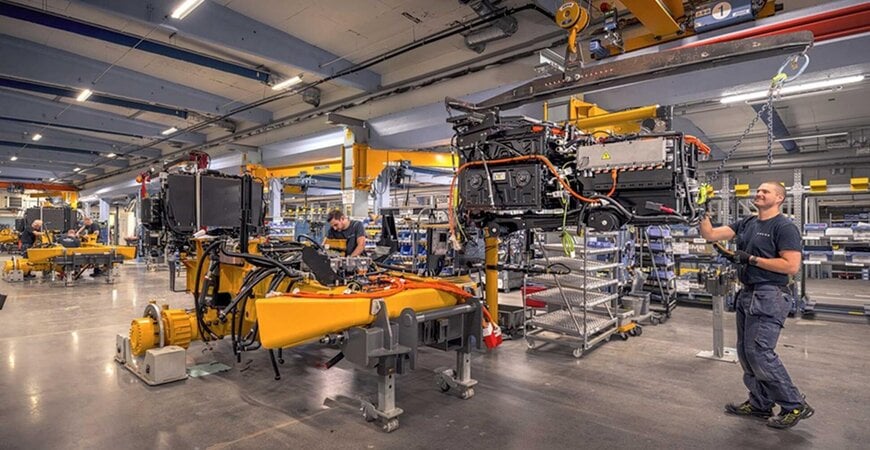
Volvo Construction Equipment (Volvo CE) has commenced serial production of its A30 Electric and A40 Electric articulated haulers, becoming the first manufacturer to bring battery-electric machines of this size and payload capacity into industrial-scale production. The vehicles are being produced at the company's Braås plant in Sweden and are scheduled for initial deliveries to customers in the UK and Norway, with broader European distribution planned for the second half of 2026.
Payload Capacity and Operating Range
The A30 Electric and A40 Electric carry payloads of 29 tonnes and 39 tonnes respectively, placing them among the largest electric machines in Volvo CE's current product portfolio. Both models are designed for high-utilisation environments such as quarrying and mining, where articulated haulers typically operate continuously and consume substantial energy. Depending on the application, the machines offer up to six hours of operation on a single charge.
Electrification in these duty cycles presents potential for measurable emissions reductions and total cost of ownership benefits, particularly where energy costs and regulatory requirements around exhaust emissions are significant operational considerations.
Production Site and Industrial Context
Serial production is underway at Volvo CE's Braås facility, the same site where the company's first articulated hauler — known as Gravel Charlie — was produced in 1966. The location carries engineering significance, as Volvo CE is widely credited with developing the articulated hauler concept. Production of electric variants at this facility represents a direct continuation of that engineering lineage under substantially different technical conditions.
The A30 Electric and A40 Electric were first publicly presented at Bauma 2025. According to Volvo CE, customer interest following the exhibition has extended beyond initial production capacity, with demand reaching into schedule periods not yet covered by confirmed output.
Market Readiness and Delivery Schedule
The transition from prototype and pilot phases to serial production reflects a broader shift in the heavy equipment sector, where zero-emission solutions are beginning to meet the operational demands of high-productivity applications. The first production units are being allocated to customers in the UK and Norway, with further deliveries across selected European markets scheduled through the latter part of 2026.
Volvo CE has indicated that the move into serial production aligns with a longer-term strategy to expand its electric and low-emission product range, addressing customers at varying stages of fleet electrification.
Edited by an industrial journalist, Lekshman Ramdas, with AI assistance.
www.volvoce.com
Powered by
Induportals Media Publishing