Deployment of High-Capacity Mobile Cranes for Industrial Construction
Everwilling Group and Liebherr cooperate to deploy compact heavy-lifting technology for infrastructure and data center construction in Australia. www.liebherr.com Everwilling Group and Liebherr are cooperating to integrate 450-tonne capacity lifting technology into heavy-lift operations for the construction sector. The deployment addresses the structural and logistical requirements of large-scale public works and digital infrastructure projects by utilizing six-axle mobile crane systems. Operational Challenges in Heavy-Lift Operations The cooperation involves Everwilling Group, an Australian construction and lifting contractor, and Liebherr, an equipment manufacturer. Everwilling Group is responsible for executing site operations, while Liebherr provides the mechanical systems, lifecycle support, and maintenance frameworks. The primary operational challenge addressed by this cooperation is the spatial constraint on construction sites combined with the increasing mass of prefabricated building components. Managing these loads requires equipment that can navigate standard road networks without requiring excessive logistical preparation while providing sufficient structural capacity for industrial construction. The partnership facilitates the alignment of equipment specifications with regional infrastructure and mobility demands. Technical System and System Architecture The deployed technical system is a mobile crane that functions as a high-capacity lifting platform on a six-axle chassis. The system is engineered to deliver a maximum lifting capacity of 450 tonnes. The engineering architecture integrates control systems and safety parameters to regulate load distribution during operation. Liebherr is responsible for the manufacturing, system calibration, and integration of the control interfaces. Everwilling Group handles the operational deployment, site engineering, and physical integration of the lifting operations into existing project workflows. The six-axle configuration maintains a compact turning radius and manages axle load distribution to comply with regional transport standards. Deployment and Integration Framework The lifting system is deployed across construction sites in New South Wales, Australia. The implementation phase includes replacing previous 300-tonne capacity units with the 450-tonne systems to expand operational capabilities without increasing the physical footprint of the machinery on site. Liebherr supports this transition by managing the lifecycle of the previous equipment, which undergoes professional refurbishment and market reintroduction after logging 25,000 operating hours. Everwilling Group integrates the new lifting technology into its existing fleet management logistics, ensuring operators are calibrated with the updated safety and control mechanisms. Target Industries and Technical Use Cases The lifting systems are applied directly in infrastructure development and industrial construction. Concrete technical use cases include the positioning of structural steel frameworks, the installation of high-mass precast concrete components, and the assembly of facilities for digital infrastructure, such as data centers. By utilizing a single compact mobile unit for high-capacity lifts, project managers achieve process stability and reduce the need for multiple smaller cranes or extended setup periods. Measurable Impact on Operational Efficiency The transition from 300-tonne to 450-tonne lifting capacity on a comparable six-axle chassis allows contractors to execute heavier lifts within the same spatial parameters. The technical mechanisms driving this result include shorter setup times and integrated control systems that streamline load management. This efficiency reduces operational downtime and improves process maintainability across complex industrial projects. Edited by Aishwarya Mambet, Induportals Editor, with AI assistance. www.liebherr.com Powered by Induportals Media Publishing
 machineryasia
Everwilling Group and Liebherr cooperate to deploy compact heavy-lifting technology for infrastructure and data center construction in Australia.
www.liebherr.com
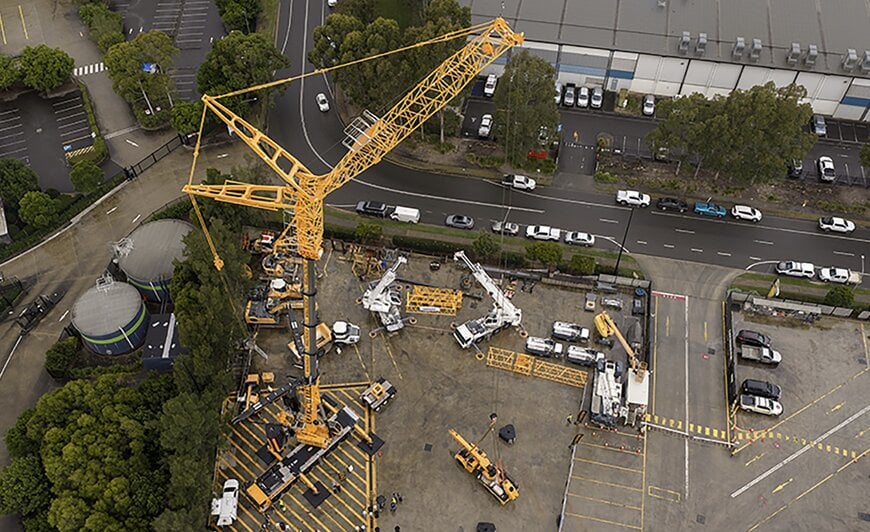
Everwilling Group and Liebherr are cooperating to integrate 450-tonne capacity lifting technology into heavy-lift operations for the construction sector. The deployment addresses the structural and logistical requirements of large-scale public works and digital infrastructure projects by utilizing six-axle mobile crane systems.
Operational Challenges in Heavy-Lift Operations
The cooperation involves Everwilling Group, an Australian construction and lifting contractor, and Liebherr, an equipment manufacturer. Everwilling Group is responsible for executing site operations, while Liebherr provides the mechanical systems, lifecycle support, and maintenance frameworks. The primary operational challenge addressed by this cooperation is the spatial constraint on construction sites combined with the increasing mass of prefabricated building components. Managing these loads requires equipment that can navigate standard road networks without requiring excessive logistical preparation while providing sufficient structural capacity for industrial construction. The partnership facilitates the alignment of equipment specifications with regional infrastructure and mobility demands.
Technical System and System Architecture
The deployed technical system is a mobile crane that functions as a high-capacity lifting platform on a six-axle chassis. The system is engineered to deliver a maximum lifting capacity of 450 tonnes. The engineering architecture integrates control systems and safety parameters to regulate load distribution during operation. Liebherr is responsible for the manufacturing, system calibration, and integration of the control interfaces. Everwilling Group handles the operational deployment, site engineering, and physical integration of the lifting operations into existing project workflows. The six-axle configuration maintains a compact turning radius and manages axle load distribution to comply with regional transport standards.
Deployment and Integration Framework
The lifting system is deployed across construction sites in New South Wales, Australia. The implementation phase includes replacing previous 300-tonne capacity units with the 450-tonne systems to expand operational capabilities without increasing the physical footprint of the machinery on site. Liebherr supports this transition by managing the lifecycle of the previous equipment, which undergoes professional refurbishment and market reintroduction after logging 25,000 operating hours. Everwilling Group integrates the new lifting technology into its existing fleet management logistics, ensuring operators are calibrated with the updated safety and control mechanisms.
Target Industries and Technical Use Cases
The lifting systems are applied directly in infrastructure development and industrial construction. Concrete technical use cases include the positioning of structural steel frameworks, the installation of high-mass precast concrete components, and the assembly of facilities for digital infrastructure, such as data centers. By utilizing a single compact mobile unit for high-capacity lifts, project managers achieve process stability and reduce the need for multiple smaller cranes or extended setup periods.
Measurable Impact on Operational Efficiency
The transition from 300-tonne to 450-tonne lifting capacity on a comparable six-axle chassis allows contractors to execute heavier lifts within the same spatial parameters. The technical mechanisms driving this result include shorter setup times and integrated control systems that streamline load management. This efficiency reduces operational downtime and improves process maintainability across complex industrial projects.
Edited by Aishwarya Mambet, Induportals Editor, with AI assistance.
www.liebherr.com
Powered by
Induportals Media Publishing