Upgrading Rail Transport Mechanics for Enhanced Safety in Quarries
Technidrive engineers an automated skip drive system for TH Moore, replacing obsolete logic components with precision variable speed technology to mitigate mechanical wear. www.technidrive.co.uk Systems integrator Technidrive, in collaboration with motor and drive manufacturer WEG, engineered an industrial automation and motion control setup to upgrade material handling infrastructure for aggregates supplier TH Moore. The implementation addresses critical safety and mechanical degradation challenges common in heavy-duty quarrying applications by modernizing the control mechanisms of a high-load rail skip. Addressing Mechanical Wear in Intermittent Quarry Operations TH Moore supplies quarry materials, high-grade aggregates, and bituminous products. At one of its sites, the company utilized an older skip drive system operating on rails to transport heavy loads of material between a mixer and multiple storage bins. The system functioned intermittently, operating for only two to three months per year, which complicated the process of identifying and repairing electrical faults. The primary mechanical issue was severe brake degradation on the skip motor. Without a variable speed drive (VSD) to regulate motion, the system engaged and disengaged abruptly. When an operator initiated a command, the skip would accelerate harshly up the rails. Upon reaching a mechanical limit switch, the system would immediately cut motor power and slam the brakes, inducing significant mechanical stress and wear across the drive train. Implementing Variable Speed Drive Technology and Encoder Feedback To resolve the excessive wear and control issues, Technidrive collaborated with WEG to integrate a 22kW 4-pole cast iron brake motor equipped with a 1024 pulse encoder. This specific motor was selected for its durability and efficiency in harsh quarrying environments. This hardware was paired with a WEG CFW700 VSD featuring built-in high-torque brake control. The new architecture eliminated the reliance on physical limit switches for hard stops. Instead, it utilizes an auto slow-down function programmed within the VSD's onboard logic controller. The system maps virtual positions along the rail infrastructure, allowing the motor to ramp up smoothly and decelerate before reaching its programmed destination. Because the WEG VSD manages the deceleration, the mechanical brake acts solely as a holding mechanism once the skip is stationary. This operational shift virtually eliminated brake wear and significantly reduced routine motor maintenance. Transitioning from Obsolete PLCs to Modern HMI Monitoring The original control framework relied on outdated programmable logic controllers (PLCs) and a series of mechanical limit switches acting as safety interlocks. Finding replacement parts for this legacy hardware proved increasingly difficult during breakdowns. Technidrive engineered a new PLC framework capable of continuously reading the 1024 pulse encoder feedback, providing precise skip positioning data. Operators interface with the system through a 10-inch human-machine interface (HMI), replacing complex push-button panels. This digital interface allows personnel to monitor the skip's exact location in real time. Additionally, the system supports remote monitoring via mobile devices, facilitating faster fault diagnosis without requiring technicians to access the main control panel directly. Quantifiable Safety Improvements and Redundancy Safety mechanisms were a critical component of the deployment. The system includes full manual override capabilities and a secondary anti-freewheel protection mechanism. If the encoder slips on the motor shaft and fails to recognize movement, a secondary interlock system activates to prevent the skip from overrunning the rails or freewheeling downward. By transitioning to this centralized, VSD-controlled architecture, the installation reduced the system's potential failure points from eight to one. Mark Poots, quarry manager at the associated company GibsonBros, indicated that the facility previously experienced frequent electrical faults. He noted that Technidrive's cost-effective modernization of the obsolete control system has successfully minimized operational downtime while ensuring that replacement parts are now readily accessible in the event of a component failure. Edited by Aishwarya Mambet, Induportals Editor, with AI assistance. www.technidrive.com Powered by Induportals Media Publishing
 machineryasia
Technidrive engineers an automated skip drive system for TH Moore, replacing obsolete logic components with precision variable speed technology to mitigate mechanical wear.
www.technidrive.co.uk
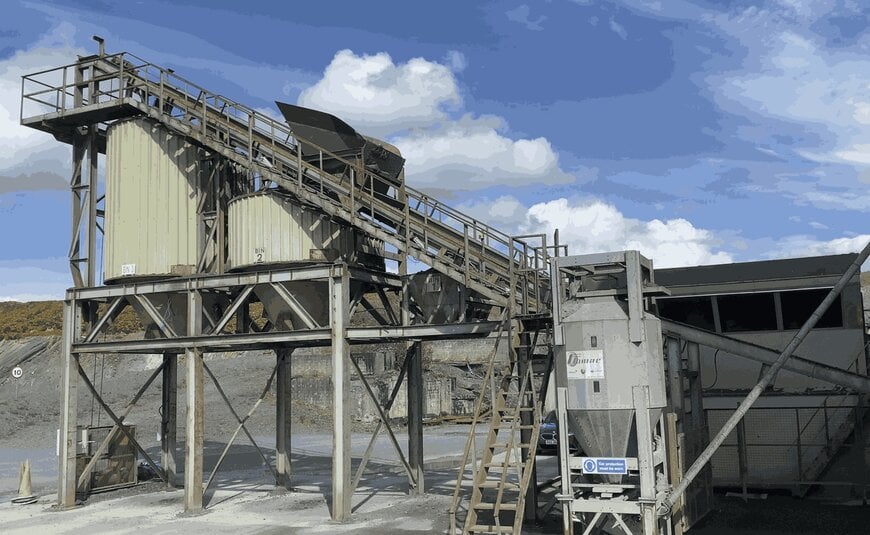
Systems integrator Technidrive, in collaboration with motor and drive manufacturer WEG, engineered an industrial automation and motion control setup to upgrade material handling infrastructure for aggregates supplier TH Moore. The implementation addresses critical safety and mechanical degradation challenges common in heavy-duty quarrying applications by modernizing the control mechanisms of a high-load rail skip.
Addressing Mechanical Wear in Intermittent Quarry Operations
TH Moore supplies quarry materials, high-grade aggregates, and bituminous products. At one of its sites, the company utilized an older skip drive system operating on rails to transport heavy loads of material between a mixer and multiple storage bins. The system functioned intermittently, operating for only two to three months per year, which complicated the process of identifying and repairing electrical faults.
The primary mechanical issue was severe brake degradation on the skip motor. Without a variable speed drive (VSD) to regulate motion, the system engaged and disengaged abruptly. When an operator initiated a command, the skip would accelerate harshly up the rails. Upon reaching a mechanical limit switch, the system would immediately cut motor power and slam the brakes, inducing significant mechanical stress and wear across the drive train.
Implementing Variable Speed Drive Technology and Encoder Feedback
To resolve the excessive wear and control issues, Technidrive collaborated with WEG to integrate a 22kW 4-pole cast iron brake motor equipped with a 1024 pulse encoder. This specific motor was selected for its durability and efficiency in harsh quarrying environments. This hardware was paired with a WEG CFW700 VSD featuring built-in high-torque brake control.
The new architecture eliminated the reliance on physical limit switches for hard stops. Instead, it utilizes an auto slow-down function programmed within the VSD's onboard logic controller. The system maps virtual positions along the rail infrastructure, allowing the motor to ramp up smoothly and decelerate before reaching its programmed destination. Because the WEG VSD manages the deceleration, the mechanical brake acts solely as a holding mechanism once the skip is stationary. This operational shift virtually eliminated brake wear and significantly reduced routine motor maintenance.
Transitioning from Obsolete PLCs to Modern HMI Monitoring
The original control framework relied on outdated programmable logic controllers (PLCs) and a series of mechanical limit switches acting as safety interlocks. Finding replacement parts for this legacy hardware proved increasingly difficult during breakdowns.
Technidrive engineered a new PLC framework capable of continuously reading the 1024 pulse encoder feedback, providing precise skip positioning data. Operators interface with the system through a 10-inch human-machine interface (HMI), replacing complex push-button panels. This digital interface allows personnel to monitor the skip's exact location in real time. Additionally, the system supports remote monitoring via mobile devices, facilitating faster fault diagnosis without requiring technicians to access the main control panel directly.
Quantifiable Safety Improvements and Redundancy
Safety mechanisms were a critical component of the deployment. The system includes full manual override capabilities and a secondary anti-freewheel protection mechanism. If the encoder slips on the motor shaft and fails to recognize movement, a secondary interlock system activates to prevent the skip from overrunning the rails or freewheeling downward.
By transitioning to this centralized, VSD-controlled architecture, the installation reduced the system's potential failure points from eight to one. Mark Poots, quarry manager at the associated company GibsonBros, indicated that the facility previously experienced frequent electrical faults. He noted that Technidrive's cost-effective modernization of the obsolete control system has successfully minimized operational downtime while ensuring that replacement parts are now readily accessible in the event of a component failure.
Edited by Aishwarya Mambet, Induportals Editor, with AI assistance.
www.technidrive.com
Powered by
Induportals Media Publishing