Articulated Hauler Design Focuses on Uptime and Lifecycle Cost
Rokbak outlines engineering and maintenance measures used to reduce downtime and operating expense in quarry, mining and infrastructure transport operations. www.rokbak.com In earthmoving and bulk material transport, machine availability directly determines productivity and cost per tonne. Scott Pollock, Rokbak's senior product manager, describes how structural design, component integration and maintenance planning are combined to keep articulated dump trucks operational for longer duty cycles. From duty cycle to structure The articulated haulers are engineered around expected load profiles rather than individual component strength. Frames, driveline and hydraulic systems are validated as a complete machine to ensure durability under continuous heavy hauling conditions typical in quarries, mines and infrastructure projects. Rokbak integrates established engines, gearboxes, axles and hydraulic components sourced for harsh environments and tests them as part of the full vehicle rather than in isolation. The objective is predictable behavior across temperature variation, terrain shock loads and continuous payload operation — conditions that often trigger failures when subsystems are optimized separately. This whole-machine validation approach is intended to reduce faults and warranty events while maintaining consistent physical availability in material-handling fleets. Fuel use and productivity tied to integration Fuel consumption is treated as a system-level outcome. Powertrain calibration, traction behavior and hydraulic demand are tuned together so efficiency improvements do not compromise cycle time or component life. The RA30 and RA40 articulated haulers are designed so that productivity, durability and fuel consumption depend on how subsystems interact rather than on peak performance of individual parts. For operators running high-volume haul cycles, lower fuel burn directly affects operating margin and total cost of ownership. Maintenance intervals extended Operational uptime is supported by service planning as much as by hardware design. Rokbak increased service intervals using updated fluids and filtration strategies: Transmission service interval extended from 2,000 to 4,000 hours on RA30 Transmission interval extended to 6,000 hours on RA40 Hydraulic service interval set at 4,000 hours Longer intervals reduce scheduled stoppages and lower maintenance material disposal, including filters and oils, which also decreases environmental impact. The result is fewer interruptions to hauling cycles and reduced lifecycle operating cost — a central metric in heavy equipment fleet management and digital supply chain planning. Operation and support affect availability The manufacturer links uptime to operator handling and maintenance discipline as much as to mechanical durability. Correct lubrication, fluid management and use of approved spare parts help prevent premature wear and unplanned stoppages. The machines are configured for straightforward operation so that productivity does not depend heavily on operator experience. Cooling systems, traction control and driveline configuration are tailored for articulated hauler use on uneven ground and high payload transport. Across global deployments in aggregates, mining and infrastructure construction, consistent performance depends on correct specification, validated machine configuration and structured maintenance support. www.rokbak.com Powered by Induportals Media Publishing
 machineryasia
Rokbak outlines engineering and maintenance measures used to reduce downtime and operating expense in quarry, mining and infrastructure transport operations.
www.rokbak.com
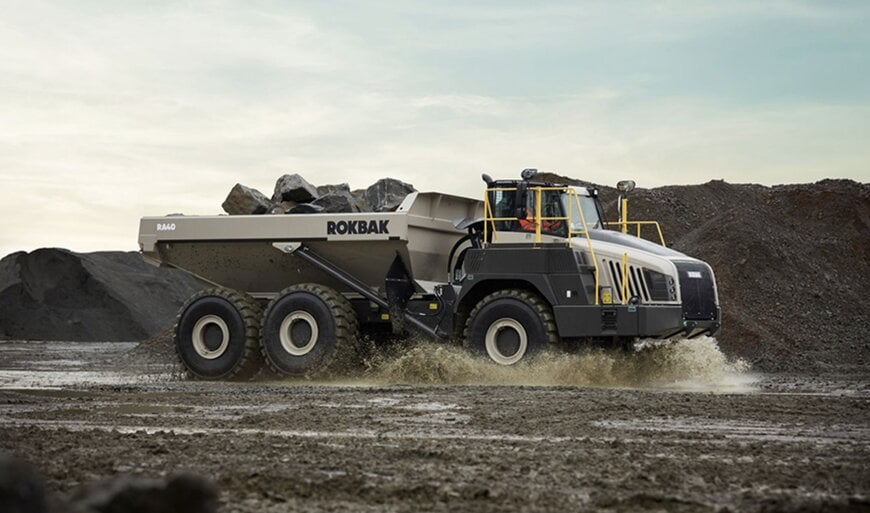
In earthmoving and bulk material transport, machine availability directly determines productivity and cost per tonne. Scott Pollock, Rokbak's senior product manager, describes how structural design, component integration and maintenance planning are combined to keep articulated dump trucks operational for longer duty cycles.
From duty cycle to structure
The articulated haulers are engineered around expected load profiles rather than individual component strength. Frames, driveline and hydraulic systems are validated as a complete machine to ensure durability under continuous heavy hauling conditions typical in quarries, mines and infrastructure projects.
Rokbak integrates established engines, gearboxes, axles and hydraulic components sourced for harsh environments and tests them as part of the full vehicle rather than in isolation. The objective is predictable behavior across temperature variation, terrain shock loads and continuous payload operation — conditions that often trigger failures when subsystems are optimized separately.
This whole-machine validation approach is intended to reduce faults and warranty events while maintaining consistent physical availability in material-handling fleets.
Fuel use and productivity tied to integration
Fuel consumption is treated as a system-level outcome. Powertrain calibration, traction behavior and hydraulic demand are tuned together so efficiency improvements do not compromise cycle time or component life.
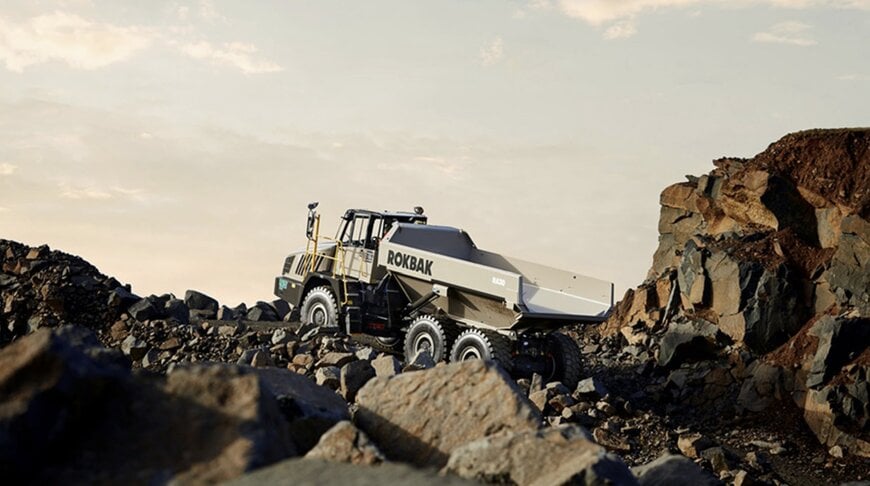
The RA30 and RA40 articulated haulers are designed so that productivity, durability and fuel consumption depend on how subsystems interact rather than on peak performance of individual parts. For operators running high-volume haul cycles, lower fuel burn directly affects operating margin and total cost of ownership.
Maintenance intervals extended
Operational uptime is supported by service planning as much as by hardware design. Rokbak increased service intervals using updated fluids and filtration strategies:
- Transmission service interval extended from 2,000 to 4,000 hours on RA30
- Transmission interval extended to 6,000 hours on RA40
- Hydraulic service interval set at 4,000 hours
Longer intervals reduce scheduled stoppages and lower maintenance material disposal, including filters and oils, which also decreases environmental impact. The result is fewer interruptions to hauling cycles and reduced lifecycle operating cost — a central metric in heavy equipment fleet management and digital supply chain planning.
Operation and support affect availability
The manufacturer links uptime to operator handling and maintenance discipline as much as to mechanical durability. Correct lubrication, fluid management and use of approved spare parts help prevent premature wear and unplanned stoppages.
The machines are configured for straightforward operation so that productivity does not depend heavily on operator experience. Cooling systems, traction control and driveline configuration are tailored for articulated hauler use on uneven ground and high payload transport.
Across global deployments in aggregates, mining and infrastructure construction, consistent performance depends on correct specification, validated machine configuration and structured maintenance support.
www.rokbak.com
Operation and support affect availability
The manufacturer links uptime to operator handling and maintenance discipline as much as to mechanical durability. Correct lubrication, fluid management and use of approved spare parts help prevent premature wear and unplanned stoppages.
The machines are configured for straightforward operation so that productivity does not depend heavily on operator experience. Cooling systems, traction control and driveline configuration are tailored for articulated hauler use on uneven ground and high payload transport.
Across global deployments in aggregates, mining and infrastructure construction, consistent performance depends on correct specification, validated machine configuration and structured maintenance support.
www.rokbak.com
Powered by
Induportals Media Publishing