Valley Forge Flag Company Thinks Your American Flag Should Be American-made
The Valley Forge Flag Company, which makes U.S. flags in a variety of materials and sizes, has had its banners flown in some iconic moments.
 machineryasia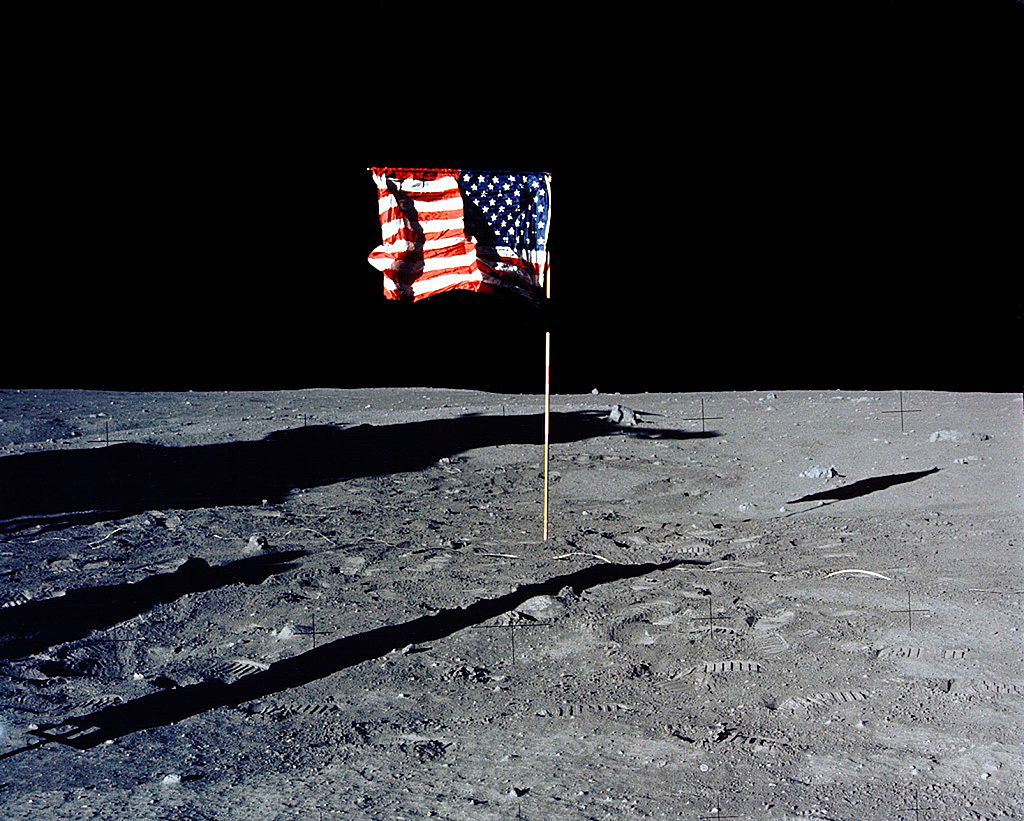
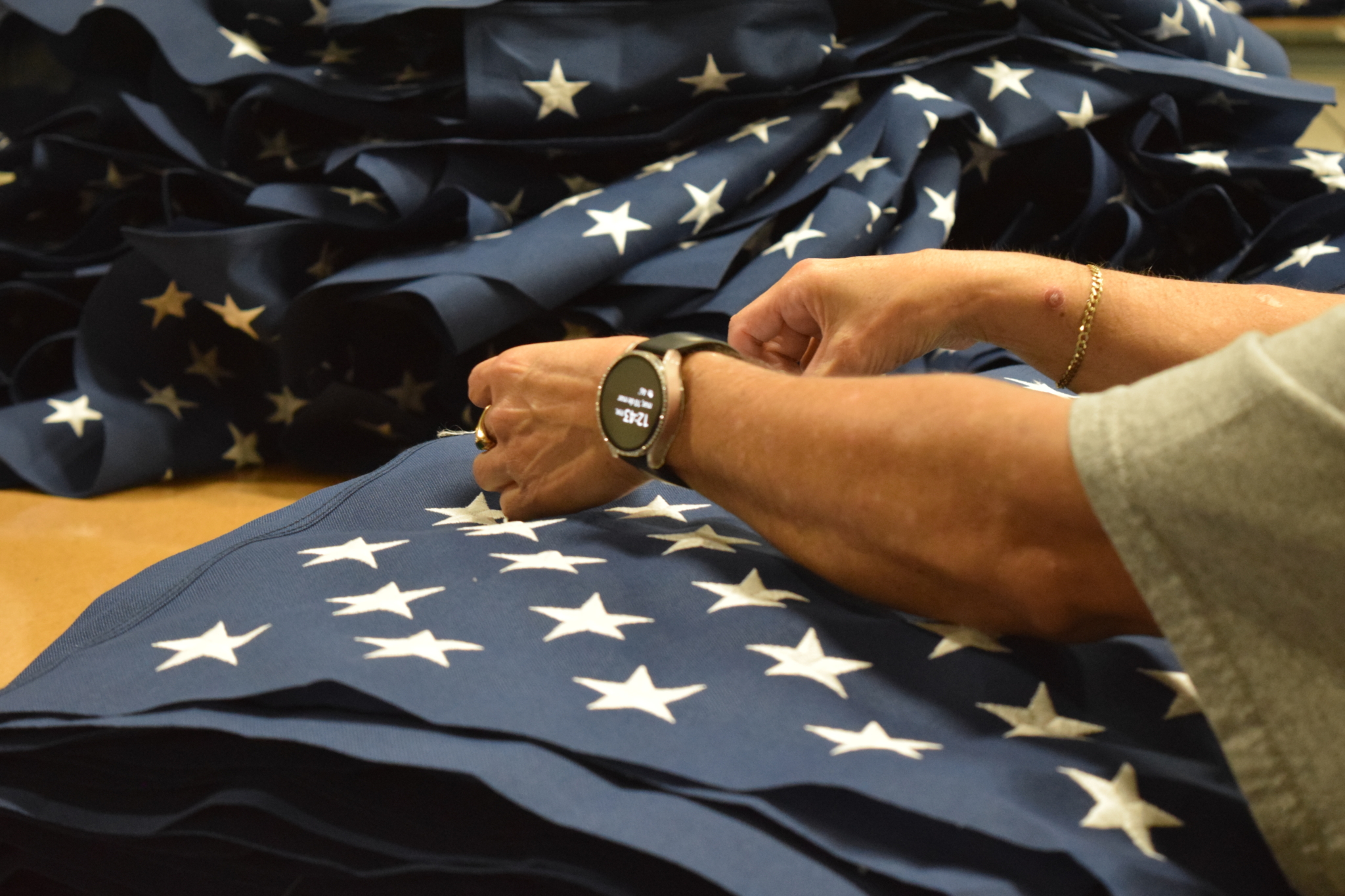
The company, which makes U.S. flags in a variety of materials and sizes, has had its banners flown in some iconic moments.
As we approach the United States of America’s 250th birthday celebration, now, perhaps more than ever, is the time to display the Red, White and Blue.
Beginning Memorial Day Monday, through Flag Day on June 14th and culminating with the ultimate birthday celebration on the Fourth of July, Americans will be showing their love of country by displaying and waving the Stars and Stripes. Memorial Day generally kicks off “flag season” each year but the 2026 commemoration is sure to rival the revelry seen during America’s 200th birthday in 1976.
The Valley Forge Flag Company, one of the oldest and most historic flag manufacturers in the United States, will be providing Old Glory to stores across the nation. As with most flag companies who manufacture in the U.S., 2026 has become a banner year for production.
“Because it is the 250th anniversary, I think we are going to make close to 25 million American flags of all specifications and sizes,” said Valley Forge Flag Company’s vice president Reggie VandenBosch. “That is just this year. I think the whole industry is having the biggest year ever.
“My best estimate and the Flag Manufacturers Association of America (FMAA) best estimate is roughly $400 million a year is sold in American flags. Valley Forge and Annin are two of the largest domestic manufacturers and both are founding members of the FMAA.”
The FMAA is a national organization that certifies that a U.S. flag is made in America by American workers with American materials. Not every U.S.-based manufacturer is a FMAA member but if a flag is certified by the group, it’s a guarantee of its origin.
After all, isn’t it most patriotic to buy an American Flag that was actually made in America?
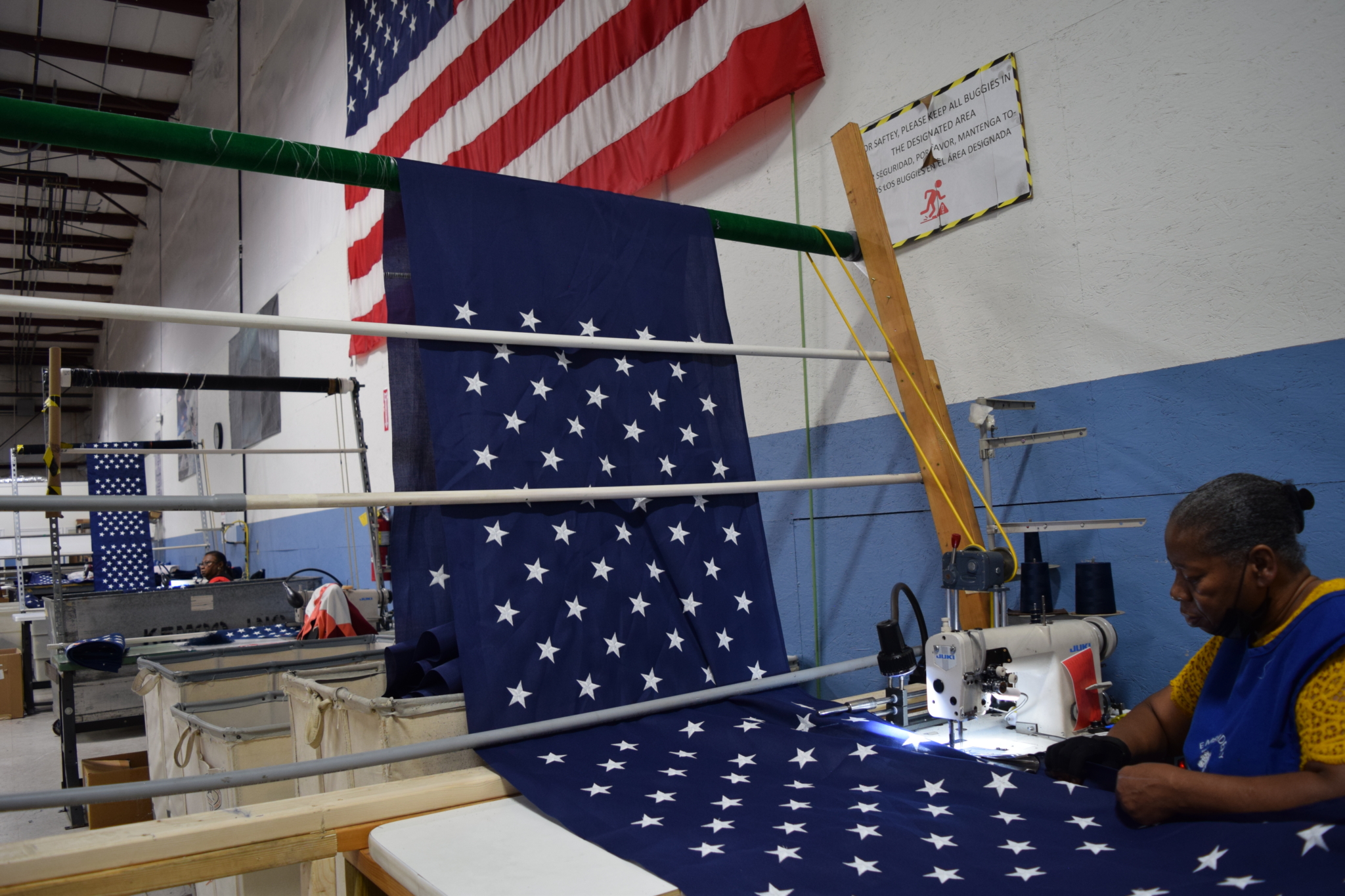
Valley Forge Flag Company began in 1882 as a maker of burlap sacks but eventually began making flags during World War I. By the 1930s, Valley Forge had opened a dedicated flag factory in Spring City, Pennsylvania.
“We were making flags in 1914, 1915 and flags really became the company focus around the time of World War I,” said VandenBosch. “They ramped up production during the war and by the 1930s they were getting a lot of government contracts.
“Valley Forge Flag’s production continued to increase during World War II when they were commonly known as the flag supplier to the Pacific Theater.”
Valley Forge Flag Company is headquartered in Wyomissing, Pennsylvania where it retains one of the original factories but most of the manufacturing today takes place at five factories in South Carolina.
The are 450 employees cutting, dying and sewing Valley Forge flags at the various locations that supply major retail outlets like Home Depot, Lowe’s, Target, Cosco, Walmart, Ace Hardware and more. Manufacturing takes place at South Carolina plants in Kingstree, Lane, Smoaks, Moncks Corner and Olanta.
“Our plant in Kingstree is the largest processing and distribution center where we make all of our displays to ship to retailers,” said VandenBosch. “It’s the largest flag processing facility in the country. It has to be, because we’re making flags for all these major retailers.
“We do some sewing there but a lot of that is with the automated processes. For printed flags, we actually print the fabric and we dye fabric there. We have equipment that that turns printed fabric into completed flags there.
“There is no imported material. The fabric is woven here, it’s dyed here, all the labor is done here. An American flag from China is offensive. It’s not really an American flag if it is not Made in America. That’s what people tell me.”
Valley Forge Flag Company has a colorful past of making flags seen by millions during historical events. It made the flags that draped the caskets of former Presidents John F. Kennedy, Dwight Eisenhower, Richard Nixon and Lyndon Johnson.
The company also manufactured the six flags that were planted on the moon during the Apollo program moon landings, including the first landing of Apollo 11 in 1969 when astronauts Neil Armstrong and Buzz Aldrin planted the American flag.
The initial moon landing flag’s origin is not without controversy as it has been claimed to have been placed with a flag from Annin Flagmakers. However, VandenBosch has spent hundreds of hours researching and is confident he can say that Valley Forge supplied the first flag on the moon.
“I think the preponderance of evidence is such that Buzz Aldrin thanked us himself for making the flag that he and Neil Armstrong planted on the moon,” said VandenBosch. “We were the government contractor at the time and the NASA engineers stated it was a government GSA (General Services Administration) flag.
“The construction of the flag on the moon is identical to the one that was made by Valley Forge. Once NASA published the high-resolution photography in 2012, you could actually look at the flag on the moon and see the stitching. Annin’s flag has red stitching on the red stripe, ours has white stitching on the red stripes.
“Annin is a great company but none of it lines up so I am 99% confident it’s ours. And around the time of the 50th anniversary of Apollo 11, we received thanks from Buzz Aldrin. So, the person that was there planting it felt it was our flag.”
Flags sold under the Valley Forge Flag Company brand are not available for direct-to-consumer purchase from the company but are readily available at most major retail outlets and are sold online from those company’s websites.
The flag brand Elizabeth Ross, on the other hand, is made by Valley Forge and is available online direct-to-consumer. Elizabeth Ross flags are the company’s luxury brand, the Cadillac of flags manufactured in America.
“Elizabeth Ross flags are generally considered the highest base-grade flags out there,” said VandenBosch. “It improves on how much stitching is used and the quality of the thread. Extra stitching is put into place in areas of the flag that are most prone to wear. They also have a heavier header.”
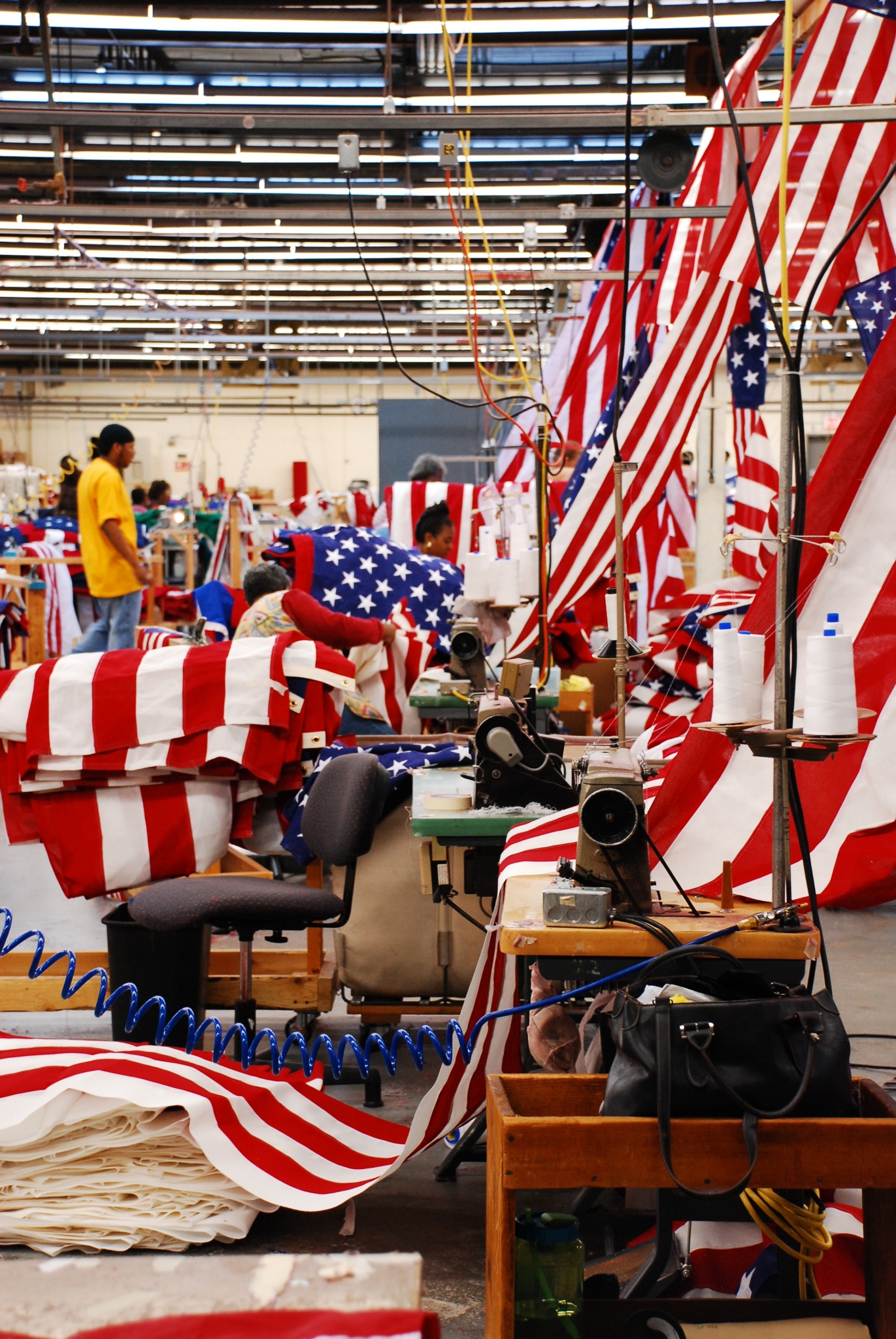
Valley Forge manufactures flags for outdoor display, memorial purposes and others for indoor display. Depending on the use of the flag it can be made of nylon, cotton, polycotton, polyester or two-ply spun polyester.
“Two-ply spun polyester is another way of processing it and makes it hold up longer outside if you’ve got a lot of wind,” said VandenBosch. “The don’t fly as well and tend to be heavy. If you’ve got lighter winds, I like nylon. Nylon is a great material that holds up well and is great for both outdoor and indoor use.
“Cotton flags are great indoors. Internment flags are all cotton. That is a government spec.”
Including its long history representing America, Valley Forge Flag Company is incredibly proud to be manufacturing in America with American workers.
Said Vanden Bosch: “We want American manufacturing to revive because we need it.” That is yet another great reason for all Americans to show their colors this summer.
The Alliance for American Manufacturing does not receive a commission from purchases made through the above links, nor was the organization or author paid for favorable coverage.
Labeling Note: This story is intended to highlight companies that support American jobs and that make great products in the United States. We rely on the companies listed to provide accurate information regarding their domestic operations and their products. Each company featured is individually responsible for labeling and advertising their products according to applicable standards, such as the Federal Trade Commission’s “Made in USA” standard or California’s “Made in USA” labeling law. We do not review individual products for compliance or claim that because a company is listed in the guide that their products comply with specific labeling or advertising standards. Our focus is on supporting companies that create American jobs.
For more on the Federal Trade Commission’s standards for “Made in USA” claims and California’s “Made in USA” labeling law, please also read this guest post by Dustin Painter and Kristi Wolff of Kelly Drye & Warren, LLP.