The Buffalo Bills’ New Stadium is American-made
Built with nearly 100% American steel, the NFL’s newest structure is a testament to the industrial history of Western New York. For generations, Buffalo helped build America. Steel mills, rail yards, factories and shipping terminals transformed the city into one […]
 machineryasia
Built with nearly 100% American steel, the NFL’s newest structure is a testament to the industrial history of Western New York.
For generations, Buffalo helped build America.
Steel mills, rail yards, factories and shipping terminals transformed the city into one of the nation’s great industrial centers, creating a culture defined by grit, resilience and pride in making things.
Today, that legacy has a new landmark.
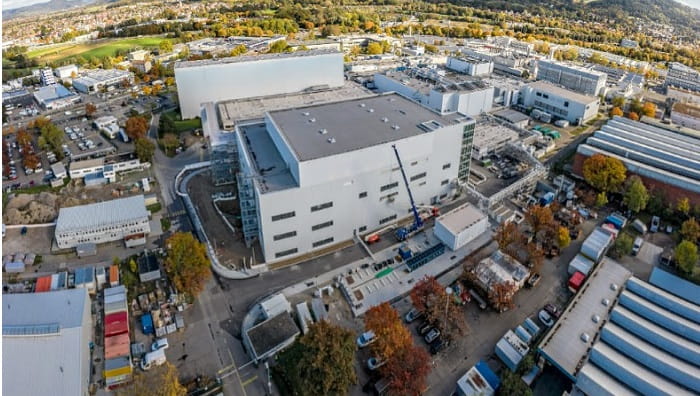
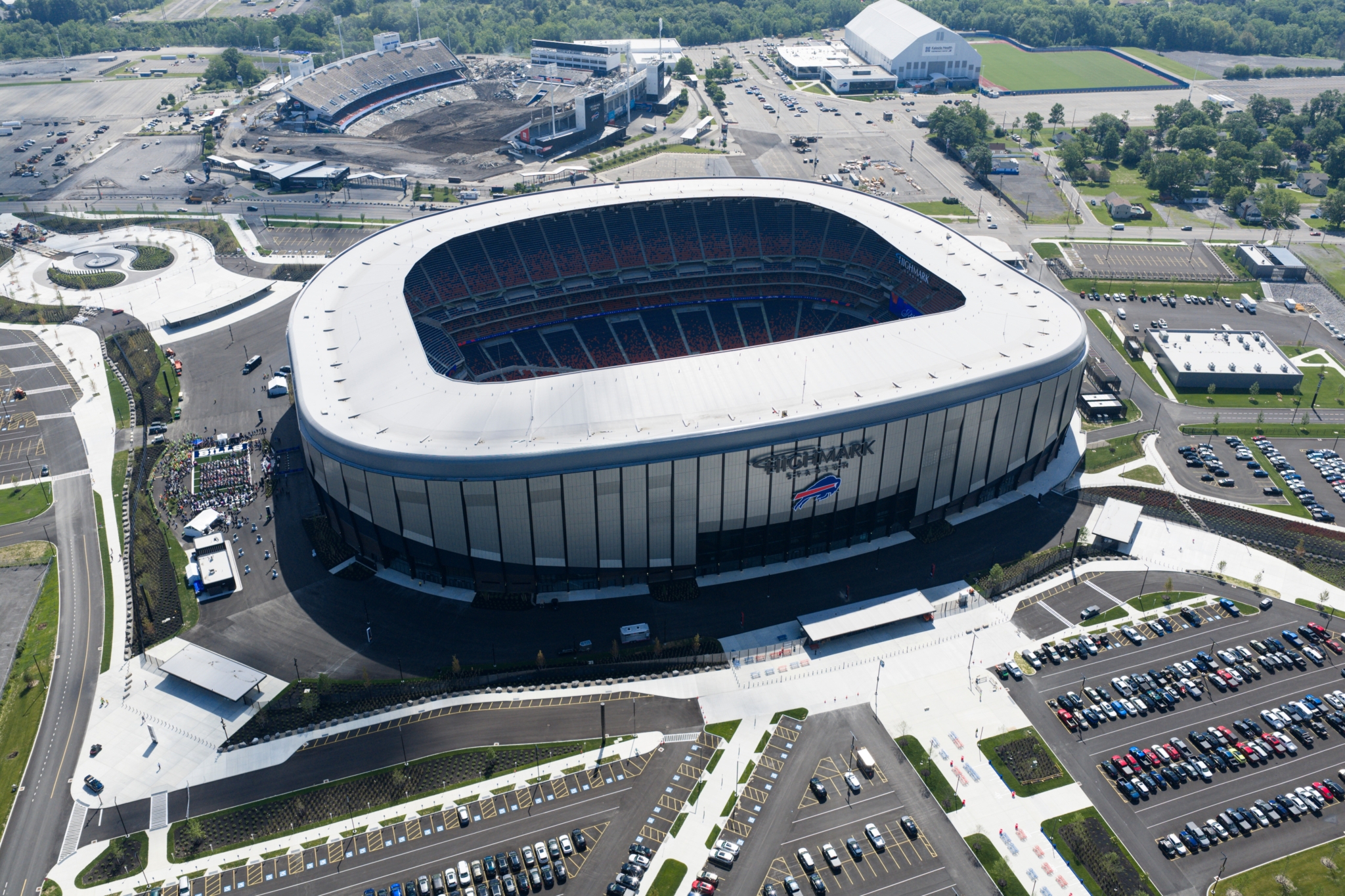
Rising beside the Buffalo Bills football team’s former home in Orchard Park, the recently completed $2.2 billion Highmark Stadium is more than the NFL’s newest venue. Built by thousands of skilled workers over three years, the open-air stadium stands as both a home for one of football’s most passionate fan bases and a testament to American manufacturing, engineering and construction expertise.
This new home of the Bills, and the affectionately known “Bills Mafia” fanbase, will be showcased tonight across America as the Bills host the Detroit Lions (Prime, 8:15 p.m. ET) in the team’s first home game of the early NFL season. Most Americans will get their first glimpse of the structure, which was built with nearly 100%, melted and poured, American-made steel.
The structural steel in the new Highmark Stadium involved a massive supply chain of 16 different fabrication companies. The Northern Division of Cives Steel Company, based in Gouverneur, New York, was the prime contractor on the steel procurement project, fabricating approximately half of the building’s 25,000 tons of steel. A total of 60% of the stadium steel was produced in New York.
The stadium was a joint construction project between Gilbane and Turner construction companies under the watchful eye of the Erie County Stadium Corporation. It became the largest construction project in Western New York history.
The $2.2 billion structure is located on a 242-acre site directly across the street from the old stadium, which has been demolished. There was a groundbreaking for the project on June 5, 2023, and the ribbon cutting to open the field of play took place on June 30, 2026.
While the stadium itself will provide many hundreds of jobs during operation, it took a workforce of approximately 6,000 more than 5 million hours to complete construction.
You may wonder why they would build an outdoor stadium in an area that is at the mercy of the effects of wintertime snow and wind.
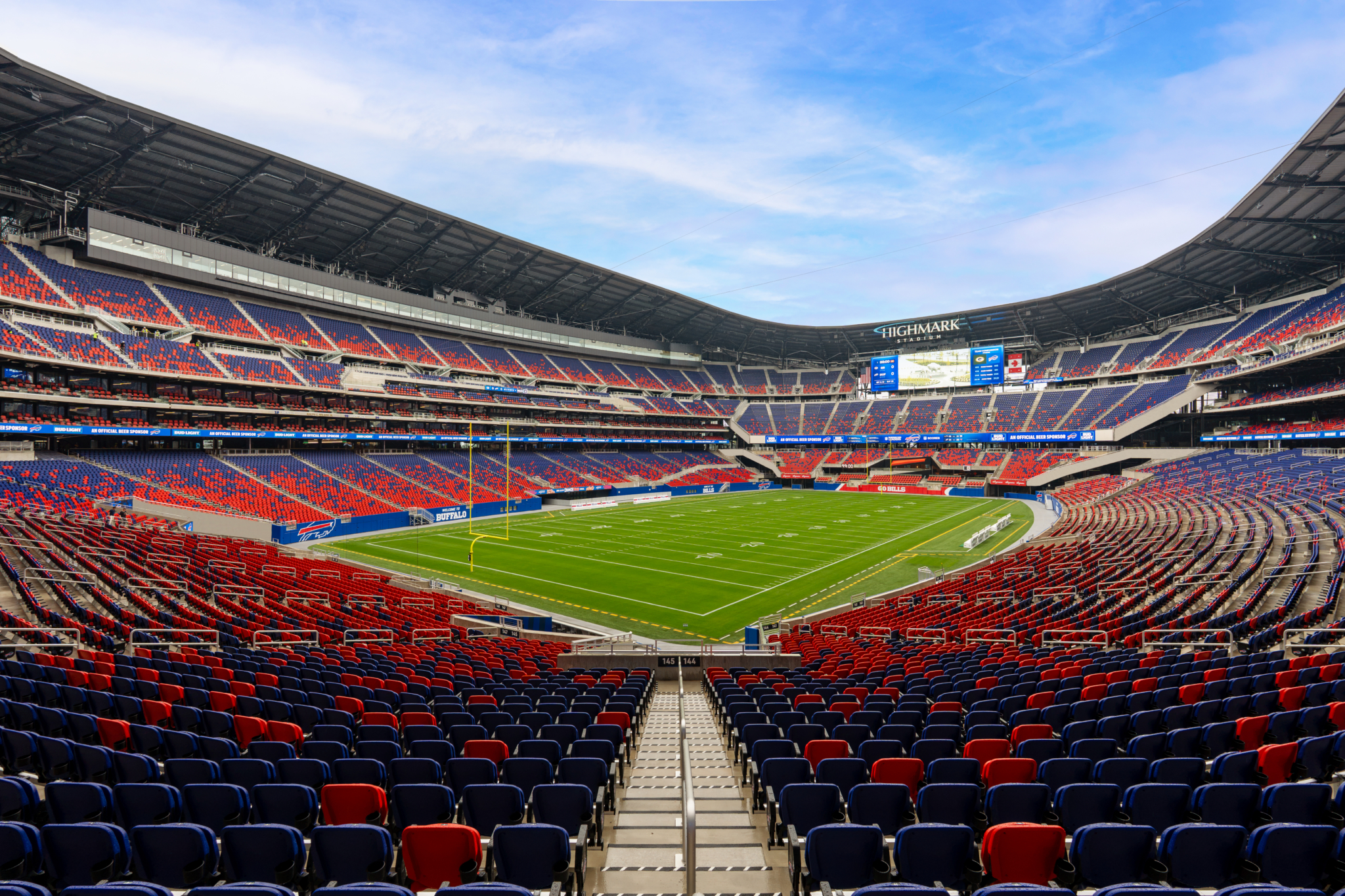
But that is exactly the point. Blue collar fans with grit and gumption give the Bills an even stronger home-field advantage than most cities. But unlike the old Rich Stadium, Highmark has a 360-degree canopy that covers more than 60% of the seating bowl, specifically designed to mitigate the typical howling winds.
The seating capacity has been reduced to 60,108 from 71,608, a trend that continues with many new stadium builds. There may be fewer seats in the bowl, but the cozy configuration will no doubt compound fans’ enthusiasm.
The playing field is 100% Kentucky Bluegrass, cultivated in New Jersey, and features underground heating coils to prevent freezing. The old Rich Stadium featured artificial turf so the switch to real grass is a step up for players and fans alike.
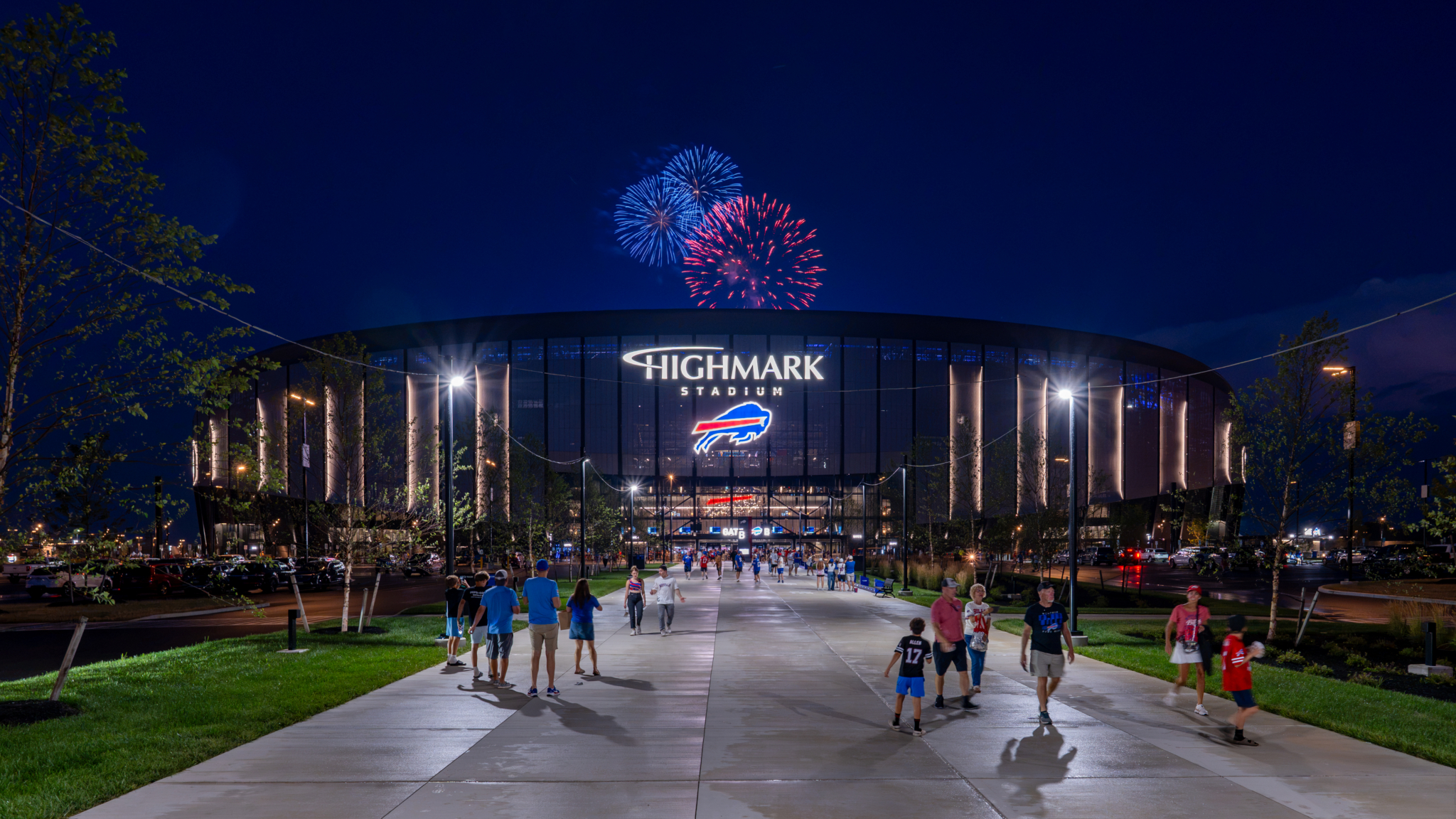
The stadium’s design acknowledges Buffalo’s industrial past. Brick and metal dominate the exterior, creating a visual connection to the factories, warehouses, grain elevators and manufacturing facilities that helped shape the region. Massive vertical architectural elements wrap around the structure, giving it a sense of permanence and durability while reinforcing the connection to Buffalo’s blue-collar identity.
The building is also something of a throwback to older stadiums, with stacked, steeper tiered seating to bring fans closer to the field and amplify the exuberance of the Bills Mafia. The concourses are open, with 360-degree circulation that lets fans view the field and not miss plays when running to the concession stands or bathrooms.
Designed by the Populous architectural firm, the stadium exterior features an iron-spot brick base honoring the Buffalo Memorial Auditorium, vertical fin colonnades and perforated metal panels designed to mitigate high winds.
“We set out to design an authentically Buffalo stadium for the Bills and their fans,” said Johnathan Mallie, the managing director for the Americas for Populous. “Our focus was to create the most intimate and intimidating atmosphere possible.”
The building’s steel didn’t just come from anywhere — who fabricated it mattered too. Highmark Stadium created thousands of jobs over the past three years and met its goals for contracting work to Minority-and-Women-Owned Business Enterprises (MWBEs). The project comfortably passed New York State’s 30% mandate for MWBE participation.
The total MWBE investment was more than $490 million in contract payments that went to diverse firms. More than $250 million of that allocation went directly to regional Western New York businesses located within 100 miles of the stadium.
Upstate Steel in Blasdell, New York, is one of the regional companies that benefitted from the MWBE allocations. The woman-owned company fabricated 24 of the 94 vertical fins placed on Highmark’s exterior. It also manufactured the girts that hold the fins in place.
“This is a once-in-a-lifetime project for our community, and the fact that a local steel fabricator was able to have such a great part of this project makes us all so proud,” said Upstate Steel president Lauren Chmielowiec. “All the steel on the job is required to be melted in America, so it’s all domestic steel, which is obviously great.”
Of the $2.2 billion cost of the stadium, $850 million came from New York State and $250 million from Erie County. The Buffalo Bills paid the remaining funds in this public-private endeavor, and the team has signed a 30-year lease to stay in Western New York.
Highmark Stadium was designed and built to provide a close-up fan experience and to top out the decibel meter when opposing quarterbacks are trying to run a play. For the faint of heart, the stadium also has seven sensory rooms where fans can get a break from the noise of sellout crowds.
The new Highmark Stadium means a lot of things to different people.
To most of America, tuning in tonight to watch the Bills host the Lions might just look like another football stadium built with steel and brick and grass in the middle.
But grit doesn’t show up on television. Neither does melted-and-poured American steel, or a 30-year lease that says the Bills aren’t going anywhere, or a region betting $2.2 billion that its best days aren’t behind it.
Buffalo used to build the things that built America. Tonight, under the lights and the roar of Bills Mafia, it’s proving it still can.
The Alliance for American Manufacturing does not receive a commission from purchases made through the above links, nor was the organization or author paid for favorable coverage.
Labeling Note: This story is intended to highlight companies that support American jobs and that make great products in the United States. We rely on the companies listed to provide accurate information regarding their domestic operations and their products. Each company featured is individually responsible for labeling and advertising their products according to applicable standards, such as the Federal Trade Commission’s “Made in USA” standard or California’s “Made in USA” labeling law. We do not review individual products for compliance or claim that because a company is listed in the guide that their products comply with specific labeling or advertising standards. Our focus is on supporting companies that create American jobs.
For more on the Federal Trade Commission’s standards for “Made in USA” claims and California’s “Made in USA” labeling law, please also read this guest post by Dustin Painter and Kristi Wolff of Kelly Drye & Warren, LLP.