Mobile Impact and Cone Crushers for Recycling and Aggregates
Metso introduces diesel-electric impact and direct-drive cone crushing plants to optimize concrete recycling and high-specification aggregate production. www.metso.com Metso has engineered two tracked processing units designed to address specific operational demands within demolition recycling and quarry aggregate production. The deployment pairs a diesel-electric mobile impact crusher featuring integrated sorting systems with a direct-drive cone crusher configured for multi-stage material classification. Processing Demolition Waste via Electrified Impact Crushing Urban infrastructure renewal generates high volumes of concrete, asphalt, and mixed demolition debris containing structural reinforcement, wood, and composite contaminants. Processing these variable feeds requires equipment capable of separating non-mineral fractions without interrupting material flow. The 70-tonne Lokotrack LT400RS addresses these feed characteristics using a 250 kW Nordberg NP1213MR horizontal impact crusher powered by a 430 kW onboard generator set, which can also draw energy directly from an external power grid to lower fuel burn, acoustic emissions, and direct exhaust output. Material sizing and separation are handled in an enclosed closed-circuit configuration. The unit integrates a 6.4-square-meter dual-deck product screen, an air-based wind sifter for low-density foreign matter such as timber or plastic, and an adjustable electromagnet for ferrous metal extraction. Broad conveyor geometries and clearances maintain continuous feed rates while reducing blockage risks. Safety and process regulation are managed mechanically and digitally: an automated mechanical interlock restricts access to the crushing chamber until the rotor achieves a full stop, while the ICX automation interface provides standardized production recipes and system diagnostic telemetry. According to Jarmo Vuorenpää, Vice President of Track Solutions at Metso, the equipment configuration addresses requirements for dependable capacity, active material sorting, and inter-site relocation, applying dual-source electrical drive architecture to lower per-tonne operating expenditures. Integrated Pre-Screening and Direct-Drive Cone Reduction For secondary and tertiary rock processing, the Lokotrack LT200HPX combines material classification and reduction within a self-contained mobile footprint. The unit employs a Nordberg HP200e cone crusher driven via a direct mechanical transmission to maximize driveline efficiency. The cone assembly utilizes backingless wear liners, eliminating the curing time and hazardous chemical handling associated with traditional resin-backed manganese mantles. Material flow flexibility is managed through modular screening arrangements, incorporating an optional dual-deck pre-screen alongside a 5.6-square-meter dual-deck final sizing screen. Wide discharge belts handle circulating loads, and hydraulic folding mechanisms reduce envelope dimensions for transport on standard heavy-haul trailers. Both crushing plants integrate onboard operating software with cloud-based fleet monitoring, feeding operational metrics into predictive maintenance algorithms to schedule component interventions before mechanical failures occur. Additional Context This section details technical specifications and competitive benchmarking not included in the original product announcement. Within the high-capacity recycling sector, the LT400RS competes directly with dual-power impact units such as the Kleemann MOBIREX MR 130i EVO2 and the Keestrack R6e. The Metso unit relies on a 250 kW rotor input with an independent 430 kW generating station, operating at parity with the Keestrack R6e diesel-electric architecture, while exceeding the screening area of typical class competitors through its 6.4-square-meter secondary screen deck. In cone crushing applications, the LT200HPX benchmark compares with the Sandvik QS332 and Terex Finlay C-1540RS. While competitors frequently employ hydraulic drivelines or standalone screen attachments, Metso utilizes a direct-drive coupling to reduce parasitic driveline energy losses, paired with a dual-deck pre-screen to scalp undersize material prior to the crushing cavity, directly reducing liner wear per processed metric ton. Edited by Evgeny Churilov, Induportals Media - Adapted by AI. www.metso.com Powered by Induportals Media Publishing
 machineryasia
Metso introduces diesel-electric impact and direct-drive cone crushing plants to optimize concrete recycling and high-specification aggregate production.
www.metso.com
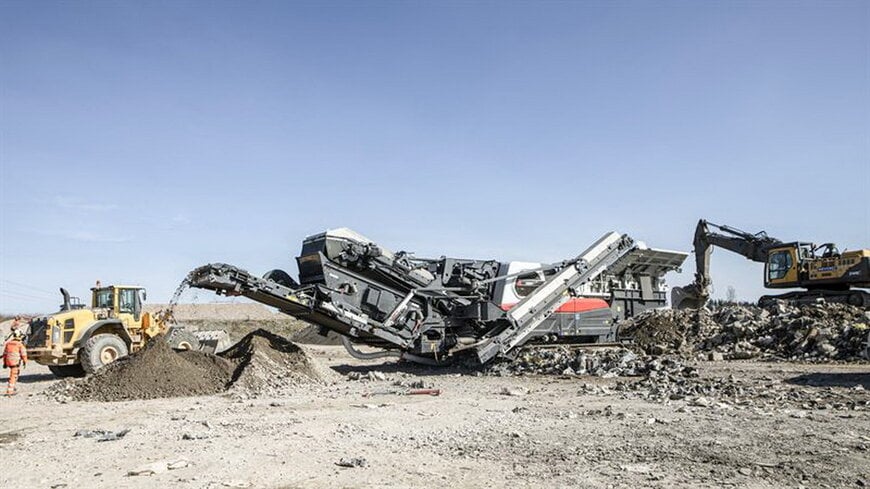
Metso has engineered two tracked processing units designed to address specific operational demands within demolition recycling and quarry aggregate production. The deployment pairs a diesel-electric mobile impact crusher featuring integrated sorting systems with a direct-drive cone crusher configured for multi-stage material classification.
Processing Demolition Waste via Electrified Impact Crushing
Urban infrastructure renewal generates high volumes of concrete, asphalt, and mixed demolition debris containing structural reinforcement, wood, and composite contaminants. Processing these variable feeds requires equipment capable of separating non-mineral fractions without interrupting material flow. The 70-tonne Lokotrack LT400RS addresses these feed characteristics using a 250 kW Nordberg NP1213MR horizontal impact crusher powered by a 430 kW onboard generator set, which can also draw energy directly from an external power grid to lower fuel burn, acoustic emissions, and direct exhaust output.
Material sizing and separation are handled in an enclosed closed-circuit configuration. The unit integrates a 6.4-square-meter dual-deck product screen, an air-based wind sifter for low-density foreign matter such as timber or plastic, and an adjustable electromagnet for ferrous metal extraction. Broad conveyor geometries and clearances maintain continuous feed rates while reducing blockage risks. Safety and process regulation are managed mechanically and digitally: an automated mechanical interlock restricts access to the crushing chamber until the rotor achieves a full stop, while the ICX automation interface provides standardized production recipes and system diagnostic telemetry.
According to Jarmo Vuorenpää, Vice President of Track Solutions at Metso, the equipment configuration addresses requirements for dependable capacity, active material sorting, and inter-site relocation, applying dual-source electrical drive architecture to lower per-tonne operating expenditures.
Integrated Pre-Screening and Direct-Drive Cone Reduction
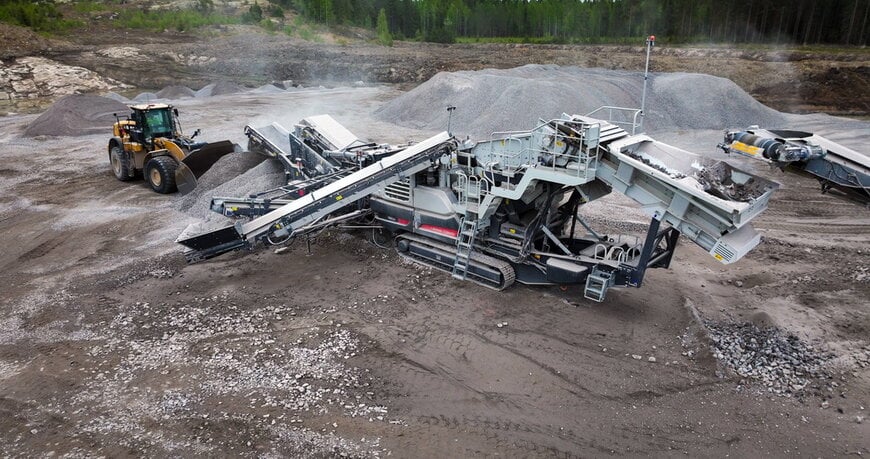
For secondary and tertiary rock processing, the Lokotrack LT200HPX combines material classification and reduction within a self-contained mobile footprint. The unit employs a Nordberg HP200e cone crusher driven via a direct mechanical transmission to maximize driveline efficiency. The cone assembly utilizes backingless wear liners, eliminating the curing time and hazardous chemical handling associated with traditional resin-backed manganese mantles.
Material flow flexibility is managed through modular screening arrangements, incorporating an optional dual-deck pre-screen alongside a 5.6-square-meter dual-deck final sizing screen. Wide discharge belts handle circulating loads, and hydraulic folding mechanisms reduce envelope dimensions for transport on standard heavy-haul trailers. Both crushing plants integrate onboard operating software with cloud-based fleet monitoring, feeding operational metrics into predictive maintenance algorithms to schedule component interventions before mechanical failures occur.
Additional Context
This section details technical specifications and competitive benchmarking not included in the original product announcement.
Within the high-capacity recycling sector, the LT400RS competes directly with dual-power impact units such as the Kleemann MOBIREX MR 130i EVO2 and the Keestrack R6e. The Metso unit relies on a 250 kW rotor input with an independent 430 kW generating station, operating at parity with the Keestrack R6e diesel-electric architecture, while exceeding the screening area of typical class competitors through its 6.4-square-meter secondary screen deck. In cone crushing applications, the LT200HPX benchmark compares with the Sandvik QS332 and Terex Finlay C-1540RS. While competitors frequently employ hydraulic drivelines or standalone screen attachments, Metso utilizes a direct-drive coupling to reduce parasitic driveline energy losses, paired with a dual-deck pre-screen to scalp undersize material prior to the crushing cavity, directly reducing liner wear per processed metric ton.
Edited by Evgeny Churilov, Induportals Media - Adapted by AI.
www.metso.com
Powered by
Induportals Media Publishing