Mobile Energy Storage Systems Enable Off-Grid Electrified Operations
Atlas Copco introduces a high-capacity, towable charging station designed to support the electrification of remote construction and industrial work sites. www.atlascopco.com Atlas Copco is releasing the FCS 220-240, a mobile rapid charging station designed to deliver high-power electricity directly to remote, off-grid locations. This system enables the electrification of heavy construction equipment and vehicle fleets by providing a portable infrastructure capable of supporting excavators, loaders, and transport trucks without requiring permanent grid connectivity. Overcoming Power Constraints at the Point of Use As industries shift toward electric heavy machinery, the lack of fixed high-power charging infrastructure in temporary work environments has emerged as a primary bottleneck. The FCS 220-240 addresses this by integrating a 232 kWh lithium-ion energy storage system within a towable, IP55-rated chassis weighing less than 3.5 tonnes. By delivering up to 220 kW of DC charging output, the unit allows operators to extend the runtime of equipment; field testing indicates that one hour of charging can provide up to five additional operating hours. This capability reduces the requirement for diesel-powered backup generators, lowering on-site fuel consumption and carbon emissions. Energy Management and Multi-User Control The system utilizes the proprietary ECO Controller to facilitate dynamic load management, balancing charging demand against auxiliary power requirements. Beyond the DC charging capacity, the unit provides a 50 kW AC auxiliary output to power additional site loads. To manage access in complex environments—such as multi-contractor worksites or equipment rental fleets—the unit includes multi-level user access controls. Permissions are managed through integrated RFID authentication, with optional support for the Open Charge Point Protocol (OCPP) for payment processing and user tracking. These management features, combined with remote telemetry, allow for real-time monitoring of energy consumption and system diagnostics. Operational Flexibility and Integration The charging station supports hybrid operation, allowing it to be recharged via existing grid connections, external EV infrastructure, or generators simultaneously while supplying power to connected machines. This charge-to-recharge capability ensures continuous operation in remote settings. By enabling high-power charging on demand, the platform serves as a critical component of a modernized digital supply chain, allowing rental companies and project managers to track utilization metrics accurately while ensuring that electrified equipment remains operational throughout entire work cycles. Additional Context This section details technical specifications and competitive benchmarking not included in the original news release. The mobile charging sector for off-grid construction is currently occupied by competitors such as Instagrid, Aggreko, and PowerUP Energy Technologies. These systems are typically benchmarked by their energy-to-weight ratio, peak power output, and the protocol support for fleet management. The Atlas Copco FCS 220-240 differentiates itself through its 232 kWh capacity, which significantly exceeds the sub-50 kWh capacity typical of portable handheld or smaller wheeled battery banks. Competitive systems often prioritize maximum portability at the expense of high-output DC charging; however, the FCS 220-240 targets the heavy-machinery segment by mirroring industrial-grade charging speeds (220 kW) usually reserved for permanent EV depots. This capacity-to-output ratio allows for the charging of large-scale excavators which require significantly higher throughput than standard passenger vehicles. Edited by Aishwarya Mambet, Induportals Editor, with AI assistance. www.atlascopcogroup.com Powered by Induportals Media Publishing
 machineryasia
Atlas Copco introduces a high-capacity, towable charging station designed to support the electrification of remote construction and industrial work sites.
www.atlascopco.com
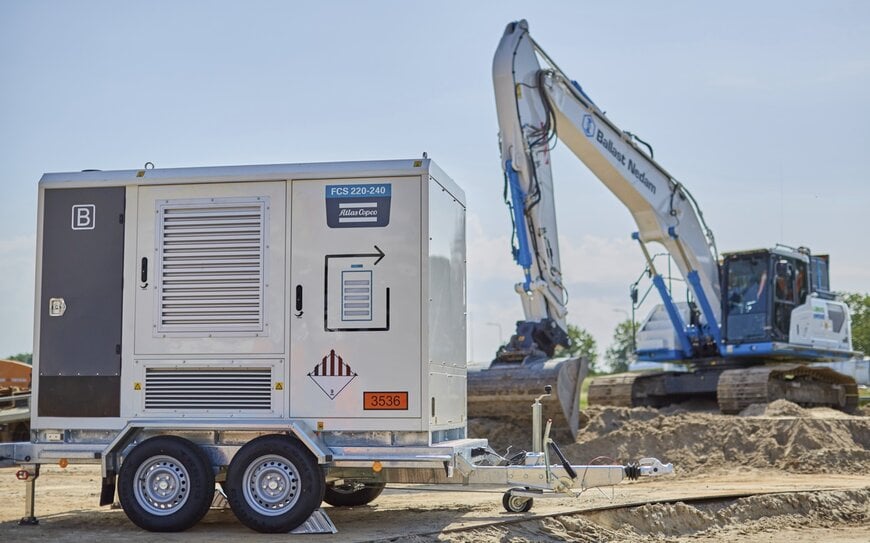
Atlas Copco is releasing the FCS 220-240, a mobile rapid charging station designed to deliver high-power electricity directly to remote, off-grid locations. This system enables the electrification of heavy construction equipment and vehicle fleets by providing a portable infrastructure capable of supporting excavators, loaders, and transport trucks without requiring permanent grid connectivity.
Overcoming Power Constraints at the Point of Use
As industries shift toward electric heavy machinery, the lack of fixed high-power charging infrastructure in temporary work environments has emerged as a primary bottleneck. The FCS 220-240 addresses this by integrating a 232 kWh lithium-ion energy storage system within a towable, IP55-rated chassis weighing less than 3.5 tonnes. By delivering up to 220 kW of DC charging output, the unit allows operators to extend the runtime of equipment; field testing indicates that one hour of charging can provide up to five additional operating hours. This capability reduces the requirement for diesel-powered backup generators, lowering on-site fuel consumption and carbon emissions.
Energy Management and Multi-User Control
The system utilizes the proprietary ECO Controller to facilitate dynamic load management, balancing charging demand against auxiliary power requirements. Beyond the DC charging capacity, the unit provides a 50 kW AC auxiliary output to power additional site loads. To manage access in complex environments—such as multi-contractor worksites or equipment rental fleets—the unit includes multi-level user access controls. Permissions are managed through integrated RFID authentication, with optional support for the Open Charge Point Protocol (OCPP) for payment processing and user tracking. These management features, combined with remote telemetry, allow for real-time monitoring of energy consumption and system diagnostics.
Operational Flexibility and Integration
The charging station supports hybrid operation, allowing it to be recharged via existing grid connections, external EV infrastructure, or generators simultaneously while supplying power to connected machines. This charge-to-recharge capability ensures continuous operation in remote settings. By enabling high-power charging on demand, the platform serves as a critical component of a modernized digital supply chain, allowing rental companies and project managers to track utilization metrics accurately while ensuring that electrified equipment remains operational throughout entire work cycles.
Additional Context
This section details technical specifications and competitive benchmarking not included in the original news release.
The mobile charging sector for off-grid construction is currently occupied by competitors such as Instagrid, Aggreko, and PowerUP Energy Technologies. These systems are typically benchmarked by their energy-to-weight ratio, peak power output, and the protocol support for fleet management. The Atlas Copco FCS 220-240 differentiates itself through its 232 kWh capacity, which significantly exceeds the sub-50 kWh capacity typical of portable handheld or smaller wheeled battery banks. Competitive systems often prioritize maximum portability at the expense of high-output DC charging; however, the FCS 220-240 targets the heavy-machinery segment by mirroring industrial-grade charging speeds (220 kW) usually reserved for permanent EV depots. This capacity-to-output ratio allows for the charging of large-scale excavators which require significantly higher throughput than standard passenger vehicles.
Edited by Aishwarya Mambet, Induportals Editor, with AI assistance.
www.atlascopcogroup.com
Powered by
Induportals Media Publishing