XCMG 14,000-Ton Ring Crane for Ultra-Heavy Construction
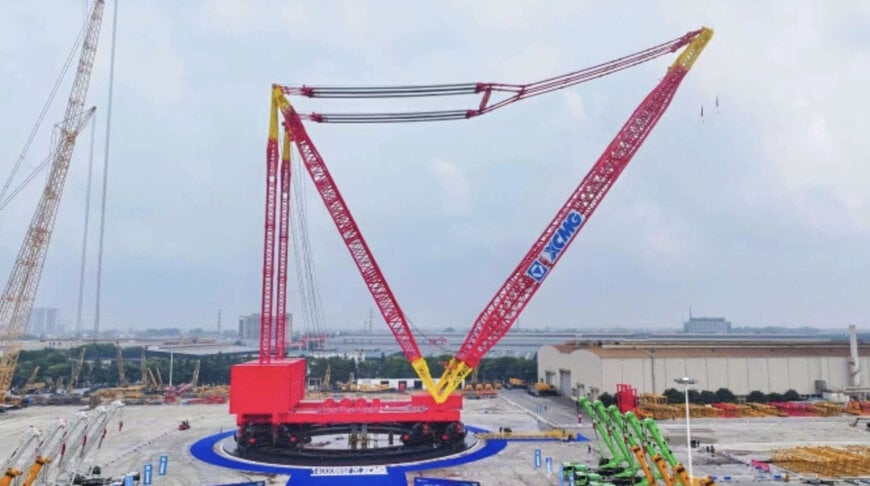
XCMG and Sinopec have developed a 14,000-ton ring crane to streamline modular assembly in nuclear, offshore wind, and conventional energy projects. www.xcmg.com As global energy infrastructure projects increasingly rely on large-scale modular construction, contractors require high-capacity lifting solutions to handle massive prefabricated components. To address this industrial requirement, XCMG, in partnership with Sinopec Heavy Lifting & Transportation Co., Ltd., has completed the first main unit of a new 14,000-ton ring crane, establishing a new operational benchmark for ultra-heavy engineering equipment. Engineering Context Modern construction methodologies in the energy sector are shifting away from sectional, on-site assembly toward the installation of complete, prefabricated modules. This transition significantly reduces construction timelines and improves quality control but demands lifting equipment capable of handling extreme loads at extensive working radii. Traditional crawler cranes often lack the load moment capacity required to position these colossal structures without necessitating frequent, time-consuming repositioning. Consequently, heavy-duty ring cranes have become essential for maintaining continuous workflow in large-scale infrastructure developments, where equipment positioning and ground-bearing constraints govern project logistics. Technical Explanation and Operating Principle The 14,000-ton ring crane utilizes a modular structural configuration comprising two main units engineered to work in tandem. The first completed unit possesses the capability to execute lifting operations independently, providing scalability based on early-stage project requirements. Upon full integration of both units, the machine relies on a pioneering electric direct-drive system. This architecture converts electrical power directly into mechanical motion, bypassing the inherent energy losses associated with traditional mechanical transmission stages. This direct conversion mechanism yields energy savings exceeding 30 percent and boosts overall operating efficiency by 20 percent, directly lowering carbon emissions and operational fuel costs during extended project deployments. Product Relevance and Technical Specifications Operating as the highest-capacity ring crane developed to date, the fully assembled system will deliver a maximum lifting capacity of 14,000 tons and an unprecedented maximum lifting moment of 700,000 ton-meters. These parameters enable the equipment to maneuver exceptionally heavy loads across wide operational footprints without relocating the base structure. Yang Dongsheng, chairman of XCMG Group and XCMG Machinery, noted that the partnership with Sinopec has created a new integrated model spanning research, development, manufacturing, and application, setting an industry benchmark for the independent innovation of major technical equipment. Real-World Applications and Industrial Integration The physical scale and lifting capabilities of the crane are specifically calibrated for conventional energy, nuclear power, and offshore wind installations. In the conventional energy and petrochemical sectors, the crane facilitates the lifting of massive vessels and processing towers as complete single units, eliminating the need for sectional hoisting. This capability drastically reduces the risks and labor hours associated with in-situ assembly, field welding, and pressure testing. For nuclear power plant construction, the crane delivers a unique operational advantage: from a single stationary position utilizing a single boom configuration, it can hoist and place plant modules and major critical equipment for two separate nuclear islands simultaneously. In offshore wind applications, the exceptional lifting height and load capacity support the onshore staging and base assembly of next-generation, larger-capacity wind turbines. Additional Context This section details technical specifications and competitive benchmarking not included in the original product announcement. Within the heavy-lifting industry, ring cranes represent the ultimate tier of load-handling equipment, distinguished from crawler cranes by their circular track (ring) footprint, which distributes extreme ground-bearing pressures over a substantially larger area. The industry trend toward modularization—particularly in Generation III+ nuclear reactors and Small Modular Reactors (SMRs)—requires cranes capable of exceeding 10,000-ton capacities to place steel containment vessels and reactor pressure vessels in single operations. A system offering a 700,000 ton-meter load moment substantially alters site logistics, allowing engineering procurement and construction (EPC) contractors to expand the size and weight of prefabricated modules. This operational shift transfers thousands of working hours from hazardous on-site heights to highly controlled, ground-level fabrication environments, fundamentally accelerating commis
 machineryasia
XCMG and Sinopec have developed a 14,000-ton ring crane to streamline modular assembly in nuclear, offshore wind, and conventional energy projects.
www.xcmg.com
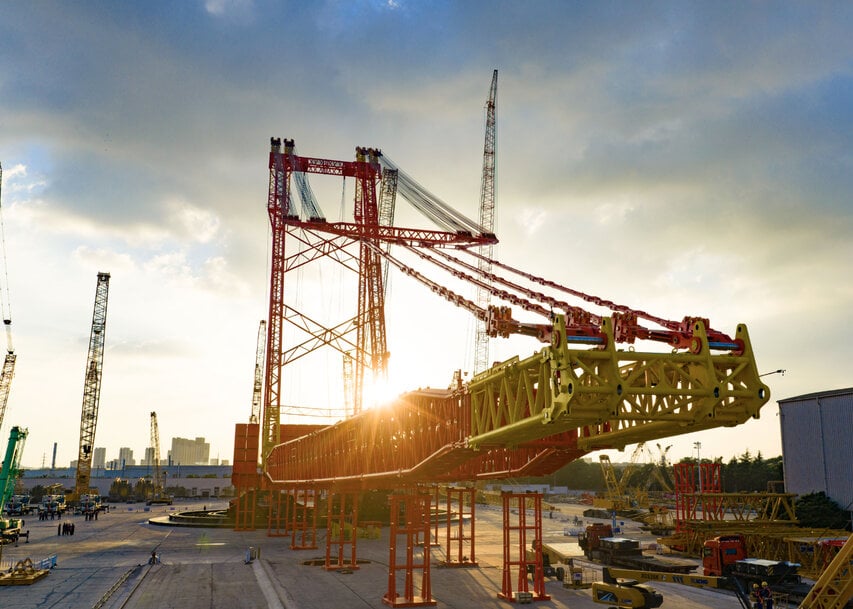
As global energy infrastructure projects increasingly rely on large-scale modular construction, contractors require high-capacity lifting solutions to handle massive prefabricated components. To address this industrial requirement, XCMG, in partnership with Sinopec Heavy Lifting & Transportation Co., Ltd., has completed the first main unit of a new 14,000-ton ring crane, establishing a new operational benchmark for ultra-heavy engineering equipment.
Engineering Context
Modern construction methodologies in the energy sector are shifting away from sectional, on-site assembly toward the installation of complete, prefabricated modules. This transition significantly reduces construction timelines and improves quality control but demands lifting equipment capable of handling extreme loads at extensive working radii. Traditional crawler cranes often lack the load moment capacity required to position these colossal structures without necessitating frequent, time-consuming repositioning. Consequently, heavy-duty ring cranes have become essential for maintaining continuous workflow in large-scale infrastructure developments, where equipment positioning and ground-bearing constraints govern project logistics.
Technical Explanation and Operating Principle
The 14,000-ton ring crane utilizes a modular structural configuration comprising two main units engineered to work in tandem. The first completed unit possesses the capability to execute lifting operations independently, providing scalability based on early-stage project requirements. Upon full integration of both units, the machine relies on a pioneering electric direct-drive system. This architecture converts electrical power directly into mechanical motion, bypassing the inherent energy losses associated with traditional mechanical transmission stages. This direct conversion mechanism yields energy savings exceeding 30 percent and boosts overall operating efficiency by 20 percent, directly lowering carbon emissions and operational fuel costs during extended project deployments.
Product Relevance and Technical Specifications
Operating as the highest-capacity ring crane developed to date, the fully assembled system will deliver a maximum lifting capacity of 14,000 tons and an unprecedented maximum lifting moment of 700,000 ton-meters. These parameters enable the equipment to maneuver exceptionally heavy loads across wide operational footprints without relocating the base structure. Yang Dongsheng, chairman of XCMG Group and XCMG Machinery, noted that the partnership with Sinopec has created a new integrated model spanning research, development, manufacturing, and application, setting an industry benchmark for the independent innovation of major technical equipment.
Real-World Applications and Industrial Integration
The physical scale and lifting capabilities of the crane are specifically calibrated for conventional energy, nuclear power, and offshore wind installations. In the conventional energy and petrochemical sectors, the crane facilitates the lifting of massive vessels and processing towers as complete single units, eliminating the need for sectional hoisting. This capability drastically reduces the risks and labor hours associated with in-situ assembly, field welding, and pressure testing. For nuclear power plant construction, the crane delivers a unique operational advantage: from a single stationary position utilizing a single boom configuration, it can hoist and place plant modules and major critical equipment for two separate nuclear islands simultaneously. In offshore wind applications, the exceptional lifting height and load capacity support the onshore staging and base assembly of next-generation, larger-capacity wind turbines.
Additional Context
This section details technical specifications and competitive benchmarking not included in the original product announcement.
Within the heavy-lifting industry, ring cranes represent the ultimate tier of load-handling equipment, distinguished from crawler cranes by their circular track (ring) footprint, which distributes extreme ground-bearing pressures over a substantially larger area. The industry trend toward modularization—particularly in Generation III+ nuclear reactors and Small Modular Reactors (SMRs)—requires cranes capable of exceeding 10,000-ton capacities to place steel containment vessels and reactor pressure vessels in single operations. A system offering a 700,000 ton-meter load moment substantially alters site logistics, allowing engineering procurement and construction (EPC) contractors to expand the size and weight of prefabricated modules. This operational shift transfers thousands of working hours from hazardous on-site heights to highly controlled, ground-level fabrication environments, fundamentally accelerating commissioning schedules for major energy infrastructure.
Edited by Maria Brueva, Induportals editor – adapted by AI.
www.xcmgglobal.com
Powered by
Induportals Media Publishing