Autonomous Battery-Electric Surface Drilling Concept for Intelligent Mining
Sandvik demonstrated an autonomous surface rig in Tampere to advance zero-emission drilling cycles and mine-wide process orchestration through digital system integration. www.home.sandvik The mining technology sector has introduced an autonomous, battery-electric surface drilling architecture designed to eliminate diesel emissions while automating tool handling and fleet coordination in open-pit extraction. Developed to address productivity bottlenecks and personnel safety hazards in hard-rock operations, the system integrates onboard robotics, dynamic computer vision, and fleet-management artificial intelligence into surface excavation workflows. Robotic Tool Handling and Machine Perception Architecture Engineered without an operator cabin, the platform relies on complete mechanical automation for standard consumable cycling. An onboard robotic manipulator executes bit changes, collar pipe installations, and down-the-hole hammer replacements directly from onboard storage racks, removing human operators from the high-risk blast zone during standard wear cycles. Machine sensory payloads incorporate dynamic object classification systems capable of identifying personnel, stationary infrastructure, and mobile machinery to adjust vehicle speed or abort operations when safe standoff distances are breached. External LED matrix panels display functional states to external site workers, and automated post-hole telemetry tools record real-time drill depth and downhole deviation data to verify blast pattern precision prior to charging. Fleet Orchestration via Real-Time Digital Twin Systems The drill communicates bidirectionally with a live digital twin using natural-language management infrastructure. A supervisory software agent assigns pattern geometries and coordinates simultaneous vehicle movement across adjacent site assets, leaving the rig to independently calculate path trajectories, hole sequencing, and cycle adaptations based on localized bench conditions. System oversight allows remote human operators to query asset status using conversational inputs and restrict manual intervention strictly to operational exceptions. This architecture follows previous concept iterations, including automated underground loaders introduced in 2020, to test software and power subsystems for transfer into high-capacity rotary blast-hole units and track drills. Additional Context: Technical Specifications and Competitive Benchmarking Fully autonomous, zero-emission surface production drilling requires integration across three core metrics: consumable management automation, zero-tailpipe energy architecture, and fleet data interchange. In surface production drilling, commercial autonomous solutions such as the Epiroc Pit Viper series and the Caterpillar MD6310 support remote telemetry, semi-autonomous tramming, and automated pattern drilling through proprietary systems like Epiroc RCS and Cat MineStar. However, operational blast-hole platforms typically rely on manual crews or specialized support trucks to replace down-the-hole hammers, swap dull bits, and handle heavy drill-string components. By integrating a dedicated articulated arm on the drill chassis for complete consumable replenishment, the Sandvik architecture targets full physical independence from maintenance tenders during active drill rounds. From an energy-carrier perspective, conventional production blast-hole operations predominantly deploy diesel engines or tethered electric-cable feeds. Tethered electric configurations restrict vehicle mobility across dynamic blast patterns, while diesel units produce localized greenhouse gases and acoustic emissions. By operating entirely on onboard industrial battery cells combined with cabin-free navigation, this architecture addresses mechanical envelope limitations and energy portability, positioning autonomous mobile electrification as a direct functional benchmark against traditional high-tonnage rotary surface units. Edited by Evgeny Churilov, Induportals Media - Adapted by AI. www.mining.sandvik Powered by Induportals Media Publishing
 machineryasia
Sandvik demonstrated an autonomous surface rig in Tampere to advance zero-emission drilling cycles and mine-wide process orchestration through digital system integration.
www.home.sandvik
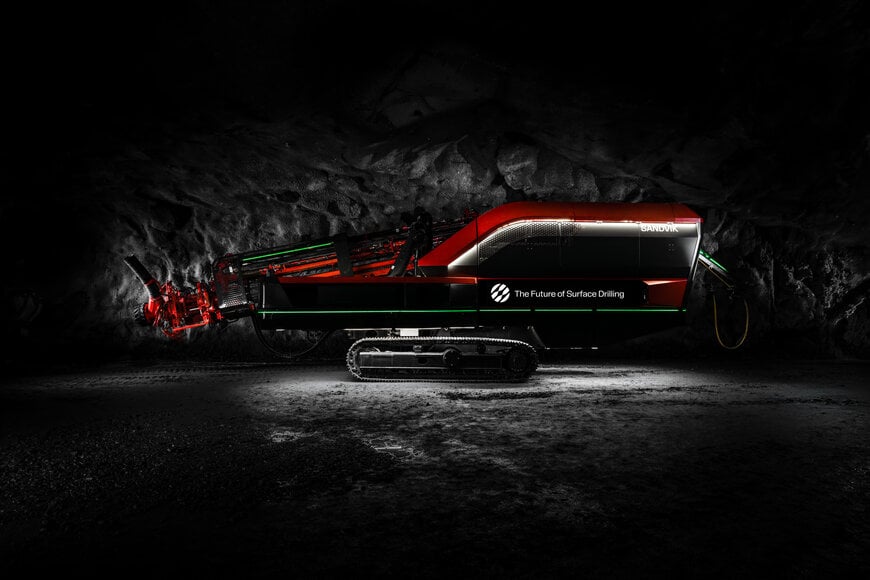
The mining technology sector has introduced an autonomous, battery-electric surface drilling architecture designed to eliminate diesel emissions while automating tool handling and fleet coordination in open-pit extraction. Developed to address productivity bottlenecks and personnel safety hazards in hard-rock operations, the system integrates onboard robotics, dynamic computer vision, and fleet-management artificial intelligence into surface excavation workflows.
Robotic Tool Handling and Machine Perception Architecture
Engineered without an operator cabin, the platform relies on complete mechanical automation for standard consumable cycling. An onboard robotic manipulator executes bit changes, collar pipe installations, and down-the-hole hammer replacements directly from onboard storage racks, removing human operators from the high-risk blast zone during standard wear cycles. Machine sensory payloads incorporate dynamic object classification systems capable of identifying personnel, stationary infrastructure, and mobile machinery to adjust vehicle speed or abort operations when safe standoff distances are breached. External LED matrix panels display functional states to external site workers, and automated post-hole telemetry tools record real-time drill depth and downhole deviation data to verify blast pattern precision prior to charging.
Fleet Orchestration via Real-Time Digital Twin Systems
The drill communicates bidirectionally with a live digital twin using natural-language management infrastructure. A supervisory software agent assigns pattern geometries and coordinates simultaneous vehicle movement across adjacent site assets, leaving the rig to independently calculate path trajectories, hole sequencing, and cycle adaptations based on localized bench conditions. System oversight allows remote human operators to query asset status using conversational inputs and restrict manual intervention strictly to operational exceptions. This architecture follows previous concept iterations, including automated underground loaders introduced in 2020, to test software and power subsystems for transfer into high-capacity rotary blast-hole units and track drills.
Additional Context: Technical Specifications and Competitive Benchmarking
Fully autonomous, zero-emission surface production drilling requires integration across three core metrics: consumable management automation, zero-tailpipe energy architecture, and fleet data interchange.
In surface production drilling, commercial autonomous solutions such as the Epiroc Pit Viper series and the Caterpillar MD6310 support remote telemetry, semi-autonomous tramming, and automated pattern drilling through proprietary systems like Epiroc RCS and Cat MineStar. However, operational blast-hole platforms typically rely on manual crews or specialized support trucks to replace down-the-hole hammers, swap dull bits, and handle heavy drill-string components. By integrating a dedicated articulated arm on the drill chassis for complete consumable replenishment, the Sandvik architecture targets full physical independence from maintenance tenders during active drill rounds.
From an energy-carrier perspective, conventional production blast-hole operations predominantly deploy diesel engines or tethered electric-cable feeds. Tethered electric configurations restrict vehicle mobility across dynamic blast patterns, while diesel units produce localized greenhouse gases and acoustic emissions. By operating entirely on onboard industrial battery cells combined with cabin-free navigation, this architecture addresses mechanical envelope limitations and energy portability, positioning autonomous mobile electrification as a direct functional benchmark against traditional high-tonnage rotary surface units.
Edited by Evgeny Churilov, Induportals Media - Adapted by AI.
www.mining.sandvik
Powered by
Induportals Media Publishing