Mobile Crane Fleet Expansion for Complex Industrial Projects
The crane and heavy haulage company Mert Vinc has integrated a new 300-tonne mobile crane into its machinery fleet to address complex lifting requirements across various infrastructure and energy projects. www.liebherr.com The crane and heavy haulage company Mert Vinc has integrated a new 300-tonne mobile crane into its machinery fleet to address complex lifting requirements across various infrastructure and energy projects. The procurement aims to enhance lifting capacities, extend operational reach, and provide flexible configuration profiles for execution in physically restricted environments. The primary objectives of this fleet update are to increase process versatility, maintain structural safety standards, and optimize equipment deployment across heterogeneous industrial layouts. Physical Constraints and Operational Layout Challenges Modern industrial facilities, petrochemical refineries, and urban construction zones present tightly confined spaces that limit the movement and setup of standard heavy-duty machinery. Conventional lifting operations with large-scale machinery often face a compromise between high load performance and physical footprint dimensions. In tight operational layouts, using equipment with fixed outriggers or restricted boom lengths increases setup times, elevates occupational hazards, and requires extensive site adjustments. This operational vulnerability demands an adaptable kinematic architecture capable of maximizing load capacities without extending the physical equipment footprint beyond site boundaries. Technical Specifications of the Multi-Axle Vehicle To overcome layout limitations, the chosen technical solution relies on a 6-axle mobile crane design that integrates specific structural modifications to optimize load-to-space ratios: Telescopic Boom Configuration: The unit features a 90-meter telescopic boom that allows long horizontal and vertical reach while remaining compact during transit and site access. Dynamic Control Architecture: The machine is operated via the LICCON3 control system, which manages the structural safety limits, real-time kinematics, and load moment indications. Variable Stabilization: The machine uses the VarioBasePlus outrigger system, which allows each crane outrigger to be extended to independent lengths, automatically calculating the maximum safe lifting capacity based on the real-time footprint layout. For specialized tasks, the system was configured with supplementary lattice jibs, a secondary winch assembly, and 7-meter extension sections to expand the overall application scope. Operational Deployment Profiles across Diverse Sectors The integration of the 300-tonne vehicle into the fleet follows a rolling deployment schedule across multiple key industry sectors. The equipment is designated for initial field deployment in the petrochemical sector to handle high-tonnage plant maintenance and structural installations. Subsequent field tasks include the logistical assembly of tower cranes on commercial building sites, high-altitude installations for national power line networks, and heavy components handling within confined shipyard environments. The long-term commercial cooperation established between the equipment vendor and the fleet operator since 2024 forms the logistical foundation for this fleet expansion, which has included the commissioning of five new heavy units within a short operational timeframe. Objective Benefits in Material Handing and Site Safety The automation of safety parameters via the integrated control system and variable outriggers allows the operating personnel to execute lifts directly near rock barriers, existing buildings, or active industrial processing loops. Because the system continuously evaluates structural center-of-gravity shifts based on real-time leg extensions, the setup process does not require uniform footprint stabilization. This operational flexibility reduces site preparation overhead, prevents structural overloads, and enhances worker safety by keeping personnel out of hazardous blind spots. By pairing high load capabilities with variable outrigger tracking, the fleet operator can eliminate the need for secondary support vehicles, thereby lowering deployment costs and optimizing material handling efficiency on complex construction sites. Edited by Sucithra Mani, Induportals editor – adapted by AI. www.liebherr.com Powered by Induportals Media Publishing
 machineryasia
The crane and heavy haulage company Mert Vinc has integrated a new 300-tonne mobile crane into its machinery fleet to address complex lifting requirements across various infrastructure and energy projects.
www.liebherr.com
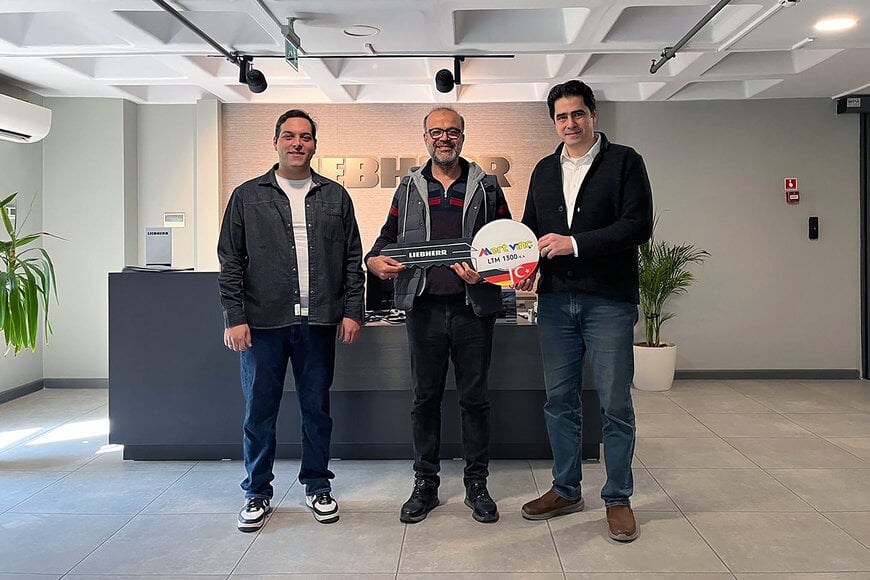
The crane and heavy haulage company Mert Vinc has integrated a new 300-tonne mobile crane into its machinery fleet to address complex lifting requirements across various infrastructure and energy projects. The procurement aims to enhance lifting capacities, extend operational reach, and provide flexible configuration profiles for execution in physically restricted environments. The primary objectives of this fleet update are to increase process versatility, maintain structural safety standards, and optimize equipment deployment across heterogeneous industrial layouts.
Physical Constraints and Operational Layout Challenges
Modern industrial facilities, petrochemical refineries, and urban construction zones present tightly confined spaces that limit the movement and setup of standard heavy-duty machinery. Conventional lifting operations with large-scale machinery often face a compromise between high load performance and physical footprint dimensions. In tight operational layouts, using equipment with fixed outriggers or restricted boom lengths increases setup times, elevates occupational hazards, and requires extensive site adjustments. This operational vulnerability demands an adaptable kinematic architecture capable of maximizing load capacities without extending the physical equipment footprint beyond site boundaries.
Technical Specifications of the Multi-Axle Vehicle
To overcome layout limitations, the chosen technical solution relies on a 6-axle mobile crane design that integrates specific structural modifications to optimize load-to-space ratios:
- Telescopic Boom Configuration: The unit features a 90-meter telescopic boom that allows long horizontal and vertical reach while remaining compact during transit and site access.
- Dynamic Control Architecture: The machine is operated via the LICCON3 control system, which manages the structural safety limits, real-time kinematics, and load moment indications.
- Variable Stabilization: The machine uses the VarioBasePlus outrigger system, which allows each crane outrigger to be extended to independent lengths, automatically calculating the maximum safe lifting capacity based on the real-time footprint layout.
For specialized tasks, the system was configured with supplementary lattice jibs, a secondary winch assembly, and 7-meter extension sections to expand the overall application scope.
Operational Deployment Profiles across Diverse Sectors
The integration of the 300-tonne vehicle into the fleet follows a rolling deployment schedule across multiple key industry sectors. The equipment is designated for initial field deployment in the petrochemical sector to handle high-tonnage plant maintenance and structural installations. Subsequent field tasks include the logistical assembly of tower cranes on commercial building sites, high-altitude installations for national power line networks, and heavy components handling within confined shipyard environments. The long-term commercial cooperation established between the equipment vendor and the fleet operator since 2024 forms the logistical foundation for this fleet expansion, which has included the commissioning of five new heavy units within a short operational timeframe.
Objective Benefits in Material Handing and Site Safety
The automation of safety parameters via the integrated control system and variable outriggers allows the operating personnel to execute lifts directly near rock barriers, existing buildings, or active industrial processing loops. Because the system continuously evaluates structural center-of-gravity shifts based on real-time leg extensions, the setup process does not require uniform footprint stabilization. This operational flexibility reduces site preparation overhead, prevents structural overloads, and enhances worker safety by keeping personnel out of hazardous blind spots. By pairing high load capabilities with variable outrigger tracking, the fleet operator can eliminate the need for secondary support vehicles, thereby lowering deployment costs and optimizing material handling efficiency on complex construction sites.
Edited by Sucithra Mani, Induportals editor – adapted by AI.
www.liebherr.com
Operational Deployment Profiles across Diverse Sectors
The integration of the 300-tonne vehicle into the fleet follows a rolling deployment schedule across multiple key industry sectors. The equipment is designated for initial field deployment in the petrochemical sector to handle high-tonnage plant maintenance and structural installations. Subsequent field tasks include the logistical assembly of tower cranes on commercial building sites, high-altitude installations for national power line networks, and heavy components handling within confined shipyard environments. The long-term commercial cooperation established between the equipment vendor and the fleet operator since 2024 forms the logistical foundation for this fleet expansion, which has included the commissioning of five new heavy units within a short operational timeframe.
Objective Benefits in Material Handing and Site Safety
The automation of safety parameters via the integrated control system and variable outriggers allows the operating personnel to execute lifts directly near rock barriers, existing buildings, or active industrial processing loops. Because the system continuously evaluates structural center-of-gravity shifts based on real-time leg extensions, the setup process does not require uniform footprint stabilization. This operational flexibility reduces site preparation overhead, prevents structural overloads, and enhances worker safety by keeping personnel out of hazardous blind spots. By pairing high load capabilities with variable outrigger tracking, the fleet operator can eliminate the need for secondary support vehicles, thereby lowering deployment costs and optimizing material handling efficiency on complex construction sites.
Edited by Sucithra Mani, Induportals editor – adapted by AI.
www.liebherr.com
Powered by
Induportals Media Publishing