Manitowoc Deploys Hybrid All-Terrain Crane with Charging Capability
Plug-in hybrid crane integrates onboard energy storage and charging while driving to support low-emission lifting operations in constrained construction environments. www.manitowoc.com Electrification in heavy lifting equipment is progressing as construction and infrastructure projects face stricter emission limits and limited grid access on jobsites. Hybrid crane architectures are emerging to balance operational flexibility with lower emissions. In this context, Manitowoc has delivered the first Grove GMK5150L-1e plug-in hybrid all-terrain crane to Mammoet. Hybrid architecture for on-site electrified lifting The Grove GMK5150L-1e is a 150-tonne all-terrain crane designed to maintain the lifting performance and mobility of conventional diesel-powered models while enabling electric operation for lifting tasks. The crane uses a 160 kWh battery pack to power the superstructure, allowing emission-free lifting on site. The system retains a 60 m main boom and is part of an electrified crane portfolio that includes the GMK5150XL-1e variant with a 68.7 m boom, introduced at bauma 2025 in Munich. Both models are designed to operate across varied terrain conditions typical of infrastructure, industrial, and heavy logistics projects. Charging strategy beyond fixed infrastructure A defining feature of the GMK5150L-1e is its ability to recharge the battery while traveling between sites. This “charge-while-driving” capability reduces dependence on fixed charging infrastructure, which remains limited across many construction environments. The crane also supports multiple charging methods, including DC fast charging, 32 A / 400 V AC charging, and a 163 kW onboard generator. This combination allows operators to maintain battery levels across different operational scenarios, improving uptime in projects where grid access is inconsistent. Such flexibility is relevant for construction workflows where equipment must move frequently between locations while maintaining readiness for immediate lifting operations. Alignment with low-emission project requirements Urban construction projects, particularly in regions such as the Netherlands, are increasingly subject to zero-emission requirements and carbon footprint assessments during procurement. Hybrid crane systems enable contractors to meet these constraints by performing lifting operations electrically while retaining diesel-based mobility when required. For operators such as Mammoet, this configuration supports compliance with evolving environmental regulations without limiting deployment across sites lacking charging infrastructure. Engineering feedback from field deployment The crane was developed with input from end users, including Mammoet, focusing on operational requirements such as duty cycles, energy consumption, and jobsite constraints. Battery capacity was sized based on typical job profiles to support continuous operation during lifting tasks. This approach reflects a shift toward application-driven equipment design, where real-world usage data informs system sizing and integration decisions within the heavy equipment supply chain. Operator conditions and system usability Electric operation of the superstructure reduces noise levels during lifting, improving working conditions for crane operators and surrounding personnel. This is particularly relevant in urban or confined environments where noise restrictions may apply. The integration of hybrid drive systems alongside conventional all-terrain crane functionality allows operators to transition between transport and lifting modes without changes to core operating procedures. Industry positioning and recognition The related GMK5150XL-1e model has received industry awards for innovation in lifting and transport equipment, including recognition in European competitions and selection as a finalist in the ESTA Awards of Excellence 2026. These recognitions reflect ongoing industry efforts to integrate electrification into heavy lifting equipment while maintaining operational performance and reliability. Edited by Aishwarya Mambet, Induportals Editor, with AI assistance. www.manitowoc.com Powered by Induportals Media Publishing
 machineryasia
Plug-in hybrid crane integrates onboard energy storage and charging while driving to support low-emission lifting operations in constrained construction environments.
www.manitowoc.com
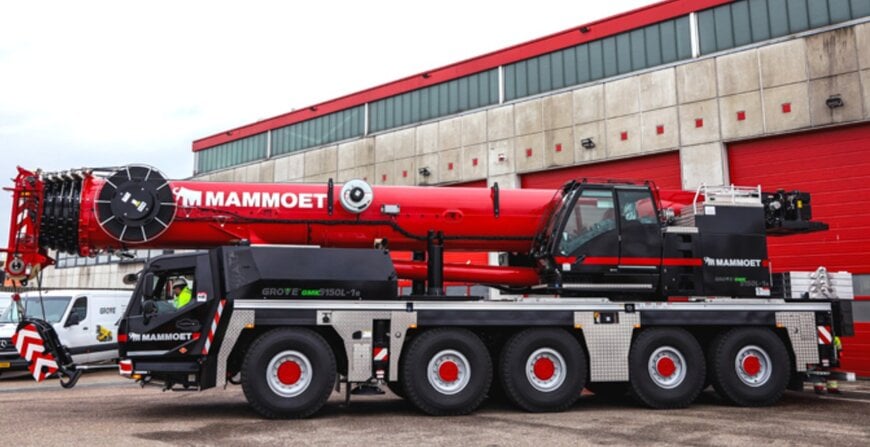
Electrification in heavy lifting equipment is progressing as construction and infrastructure projects face stricter emission limits and limited grid access on jobsites. Hybrid crane architectures are emerging to balance operational flexibility with lower emissions. In this context, Manitowoc has delivered the first Grove GMK5150L-1e plug-in hybrid all-terrain crane to Mammoet.
Hybrid architecture for on-site electrified lifting
The Grove GMK5150L-1e is a 150-tonne all-terrain crane designed to maintain the lifting performance and mobility of conventional diesel-powered models while enabling electric operation for lifting tasks. The crane uses a 160 kWh battery pack to power the superstructure, allowing emission-free lifting on site.
The system retains a 60 m main boom and is part of an electrified crane portfolio that includes the GMK5150XL-1e variant with a 68.7 m boom, introduced at bauma 2025 in Munich. Both models are designed to operate across varied terrain conditions typical of infrastructure, industrial, and heavy logistics projects.
Charging strategy beyond fixed infrastructure
A defining feature of the GMK5150L-1e is its ability to recharge the battery while traveling between sites. This “charge-while-driving” capability reduces dependence on fixed charging infrastructure, which remains limited across many construction environments.
The crane also supports multiple charging methods, including DC fast charging, 32 A / 400 V AC charging, and a 163 kW onboard generator. This combination allows operators to maintain battery levels across different operational scenarios, improving uptime in projects where grid access is inconsistent.
Such flexibility is relevant for construction workflows where equipment must move frequently between locations while maintaining readiness for immediate lifting operations.
Alignment with low-emission project requirements
Urban construction projects, particularly in regions such as the Netherlands, are increasingly subject to zero-emission requirements and carbon footprint assessments during procurement. Hybrid crane systems enable contractors to meet these constraints by performing lifting operations electrically while retaining diesel-based mobility when required.
For operators such as Mammoet, this configuration supports compliance with evolving environmental regulations without limiting deployment across sites lacking charging infrastructure.
Engineering feedback from field deployment
The crane was developed with input from end users, including Mammoet, focusing on operational requirements such as duty cycles, energy consumption, and jobsite constraints. Battery capacity was sized based on typical job profiles to support continuous operation during lifting tasks.
This approach reflects a shift toward application-driven equipment design, where real-world usage data informs system sizing and integration decisions within the heavy equipment supply chain.
Operator conditions and system usability
Electric operation of the superstructure reduces noise levels during lifting, improving working conditions for crane operators and surrounding personnel. This is particularly relevant in urban or confined environments where noise restrictions may apply.
The integration of hybrid drive systems alongside conventional all-terrain crane functionality allows operators to transition between transport and lifting modes without changes to core operating procedures.
Industry positioning and recognition
The related GMK5150XL-1e model has received industry awards for innovation in lifting and transport equipment, including recognition in European competitions and selection as a finalist in the ESTA Awards of Excellence 2026.
These recognitions reflect ongoing industry efforts to integrate electrification into heavy lifting equipment while maintaining operational performance and reliability.
Edited by Aishwarya Mambet, Induportals Editor, with AI assistance.
www.manitowoc.com
Powered by
Induportals Media Publishing