Integrated Systems Support Zero-Emission Construction Sites
Volvo Construction Equipment & Hitachi Energy collaborate to combine electric machinery, energy infrastructure and site integration for lower-emission operations. www.volvoce.com Volvo Construction Equipment (Volvo CE) and Hitachi Energy have signed a Memorandum of Understanding (MoU) to evaluate integrated approaches for deploying zero-emission construction sites. The cooperation combines electric construction equipment with power supply systems, charging infrastructure and energy management capabilities to support construction and manufacturing operations undergoing electrification. Electrified Construction Sites Require Integrated Energy Infrastructure Construction companies face increasing pressure to reduce emissions while maintaining productivity and meeting regulatory requirements linked to environmental performance. Although electric machinery provides a route to lower operational emissions, fully electrified construction sites require coordination between machines, charging systems, energy distribution and digital infrastructure. The cooperation addresses this challenge through system-level integration rather than isolated technology deployment. The target application areas include infrastructure projects, industrial construction and manufacturing environments where energy-intensive equipment must operate alongside emissions reduction targets. Division of Responsibilities Combines Equipment and Energy Expertise Volvo CE contributes expertise in electric construction machinery, digitalization and operational workflows for construction environments. Hitachi Energy provides capabilities in electrification, grid integration, power systems and energy management. The companies will jointly assess technical and commercial concepts supporting zero-emission construction and manufacturing operations. Areas under evaluation include charging infrastructure, power supply architecture, energy management systems and operational execution at site level. The agreement also covers business models, deployment approaches and aftermarket support requirements intended to simplify adoption of electrified construction environments. System Integration Connects Machines, Charging and Energy Management The collaboration focuses on integrating electric construction equipment with supporting electrical infrastructure as a coordinated ecosystem. Such integration aims to enable energy supply, charging schedules and equipment operation to function within a single operational framework. This approach reflects a shift within industrial automation and digital infrastructure from standalone technologies toward interconnected systems designed for deployment at scale. Coordinated system integration can reduce implementation complexity and improve compatibility between machines and site energy requirements. Initial Deployment Prioritizes Plug-and-Play Operational Models The initial phase emphasizes practical implementation models intended to support deployment with minimal disruption to existing workflows. Plug-and-play concepts are being explored to simplify the transition from conventional operations to electrified construction sites. The agreement also establishes a basis for future technical development, including potential work on connected machines, deeper digital integration and expanded service capabilities. Integrated Energy Planning Supports Long-Term Electrification The cooperation seeks to address operational barriers associated with large-scale construction electrification by combining machinery, energy infrastructure and management systems within a unified framework. Improved coordination between equipment and power systems may support implementation efficiency and facilitate compliance with emissions-related requirements. Edited by Natania Lyngdoh, Induportals editor, assisted by AI. www.volvoce.com Powered by Induportals Media Publishing
 machineryasia
Volvo Construction Equipment & Hitachi Energy collaborate to combine electric machinery, energy infrastructure and site integration for lower-emission operations.
www.volvoce.com
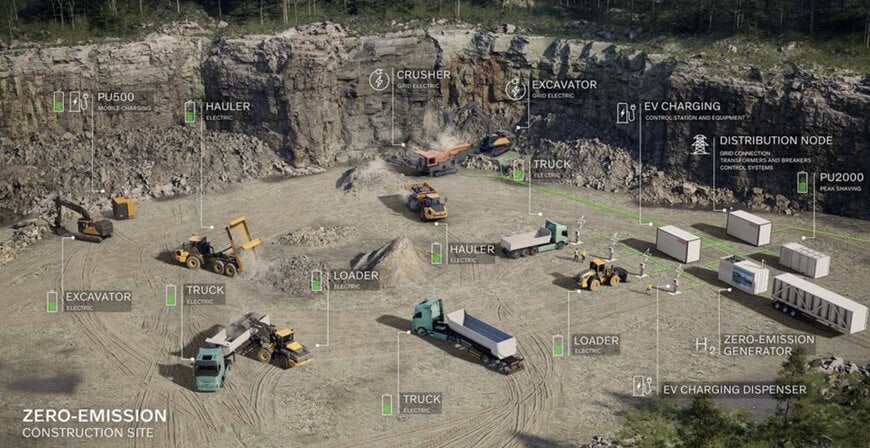
Volvo Construction Equipment (Volvo CE) and Hitachi Energy have signed a Memorandum of Understanding (MoU) to evaluate integrated approaches for deploying zero-emission construction sites. The cooperation combines electric construction equipment with power supply systems, charging infrastructure and energy management capabilities to support construction and manufacturing operations undergoing electrification.
Electrified Construction Sites Require Integrated Energy Infrastructure
Construction companies face increasing pressure to reduce emissions while maintaining productivity and meeting regulatory requirements linked to environmental performance. Although electric machinery provides a route to lower operational emissions, fully electrified construction sites require coordination between machines, charging systems, energy distribution and digital infrastructure.
The cooperation addresses this challenge through system-level integration rather than isolated technology deployment. The target application areas include infrastructure projects, industrial construction and manufacturing environments where energy-intensive equipment must operate alongside emissions reduction targets.
Division of Responsibilities Combines Equipment and Energy Expertise
Volvo CE contributes expertise in electric construction machinery, digitalization and operational workflows for construction environments. Hitachi Energy provides capabilities in electrification, grid integration, power systems and energy management.
The companies will jointly assess technical and commercial concepts supporting zero-emission construction and manufacturing operations. Areas under evaluation include charging infrastructure, power supply architecture, energy management systems and operational execution at site level.
The agreement also covers business models, deployment approaches and aftermarket support requirements intended to simplify adoption of electrified construction environments.
System Integration Connects Machines, Charging and Energy Management
The collaboration focuses on integrating electric construction equipment with supporting electrical infrastructure as a coordinated ecosystem. Such integration aims to enable energy supply, charging schedules and equipment operation to function within a single operational framework.
This approach reflects a shift within industrial automation and digital infrastructure from standalone technologies toward interconnected systems designed for deployment at scale. Coordinated system integration can reduce implementation complexity and improve compatibility between machines and site energy requirements.
Initial Deployment Prioritizes Plug-and-Play Operational Models
The initial phase emphasizes practical implementation models intended to support deployment with minimal disruption to existing workflows. Plug-and-play concepts are being explored to simplify the transition from conventional operations to electrified construction sites.
The agreement also establishes a basis for future technical development, including potential work on connected machines, deeper digital integration and expanded service capabilities.
Integrated Energy Planning Supports Long-Term Electrification
The cooperation seeks to address operational barriers associated with large-scale construction electrification by combining machinery, energy infrastructure and management systems within a unified framework. Improved coordination between equipment and power systems may support implementation efficiency and facilitate compliance with emissions-related requirements.
Edited by Natania Lyngdoh, Induportals editor, assisted by AI.
www.volvoce.com
Powered by
Induportals Media Publishing