Industrial Telehandler Enhancements for Versatile Material Handling
SENNEBOGEN introduces updated 360 G telehandler to improve operator control, safety systems, and application flexibility in industrial and municipal environments. www.sennebogen.com The SENNEBOGEN 360 G industrial telehandler has been updated with targeted technical improvements aimed at increasing operational efficiency, safety, and adaptability across material handling, recycling, and municipal applications. The revised configuration was presented by SENNEBOGEN at IFAT (May 4–8 )2026. Configurable steering system for precise control A central update to the 360 G is its configurable steering architecture, designed to optimize workflows in demanding environments. Operators can switch between traditional steering wheel control, joystick-only steering, or a combined mode depending on the application. Joystick steering enables directional changes without hand repositioning, reducing operator fatigue and shortening cycle times in repetitive handling tasks. This is particularly relevant in high-frequency loading operations within a digital supply chain, where precision and speed directly affect throughput. For road travel, the conventional steering wheel ensures stable handling, maintaining compliance with transport safety requirements. Operator environment and safety systems The Multicab operator environment has been redesigned with a focus on ergonomics and assistance systems. A new high-back comfort seat, optionally equipped with climate control and seat heating, supports sustained operation during extended shifts. Safety is enhanced through a camera-based monitoring system with integrated person detection. This system identifies movement in the machine’s vicinity and alerts the operator, reducing collision risks in confined or low-visibility environments such as recycling facilities or urban job sites. Redesigned boom for higher load capacity A newly engineered boom structure represents a key mechanical upgrade. The revised design improves load distribution and structural rigidity, allowing the 360 G to handle buckets with capacities of up to 7 m³. Combined with high-performance hydraulics and Z-kinematics, the system maintains strong breakout forces and efficient power transmission under heavy-duty conditions. This enables increased throughput in bulk material handling applications such as scrap processing, aggregate handling, and waste management. Expanded attachments and terrain adaptability The attachment range has been extended to support municipal and infrastructure maintenance tasks. Tools such as hedge trimmers and mulchers allow the machine to be deployed for vegetation control, roadside maintenance, and embankment management. An expanded tire portfolio further enhances adaptability across varying ground conditions, from paved urban surfaces to uneven terrain. This flexibility supports integration into broader automotive data ecosystem frameworks where multi-role equipment contributes to operational efficiency and fleet optimization. Economic and operational efficiency for municipalities The multifunctional configuration of the 360 G reduces the need for multiple specialized machines. Municipal operators can consolidate tasks such as material handling and green space maintenance into a single platform, lowering capital expenditure and simplifying fleet management. Higher utilization rates and reduced equipment redundancy contribute to improved lifecycle cost efficiency, particularly in public sector operations with constrained budgets. Structural protection and durability improvements Durability has been enhanced through reinforced structural components, including an upgraded tank cover, additional impact protection for the engine hood, and protective grilles for the front windshield. These measures reduce wear-related damage and support continuous operation in harsh environments. Functional design update The updated design consolidates previously grey components into a uniform black finish across the cab, boom, and attachments. Beyond visual consistency, this change improves wear visibility and simplifies maintenance inspections, enabling quicker identification of surface damage or material fatigue. Technical positioning in industrial applications The updated SENNEBOGEN 360 G integrates mechanical, ergonomic, and digital safety improvements into a single platform tailored for industrial material handling and municipal operations. Its configurable control systems, increased load capacity, and expanded attachment ecosystem position it as a flexible solution for environments requiring both precision handling and operational versatility. The enhancements presented at IFAT 2026 reflect ongoing development focused on aligning telehandler performance with evolving operational requirements in recycling, infrastructure maintenance, and heavy-duty logistics. Edited by an industrial journalist Sucithra Mani with AI assistance. www.sennebogen.com Powered by Induportals Media Publishing
 machineryasia
SENNEBOGEN introduces updated 360 G telehandler to improve operator control, safety systems, and application flexibility in industrial and municipal environments.
www.sennebogen.com
The SENNEBOGEN 360 G industrial telehandler has been updated with targeted technical improvements aimed at increasing operational efficiency, safety, and adaptability across material handling, recycling, and municipal applications. The revised configuration was presented by SENNEBOGEN at IFAT (May 4–8 )2026.
Configurable steering system for precise control
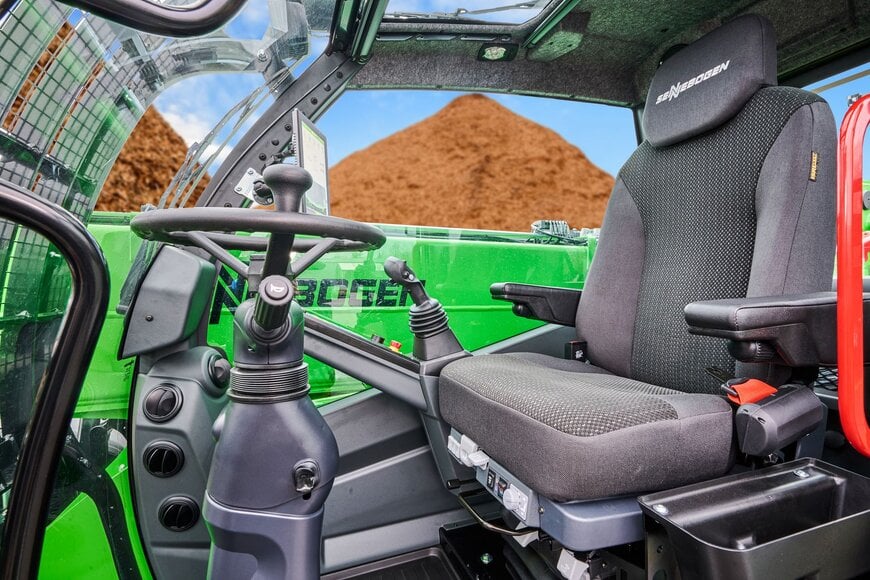
A central update to the 360 G is its configurable steering architecture, designed to optimize workflows in demanding environments. Operators can switch between traditional steering wheel control, joystick-only steering, or a combined mode depending on the application.
Joystick steering enables directional changes without hand repositioning, reducing operator fatigue and shortening cycle times in repetitive handling tasks. This is particularly relevant in high-frequency loading operations within a digital supply chain, where precision and speed directly affect throughput. For road travel, the conventional steering wheel ensures stable handling, maintaining compliance with transport safety requirements.
Operator environment and safety systems
The Multicab operator environment has been redesigned with a focus on ergonomics and assistance systems. A new high-back comfort seat, optionally equipped with climate control and seat heating, supports sustained operation during extended shifts.
Safety is enhanced through a camera-based monitoring system with integrated person detection. This system identifies movement in the machine’s vicinity and alerts the operator, reducing collision risks in confined or low-visibility environments such as recycling facilities or urban job sites.
Redesigned boom for higher load capacity
A newly engineered boom structure represents a key mechanical upgrade. The revised design improves load distribution and structural rigidity, allowing the 360 G to handle buckets with capacities of up to 7 m³.
Combined with high-performance hydraulics and Z-kinematics, the system maintains strong breakout forces and efficient power transmission under heavy-duty conditions. This enables increased throughput in bulk material handling applications such as scrap processing, aggregate handling, and waste management.
Expanded attachments and terrain adaptability
The attachment range has been extended to support municipal and infrastructure maintenance tasks. Tools such as hedge trimmers and mulchers allow the machine to be deployed for vegetation control, roadside maintenance, and embankment management.
An expanded tire portfolio further enhances adaptability across varying ground conditions, from paved urban surfaces to uneven terrain. This flexibility supports integration into broader automotive data ecosystem frameworks where multi-role equipment contributes to operational efficiency and fleet optimization.
Economic and operational efficiency for municipalities
The multifunctional configuration of the 360 G reduces the need for multiple specialized machines. Municipal operators can consolidate tasks such as material handling and green space maintenance into a single platform, lowering capital expenditure and simplifying fleet management.
Higher utilization rates and reduced equipment redundancy contribute to improved lifecycle cost efficiency, particularly in public sector operations with constrained budgets.
Structural protection and durability improvements
Durability has been enhanced through reinforced structural components, including an upgraded tank cover, additional impact protection for the engine hood, and protective grilles for the front windshield. These measures reduce wear-related damage and support continuous operation in harsh environments.
Functional design update
The updated design consolidates previously grey components into a uniform black finish across the cab, boom, and attachments. Beyond visual consistency, this change improves wear visibility and simplifies maintenance inspections, enabling quicker identification of surface damage or material fatigue.
Technical positioning in industrial applications
The updated SENNEBOGEN 360 G integrates mechanical, ergonomic, and digital safety improvements into a single platform tailored for industrial material handling and municipal operations. Its configurable control systems, increased load capacity, and expanded attachment ecosystem position it as a flexible solution for environments requiring both precision handling and operational versatility.
The enhancements presented at IFAT 2026 reflect ongoing development focused on aligning telehandler performance with evolving operational requirements in recycling, infrastructure maintenance, and heavy-duty logistics.
Edited by an industrial journalist Sucithra Mani with AI assistance.
www.sennebogen.com
Powered by
Induportals Media Publishing