How the First Ferris Wheel Came to Life, Thanks to American Manufacturing
Chicago needed something big for the 1893 World’s Fair. American steelworkers had the answer. In 1893, the Chicago World’s Fair needed a centerpiece. Seeking to rival Paris’s Eiffel Tower, which had been created for the 1889 Paris Exposition, organizers in […]
 machineryasia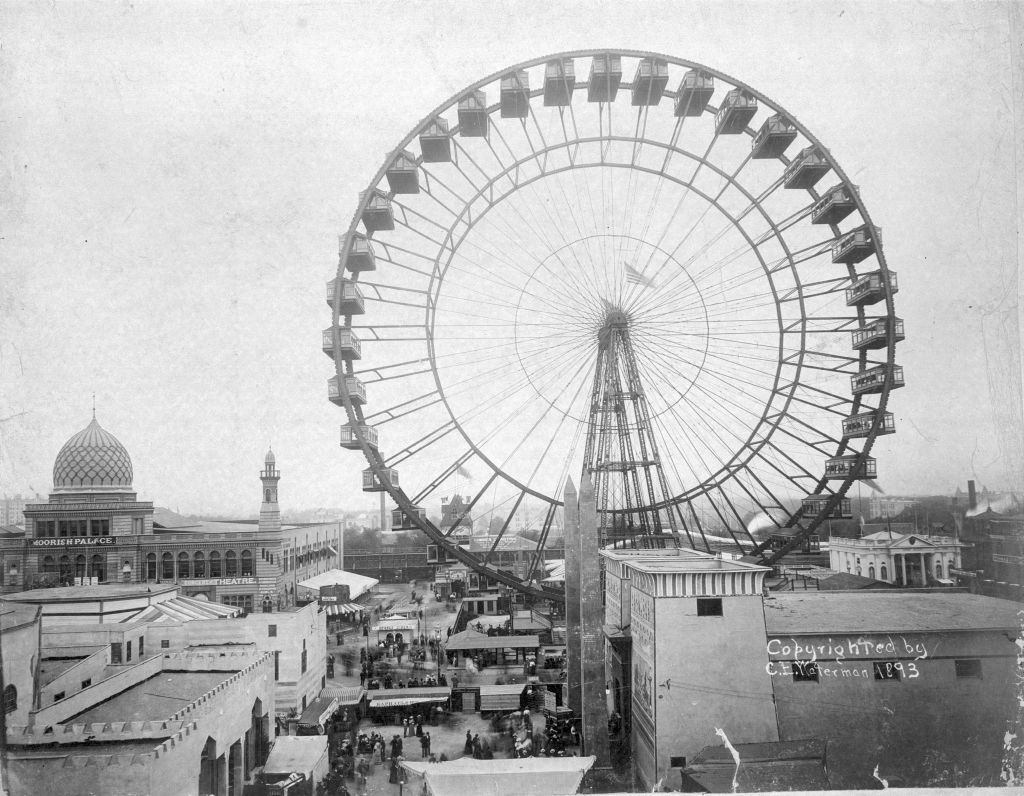
Chicago needed something big for the 1893 World’s Fair. American steelworkers had the answer.
In 1893, the Chicago World’s Fair needed a centerpiece.
Seeking to rival Paris’s Eiffel Tower, which had been created for the 1889 Paris Exposition, organizers in the United States knew they needed something flashy and impressive – something that would be talked about for hundreds of years after the fair. David Burnham, an esteemed architect who oversaw the design and construction of the fair’s buildings, attractions and overall spaces, said to his team of designers that “something novel, original, daring and unique must be designed and built if American engineers are to retain their prestige and standing.”
Despite a multitude of suggestions from his team, Burnham was dissatisfied with their ideas and balked at what he felt was a major lack of imagination. One metal worker and steel inspector for the fair – George Washington Gale Ferris Jr. – proposed a giant wheel. Some say the idea struck him one night during dinner, but other reports indicate that Ferris may have been planning his giant wheel for several years leading up to the Chicago World’s Fair.
At first, Burnham didn’t see the wheel as the answer to his problem. He thought the design would be too fragile to carry so many people that high in the air. Ferris, on the other hand, was so sure of his design’s validity that he spent thousands of dollars of his own money to build parts of the structure and conduct numerous safety studies, just to convince Burnham that the wheel would work. Burnham eventually conceded, and work on the first Ferris Wheel officially began in late 1892, nearly six months before the fair was set to open.
A collaboration of American architects, engineers, designers and steelworkers, Chicago’s original Ferris Wheel was a culmination of American manufacturing excellence in the late 1800s. Ferris’s home base of Pittsburgh, Pennsylvania was responsible for the construction of the giant axle that supported the wheel. Forged from steel by the Bethlehem Iron Company of Bethlehem, Pennsylvania – which became the Bethlehem Steel Company six years later – the axle was the largest single steel forging in history at the time it was constructed.
While Bethlehem Steel no longer exists, remnants of its original production capabilities do. Through various mergers and acquisitions, they are now assets of Cleveland-Cliffs, America’s second-largest steel producer.
Other parts and fabrication of the wheel came from a diverse group of construction workers, electric companies and steel manufacturers, including an air brake made by the Westinghouse Air Brake Company (founded by George Westinghouse, who also founded the Westinghouse Electric Corporation that later became CBS). The air brake allowed the Ferris Wheel to be stopped and kept stagnant at will, ensuring that riders could disembark the ride and that the wheel could be halted when not in use. Additionally, Westinghouse Electric provided the lighting for the fair, beating out Thomas Edison for the contract.
When the completed Ferris Wheel opened to the public on June 21, 1983, it stood 264 feet tall and was fitted with 36 passenger cars that could each hold 60 people – thus, the wheel boasted a total capacity of 2,160.
Nowadays, the original Ferris Wheel is long gone. Once a triumph of American manufacturing and engineering excellence, the wheel was moved a few times following the Chicago World’s Fair. Its final extravagant run came with the St. Louis World’s Fair in 1904, after which it was demolished for scraps. While most reports state that the entire wheel and its contents were taken apart and repurposed, a 2007 magnetic survey indicated that the giant axle fabricated by Bethlehem Iron Company may still buried under the location of the wheel’s demolition in Missouri.
Today’s Ferris Wheels can be found all over the world, acting as the centerpiece for amusement parks, state fairs, and other grand attractions. Most modern ones are much larger than Chicago’s original wheel, and Ain Dubai in Dubai, UAE broke the record in 2021 for the tallest Ferris Wheel, at 820 feet tall. The previous recordholder, the High Roller in Las Vegas, Nevada, is 550 feet tall.
If you’re headed to your local fair or an amusement park this summer, keep an eye out for this iconic wheel. Unfortunately, most Ferris Wheels today are not made fully in the United States, but one company is still churning out both portable and permanent American-made wheels of all sizes: Chance Rides of Wichita, Kansas. We featured Chance Rides on our blog in 2015, and since then, they have continued to manufacture and modernize their captivating attractions!