Five Factory Trends to Watch in 2026
It could be an interesting year for the domestic manufacturing sector. Shifting Macroeconomic and policy currents could greatly affect domestic manufacturing’s outlook as we begin a new year. Will the burgeoning AI sector affect goods-producing industries? Will the quiet trend […]
 machineryasia
It could be an interesting year for the domestic manufacturing sector.
Shifting Macroeconomic and policy currents could greatly affect domestic manufacturing’s outlook as we begin a new year. Will the burgeoning AI sector affect goods-producing industries? Will the quiet trend of factory construction continue? And will manufacturing employment begin a rebound? I’ve outlined a few trends to watch for below:
1) Manufacturing jobs may be poised to rise after slowly trending downward since 2023.
After more than two years of stop‑start hiring, the stage is set for manufacturing job gains as three forces could align in 2026: lower interest rates, greater tariff predictability and an improving macroeconomy. Cheaper capital reduces barriers for factory upgrades and new facilities, especially in durable goods (think metal fabrication, machinery and transportation equipment) where payback periods are long. This doesn’t merely juice capital expenditures; it tends to unlock hiring for maintenance technicians, machinists and production supervisors.
Meanwhile, tariff policy should stabilize. We’ll have more on that in a trend presented later, but tariff stability will reduce uncertainty. And it will also allow firms to accurately model what is called “landed cost” or “total cost of ownership” with confidence, meaning they can commit to expanding hiring and domestic capacity rather than deferring decisions quarter after quarter. Finally, households and businesses should be exiting an inflation‑obsessed mindset; that shift typically shows up first in orders, then in new hires.
There are risks, though, particularly if the Federal Reserve reverses its rate-easing course, the Trump Administration doesn’t settle tariff policy, or we see contractions due to something like a government shutdown, an AI stock bubble bursting, major defaults on debt and loans, or a black swan event. Despite these risks, for the typical U.S. manufacturer, the next 12 months look more like incremental tailwinds than headwinds. That should translate into new factory jobs.
2) There may be even more new factory openings in 2026.
It’s not a secret that many companies have broken ground on new factories over the past several years — particularly in semiconductors and pharmaceuticals. The Daily Digest newsletter we produce at AAM has chronicled this and there are honestly too many to name. Pratt & Whitney, GE Appliances, LG, GM, Hyundai, Stellantis, Toyota, Rivian, Boeing, Phillips, Rockwell, Schneider, First Solar, Eli Lilly, Novartis, and that’s just the tip of the iceberg.
2026 could be defined by filling these factories with machine tools and workers. That in turn should trigger second‑order effects. Supplier localization should mean smaller manufacturers come online to supply the larger factories. For an industry like semiconductors that translates into opportunities for chemicals, specialty gases, substrates, printed circuit boards, and precision equipment. So, for example, a new chip plant in New York, Texas or Arizona means an industrial ecosystem springs to life around it.
We may also see more auto, steel and aluminum facilities come back online if overall demand accelerates and tariffs stay in place. Take for instance US Steel’s announcement that it will be reopening an Illinois blast furnace in April. It would add to a quiet trend in factory growth. From 2001, when China entered the World Trade Organization, until 2013, we saw 65,000 manufacturing facilities close across the country. But since that time, the number of factories large and small has been steadily growing. We should be adding to it again in 2026.
3) Tariffs. Again.
We called 2025 the Year of the Tariff. And with good reason. If the U.S. Supreme Court invalidates tariffs imposed under the International Emergency Economic Powers Act (IEEPA), expect the Trump administration to pivot quickly to alternative statutory tools. The most likely move is reciprocal tariffs under existing trade authorities paired with a commitment to keep Section 232 tariffs on steel, aluminum and other products intact. This approach would allow Trump to sidestep judicial constraints. Reciprocal tariffs — framed as matching foreign duties — could target sectors where U.S. exporters face high barriers such as autos, machinery and chemicals.
There are already signs that “peak tariff” may be behind us. Recently Trump has delayed new levies on foreign semiconductors and certain kitchen cabinets, vanities and upholstered furniture.
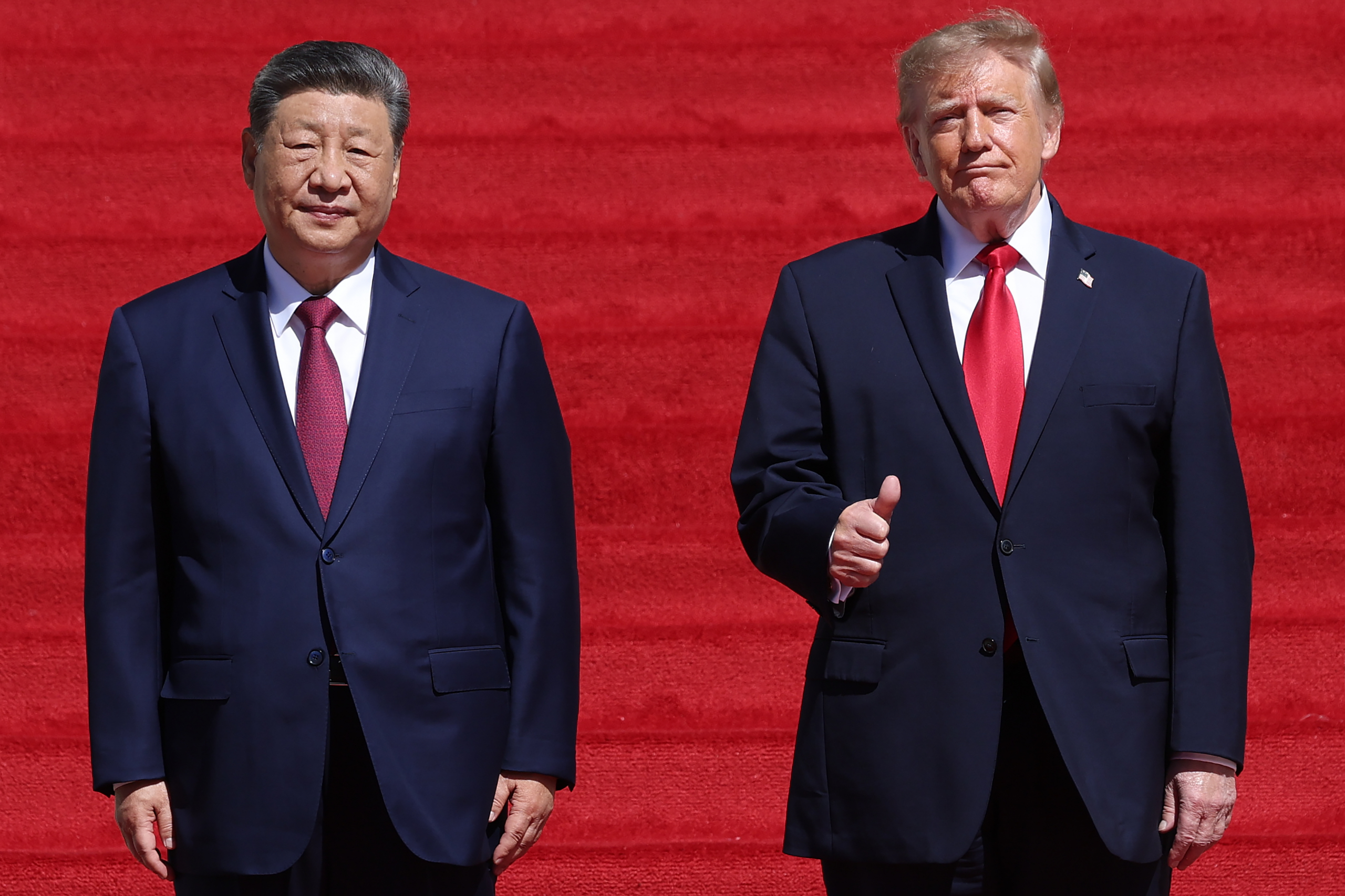
The tariff wildcard, however, is China. Trump could escalate tariffs if China fails to comply with the agreement reached between Washington and Beijing last year. But so far the administration has prioritized stability over confrontation. We have seen significant changes in the US-China economic relationship already: The bilateral trade deficit with China is down a considerable amount, and the focus has shifted from volume (the “China shock”) to security (rare earths, for example).
4) Light at the end of the training tunnel.

One of the most common complaints from small manufacturers is finding and retaining new workers, particularly as older workers — and there a lot of them in manufacturing — retire. There is a new and potentially very useful tool coming online that could help address this challenge. Starting on July 1, Pell Grant eligibility for short-term training programs could reshape the talent landscape for U.S. manufacturing. Historically, cost barriers have kept many prospective workers from pursuing technical credentials; now, federal support for programs under 15 weeks — covering CNC operation, industrial maintenance and robotics — opens the door for thousands of learners. This policy shift coincides with a national push for apprenticeships and pre-apprenticeships, amplified by state workforce boards and industry consortia eager to surge new hires.
The timing couldn’t be better. Demand signals from reshoring, infrastructure projects and advanced manufacturing investments are converging, creating more demand even as older manufacturing workers are exiting. Employers need trained talent faster than traditional two-year programs can deliver. Pell-backed short courses paired with earn-and-learn models offer a pragmatic solution, especially for underrepresented groups and career changers.
5) AI data centers could crowd out manufacturing for talent, energy and materials.
The AI boom’s unseen impact on factories will arrive via three pinch points. First is workforce competition. Data centers and their build‑out contractors are recruiting the same electricians, HVAC techs, project engineers and controls specialists that manufacturers need to electrify lines, retrofit facilities and maintain uptime. Second is energy capacity. Multi‑gigawatt data center pipelines are straining regional grids; where utilities hit interconnection limits, manufacturers face delayed service upgrades or higher rates. Third is materials. The cooling, cabling, power‑conversion and backup systems required for hyperscale capacity absorb transformers, switchgear, aluminum/copper conductors and specialized steels — often the same constrained inputs industrial plants need.
None of this argues against digital infrastructure; it argues for balanced planning. States and utilities will need fast‑track pathways for industrial load, prioritizing projects that anchor supply chains. Workforce systems should incentivize cross‑training (e.g., from data‑center assembly to industrial maintenance) to prevent permanent talent siphons. Unchecked AI build‑outs risk crowding out the very production base that underwrites national competitiveness; smart coordination ensures both sectors thrive without starving each other of the essentials.