Fine dry screening improves efficiency in mining circuits
Metso introduces flip-flow screening technology to enable precise classification of fine materials while reducing water use and improving comminution circuit performance. www.metso.com Fine material classification in mining and aggregates processing directly affects energy consumption, product quality, and overall circuit efficiency. In this context, Metso has introduced the GFF Series™ flip-flow screens for fine dry screening of moist and difficult materials in comminution and sand production applications. Addressing fine screening limits in dry processing In mining and aggregates, screening efficiency becomes more difficult as particle sizes decrease and moisture content increases. Conventional screening systems often require wet processing to maintain separation accuracy, increasing water consumption and downstream handling complexity. The GFF Series™ combines flip-flow and conventional deck technologies to enable stable classification in both dry and wet conditions. High excitation forces improve particle stratification and separation, achieving cut sizes down to 0.5 mm in dry operation and 0.3 mm in wet operation. This allows finer classification without relying entirely on wet screening, supporting more efficient material handling across the processing chain. Impact on HPGR and comminution efficiency In high-pressure grinding rolls (HPGR) circuits, classification accuracy directly influences circulating load and grinding efficiency. Finer and more precise separation reduces the amount of oversized material returning to the grinding stage, lowering energy consumption and improving throughput. By enabling tighter cut sizes, the GFF Series™ supports improved particle size distribution ahead of downstream grinding. This contributes to more efficient comminution circuits and aligns with process optimization strategies in a digital supply chain where energy use and throughput are continuously monitored. Consistency in fine aggregate production In aggregate processing, particularly sand manufacturing, classification accuracy affects final product quality. Inefficient screening can result in cross-contamination between particle size fractions, leading to inconsistent output. Higher screening efficiency in the GFF Series™ minimizes this cross-contamination, supporting uniform particle size distribution. This is relevant for applications requiring controlled grading, where product consistency is critical for downstream use. Reducing water demand and process losses The hybrid screening approach reduces the need for process water by maintaining efficiency in dry conditions. Compared with conventional screening systems, this lowers water consumption and reduces energy losses associated with additional pumping and wet material handling. Minimizing blinding and pegging further improves operational stability. The flip-flow deck design continuously flexes the screening surface, preventing material buildup that can block apertures and reduce screening efficiency. Maintenance access and operational reliability Operational uptime is influenced by both equipment durability and serviceability. The GFF Series™ incorporates a rugged construction designed for continuous operation in abrasive environments. Anti-blinding behavior reduces unplanned stoppages, while accessible components simplify maintenance procedures. These factors contribute to higher equipment availability and a lower total cost of ownership over the system lifecycle. Extending fine screening beyond mining Although developed for mining and aggregates, the same screening principles apply to other industries handling fine and difficult materials. Applications such as biomass processing, fertilizer production, construction waste recycling, and industrial minerals can benefit from improved dry classification and reduced dependency on water-intensive processes. Integration within full comminution flowsheets The GFF Series™ expands Metso’s screening portfolio, complementing earlier solutions such as the Grande Series introduced in 2025. Within integrated flowsheets, the screens operate alongside technologies such as HRC™e HPGRs and Vertimill® grinding systems. Improved classification upstream enables a greater share of size reduction to be handled by energy-efficient HPGR systems, supporting optimized circuit design and reduced overall energy consumption. Edited by Aishwarya Mambet, Induportals Editor, with AI assistance. www.metso.com Powered by Induportals Media Publishing
 machineryasia
Metso introduces flip-flow screening technology to enable precise classification of fine materials while reducing water use and improving comminution circuit performance.
www.metso.com
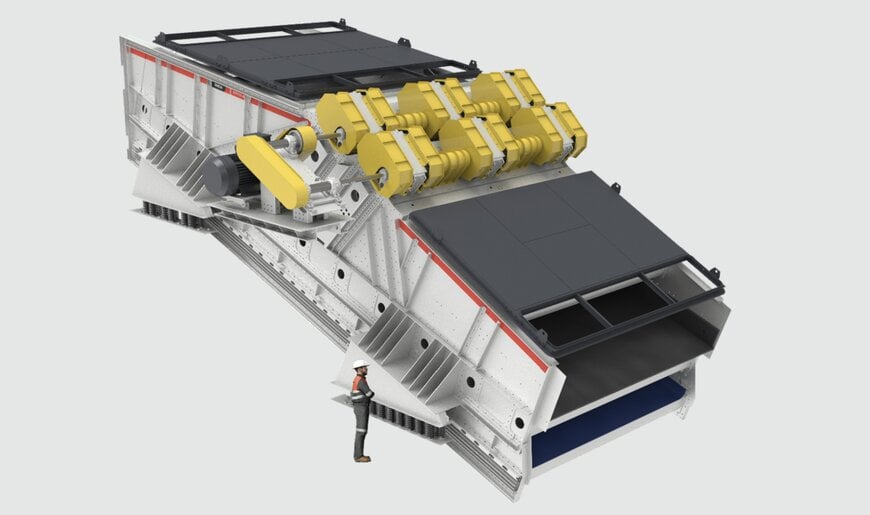
Fine material classification in mining and aggregates processing directly affects energy consumption, product quality, and overall circuit efficiency. In this context, Metso has introduced the GFF Series™ flip-flow screens for fine dry screening of moist and difficult materials in comminution and sand production applications.
Addressing fine screening limits in dry processing
In mining and aggregates, screening efficiency becomes more difficult as particle sizes decrease and moisture content increases. Conventional screening systems often require wet processing to maintain separation accuracy, increasing water consumption and downstream handling complexity.
The GFF Series™ combines flip-flow and conventional deck technologies to enable stable classification in both dry and wet conditions. High excitation forces improve particle stratification and separation, achieving cut sizes down to 0.5 mm in dry operation and 0.3 mm in wet operation. This allows finer classification without relying entirely on wet screening, supporting more efficient material handling across the processing chain.
Impact on HPGR and comminution efficiency
In high-pressure grinding rolls (HPGR) circuits, classification accuracy directly influences circulating load and grinding efficiency. Finer and more precise separation reduces the amount of oversized material returning to the grinding stage, lowering energy consumption and improving throughput.
By enabling tighter cut sizes, the GFF Series™ supports improved particle size distribution ahead of downstream grinding. This contributes to more efficient comminution circuits and aligns with process optimization strategies in a digital supply chain where energy use and throughput are continuously monitored.
Consistency in fine aggregate production
In aggregate processing, particularly sand manufacturing, classification accuracy affects final product quality. Inefficient screening can result in cross-contamination between particle size fractions, leading to inconsistent output.
Higher screening efficiency in the GFF Series™ minimizes this cross-contamination, supporting uniform particle size distribution. This is relevant for applications requiring controlled grading, where product consistency is critical for downstream use.
Reducing water demand and process losses
The hybrid screening approach reduces the need for process water by maintaining efficiency in dry conditions. Compared with conventional screening systems, this lowers water consumption and reduces energy losses associated with additional pumping and wet material handling.
Minimizing blinding and pegging further improves operational stability. The flip-flow deck design continuously flexes the screening surface, preventing material buildup that can block apertures and reduce screening efficiency.
Maintenance access and operational reliability
Operational uptime is influenced by both equipment durability and serviceability. The GFF Series™ incorporates a rugged construction designed for continuous operation in abrasive environments.
Anti-blinding behavior reduces unplanned stoppages, while accessible components simplify maintenance procedures. These factors contribute to higher equipment availability and a lower total cost of ownership over the system lifecycle.
Extending fine screening beyond mining
Although developed for mining and aggregates, the same screening principles apply to other industries handling fine and difficult materials. Applications such as biomass processing, fertilizer production, construction waste recycling, and industrial minerals can benefit from improved dry classification and reduced dependency on water-intensive processes.
Integration within full comminution flowsheets
The GFF Series™ expands Metso’s screening portfolio, complementing earlier solutions such as the Grande Series introduced in 2025. Within integrated flowsheets, the screens operate alongside technologies such as HRC™e HPGRs and Vertimill® grinding systems.
Improved classification upstream enables a greater share of size reduction to be handled by energy-efficient HPGR systems, supporting optimized circuit design and reduced overall energy consumption.
Edited by Aishwarya Mambet, Induportals Editor, with AI assistance.
www.metso.com
Powered by
Induportals Media Publishing