Epiroc Supports Controlled Tunnel Excavation in India
Mechanized rock excavation helped maintain tunnel progress on the Shimla Bypass project, where blasting restrictions in geologically sensitive Himalayan sections limited conventional methods. www.epiroc.com Shimla bypass jobsite. Tunnel construction in mountainous terrain often requires switching excavation methods as geology, regulatory constraints, and proximity to populated areas change across the alignment. In this context, mechanized excavation can provide an alternative where drill-and-blast operations face operational limits. Epiroc supplied a hydraulic rock excavation solution for the Shimla Bypass Tunnel Project in India, supporting Bharat Constructions (India) Pvt. Ltd. on a section of the National Highways Authority of India’s NH-5 infrastructure program. Excavation constraints in Himalayan tunnel construction The Shimla Bypass project spans approximately 27.4 km and is intended to divert through-traffic away from Shimla to reduce urban congestion while improving transport connectivity across Himachal Pradesh. The alignment includes tunnels, bridges, and culverts constructed through Himalayan terrain characterized by variable rock formations, fault zones, and sections close to inhabited areas. A significant portion of tunnelling has been executed using the drill-and-blast method under the New Austrian Tunnelling Method (NATM), which allows tunnel support systems to be adjusted based on observed ground behavior during excavation. This approach is commonly used in complex geology where excavation conditions can shift over short distances. However, some tunnel sections imposed restrictions on blasting due to vibration control requirements, safety compliance, and proximity to populated areas. These limitations created scheduling and excavation continuity challenges. Epiroc HB 3600 ready to start the tunnel operation. Hydraulic breaking as a non-explosive alternative To address these constraints, Epiroc carried out a technical assessment and recommended deployment of its HB 3600 DP hydraulic breaker as a non-explosive excavation method. The equipment was adapted for underground tunnel operation, including modifications related to tunnel clearance requirements, working cycles, and continuous-duty use. After commissioning and an initial stabilization phase, the hydraulic breaker was used for controlled rock excavation in sections where blasting could not be used or was temporarily suspended. For tunnel projects operating under regulatory constraints, this type of mechanized excavation offers a practical alternative to maintain excavation continuity while reducing dependence on explosives handling and blast scheduling. Epiroc HB 3600 breaker in tunnel operation. Equipment support beyond machine deployment In addition to supplying equipment, Epiroc provided operator and maintenance training for the site engineering teams. The training focused on underground operating practices, wear management, maintenance reliability, and equipment uptime. For long-duration infrastructure projects, equipment availability directly affects excavation progress, particularly when excavation sequencing depends on limited working windows or constrained site access. Faster integration of specialized equipment can therefore reduce delays in tunnel advance. Approximately 3 km of tunnelling is currently under execution as part of the broader project. Infrastructure implications for sensitive construction corridors Mechanized excavation is becoming increasingly relevant in infrastructure projects where environmental constraints, urban proximity, or geological sensitivity limit conventional blasting operations. In mountainous transport corridors, hybrid excavation strategies combining drill-and-blast with precision excavation equipment can improve project flexibility. Once completed, the Shimla Underground Bypass is expected to reduce congestion within Shimla, improve travel efficiency along the NH-5 corridor, and strengthen regional connectivity across northern India. The project also supports broader transport infrastructure development intended to improve tourism, freight movement, and road safety in the region. Edited by Aishwarya Mambet, Induportals Editor, with AI assistance. www.epiroc.com Powered by Induportals Media Publishing
 machineryasia
Mechanized rock excavation helped maintain tunnel progress on the Shimla Bypass project, where blasting restrictions in geologically sensitive Himalayan sections limited conventional methods.
www.epiroc.com
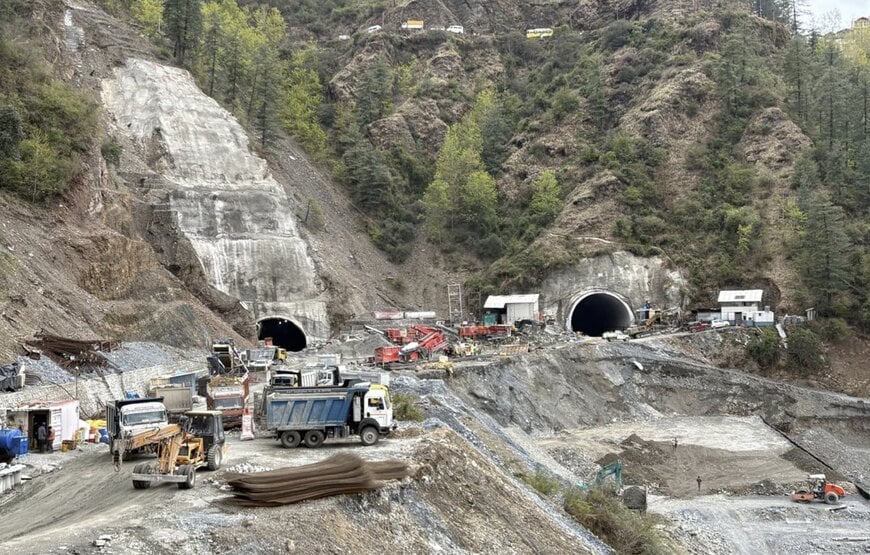
Shimla bypass jobsite.
Tunnel construction in mountainous terrain often requires switching excavation methods as geology, regulatory constraints, and proximity to populated areas change across the alignment. In this context, mechanized excavation can provide an alternative where drill-and-blast operations face operational limits. Epiroc supplied a hydraulic rock excavation solution for the Shimla Bypass Tunnel Project in India, supporting Bharat Constructions (India) Pvt. Ltd. on a section of the National Highways Authority of India’s NH-5 infrastructure program.
Excavation constraints in Himalayan tunnel construction
The Shimla Bypass project spans approximately 27.4 km and is intended to divert through-traffic away from Shimla to reduce urban congestion while improving transport connectivity across Himachal Pradesh. The alignment includes tunnels, bridges, and culverts constructed through Himalayan terrain characterized by variable rock formations, fault zones, and sections close to inhabited areas.
A significant portion of tunnelling has been executed using the drill-and-blast method under the New Austrian Tunnelling Method (NATM), which allows tunnel support systems to be adjusted based on observed ground behavior during excavation. This approach is commonly used in complex geology where excavation conditions can shift over short distances.
However, some tunnel sections imposed restrictions on blasting due to vibration control requirements, safety compliance, and proximity to populated areas. These limitations created scheduling and excavation continuity challenges.
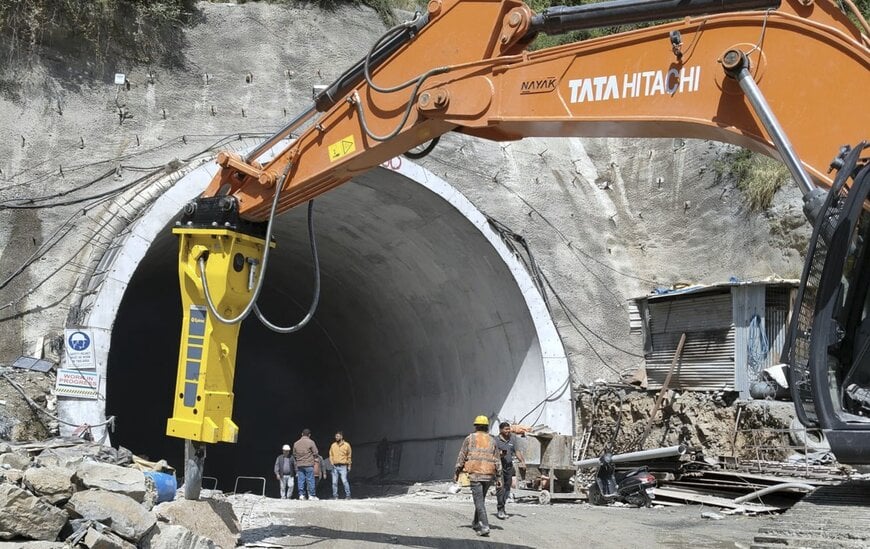
Epiroc HB 3600 ready to start the tunnel operation.
Hydraulic breaking as a non-explosive alternative
To address these constraints, Epiroc carried out a technical assessment and recommended deployment of its HB 3600 DP hydraulic breaker as a non-explosive excavation method.
The equipment was adapted for underground tunnel operation, including modifications related to tunnel clearance requirements, working cycles, and continuous-duty use. After commissioning and an initial stabilization phase, the hydraulic breaker was used for controlled rock excavation in sections where blasting could not be used or was temporarily suspended.
For tunnel projects operating under regulatory constraints, this type of mechanized excavation offers a practical alternative to maintain excavation continuity while reducing dependence on explosives handling and blast scheduling.
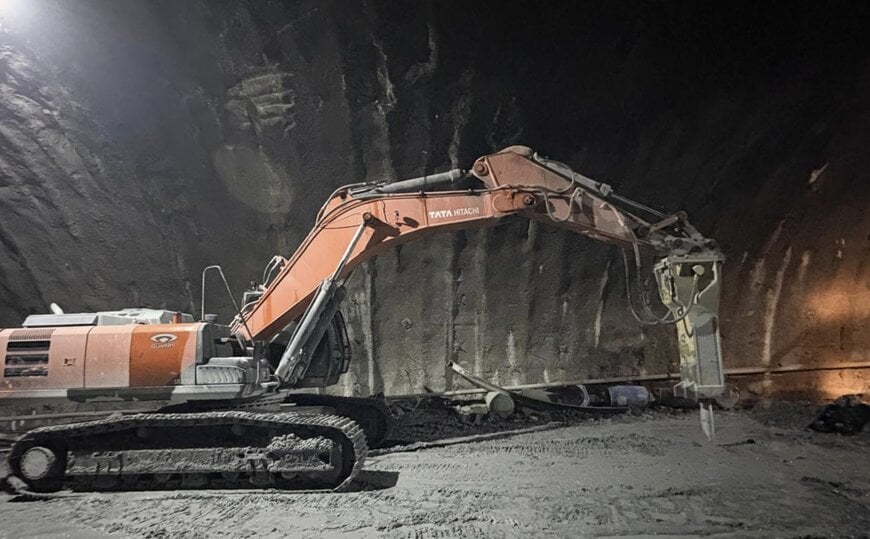
Epiroc HB 3600 breaker in tunnel operation.
Equipment support beyond machine deployment
In addition to supplying equipment, Epiroc provided operator and maintenance training for the site engineering teams. The training focused on underground operating practices, wear management, maintenance reliability, and equipment uptime.
For long-duration infrastructure projects, equipment availability directly affects excavation progress, particularly when excavation sequencing depends on limited working windows or constrained site access. Faster integration of specialized equipment can therefore reduce delays in tunnel advance.
Approximately 3 km of tunnelling is currently under execution as part of the broader project.
Infrastructure implications for sensitive construction corridors
Mechanized excavation is becoming increasingly relevant in infrastructure projects where environmental constraints, urban proximity, or geological sensitivity limit conventional blasting operations. In mountainous transport corridors, hybrid excavation strategies combining drill-and-blast with precision excavation equipment can improve project flexibility.
Once completed, the Shimla Underground Bypass is expected to reduce congestion within Shimla, improve travel efficiency along the NH-5 corridor, and strengthen regional connectivity across northern India. The project also supports broader transport infrastructure development intended to improve tourism, freight movement, and road safety in the region.
Edited by Aishwarya Mambet, Induportals Editor, with AI assistance.
www.epiroc.com
Tunnel construction in mountainous terrain often requires switching excavation methods as geology, regulatory constraints, and proximity to populated areas change across the alignment. In this context, mechanized excavation can provide an alternative where drill-and-blast operations face operational limits. Epiroc supplied a hydraulic rock excavation solution for the Shimla Bypass Tunnel Project in India, supporting Bharat Constructions (India) Pvt. Ltd. on a section of the National Highways Authority of India’s NH-5 infrastructure program.
Excavation constraints in Himalayan tunnel construction
The Shimla Bypass project spans approximately 27.4 km and is intended to divert through-traffic away from Shimla to reduce urban congestion while improving transport connectivity across Himachal Pradesh. The alignment includes tunnels, bridges, and culverts constructed through Himalayan terrain characterized by variable rock formations, fault zones, and sections close to inhabited areas.
A significant portion of tunnelling has been executed using the drill-and-blast method under the New Austrian Tunnelling Method (NATM), which allows tunnel support systems to be adjusted based on observed ground behavior during excavation. This approach is commonly used in complex geology where excavation conditions can shift over short distances.
However, some tunnel sections imposed restrictions on blasting due to vibration control requirements, safety compliance, and proximity to populated areas. These limitations created scheduling and excavation continuity challenges.
Epiroc HB 3600 ready to start the tunnel operation.
Hydraulic breaking as a non-explosive alternative
To address these constraints, Epiroc carried out a technical assessment and recommended deployment of its HB 3600 DP hydraulic breaker as a non-explosive excavation method.
The equipment was adapted for underground tunnel operation, including modifications related to tunnel clearance requirements, working cycles, and continuous-duty use. After commissioning and an initial stabilization phase, the hydraulic breaker was used for controlled rock excavation in sections where blasting could not be used or was temporarily suspended.
For tunnel projects operating under regulatory constraints, this type of mechanized excavation offers a practical alternative to maintain excavation continuity while reducing dependence on explosives handling and blast scheduling.
Epiroc HB 3600 breaker in tunnel operation.
Equipment support beyond machine deployment
In addition to supplying equipment, Epiroc provided operator and maintenance training for the site engineering teams. The training focused on underground operating practices, wear management, maintenance reliability, and equipment uptime.
For long-duration infrastructure projects, equipment availability directly affects excavation progress, particularly when excavation sequencing depends on limited working windows or constrained site access. Faster integration of specialized equipment can therefore reduce delays in tunnel advance.
Approximately 3 km of tunnelling is currently under execution as part of the broader project.
Infrastructure implications for sensitive construction corridors
Mechanized excavation is becoming increasingly relevant in infrastructure projects where environmental constraints, urban proximity, or geological sensitivity limit conventional blasting operations. In mountainous transport corridors, hybrid excavation strategies combining drill-and-blast with precision excavation equipment can improve project flexibility.
Once completed, the Shimla Underground Bypass is expected to reduce congestion within Shimla, improve travel efficiency along the NH-5 corridor, and strengthen regional connectivity across northern India. The project also supports broader transport infrastructure development intended to improve tourism, freight movement, and road safety in the region.
Edited by Aishwarya Mambet, Induportals Editor, with AI assistance.
www.epiroc.com
Powered by
Induportals Media Publishing