Electric Wheeled Excavator Targets Urban Construction
Volvo Construction Equipment introduces an electric wheeled excavator designed to combine zero-emission operation, road mobility and full-shift productivity. www.volvoce.com Volvo Construction Equipment has launched the EWR150 Electric, bringing battery-electric technology to the wheeled excavator segment for the first time within its portfolio. The 15–17-ton machine has been developed for construction, infrastructure, utility and urban development projects that require low-emission operation, reduced noise and operational flexibility. By combining independent road travel with battery-electric performance, the machine addresses growing demand for sustainable construction equipment in cities and environmentally sensitive locations. Battery-Electric Mobility for Construction Operations Unlike many electric construction machines that require transportation between jobsites, the EWR150 Electric is designed to travel independently on public roads without the need for a transport trailer. This capability allows contractors to move directly between work locations, reducing logistics requirements and improving operational efficiency. The machine is intended for applications where mobility is critical, including urban infrastructure maintenance, road construction, utility installation, landscaping, demolition and municipal projects. Its ability to operate with zero tailpipe emissions and significantly lower noise levels makes it suitable for environments where environmental regulations and community impact are becoming increasingly important. Electric Drivetrain and Energy Recovery System At the core of the machine is a dedicated electric drive architecture that combines an electric travel motor with a hydraulic boom energy-recovery system. The recovery system captures and reuses energy generated during boom movements, improving overall energy efficiency and extending operating time. According to Volvo Construction Equipment, the excavator can typically operate between eight and ten hours depending on the application, enabling most operators to complete a standard working shift without intermediate charging. The integration of regenerative energy functions is intended to maximize battery utilization while maintaining consistent machine performance throughout the workday. Flexible Charging Infrastructure To support a variety of operating conditions, the EWR150 Electric offers multiple charging options. The machine supports DC fast charging up to 150 kW, enabling rapid recharging during scheduled breaks or shift changes. For overnight charging, an onboard AC charger provides charging capability up to 22 kW. The excavator uses a CCS2 charging interface, allowing compatibility with charging infrastructure commonly deployed for electric commercial vehicles. This approach simplifies integration into mixed fleets where construction equipment, trucks and service vehicles may share charging resources. Performance Comparable to Diesel Models The EWR150 Electric has been developed from the platform of Volvo CE’s conventional wheeled excavators and is designed to match diesel-machine performance in key operational areas. The machine maintains equivalent reach, travel speed, lifting capacity and operating weight while eliminating exhaust emissions. Technical specifications include an operating weight between 16.6 and 17.9 tonnes, a bucket capacity of 0.67 cubic meters, a maximum digging depth of 5.23 meters, a maximum digging reach of 8.96 meters and a lifting capacity of 5,600 kilograms. The excavator can travel at speeds up to 35 km/h and incorporates a compact short-tail-swing design with a tail swing radius of 1.72 meters for operation in confined spaces. A 270 kWh battery pack operating at 600 volts powers the machine. Applications in Urban and Noise-Sensitive Environments The machine has been developed to support projects where emissions and noise restrictions affect equipment selection. Urban construction sites, municipal infrastructure projects, utility maintenance operations and work near hospitals, schools and residential developments can benefit from quieter operation. The reduction in operational noise may also allow contractors to perform work outside standard operating hours where local regulations permit. Beyond urban applications, Volvo CE positions the machine for use in agriculture, forestry, recycling, waste management and landscaping projects where mobility and environmental performance are important considerations. Maintenance and Total Cost of Ownership Electric drivetrains typically contain fewer wear components than internal combustion engines, reducing routine maintenance requirements. Volvo CE states that the electric configuration helps decrease service needs, improve uptime and lower long-term operating costs. The machine is assembled as a purpose-built electric excavator rather than a converted diesel platform. This design approach allows optimization of battery placement, weight distri
 machineryasia
Volvo Construction Equipment introduces an electric wheeled excavator designed to combine zero-emission operation, road mobility and full-shift productivity.
www.volvoce.com
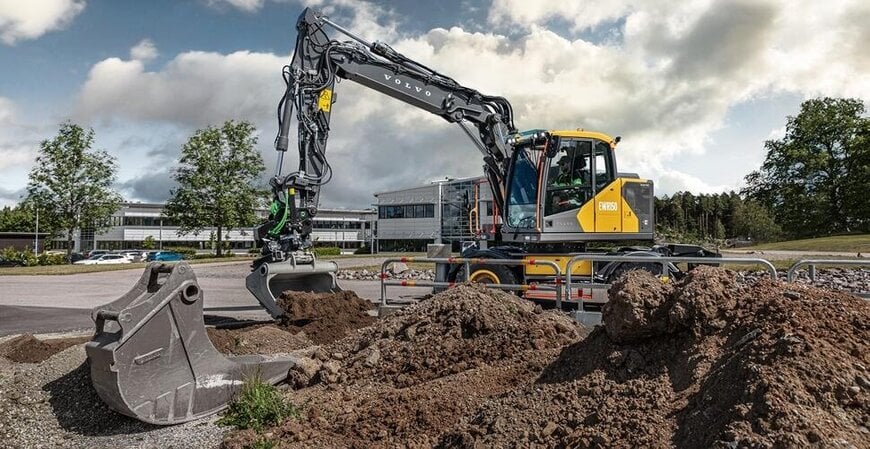
Volvo Construction Equipment has launched the EWR150 Electric, bringing battery-electric technology to the wheeled excavator segment for the first time within its portfolio. The 15–17-ton machine has been developed for construction, infrastructure, utility and urban development projects that require low-emission operation, reduced noise and operational flexibility. By combining independent road travel with battery-electric performance, the machine addresses growing demand for sustainable construction equipment in cities and environmentally sensitive locations.
Battery-Electric Mobility for Construction Operations
Unlike many electric construction machines that require transportation between jobsites, the EWR150 Electric is designed to travel independently on public roads without the need for a transport trailer. This capability allows contractors to move directly between work locations, reducing logistics requirements and improving operational efficiency.
The machine is intended for applications where mobility is critical, including urban infrastructure maintenance, road construction, utility installation, landscaping, demolition and municipal projects. Its ability to operate with zero tailpipe emissions and significantly lower noise levels makes it suitable for environments where environmental regulations and community impact are becoming increasingly important.
Electric Drivetrain and Energy Recovery System
At the core of the machine is a dedicated electric drive architecture that combines an electric travel motor with a hydraulic boom energy-recovery system. The recovery system captures and reuses energy generated during boom movements, improving overall energy efficiency and extending operating time.
According to Volvo Construction Equipment, the excavator can typically operate between eight and ten hours depending on the application, enabling most operators to complete a standard working shift without intermediate charging. The integration of regenerative energy functions is intended to maximize battery utilization while maintaining consistent machine performance throughout the workday.
Flexible Charging Infrastructure
To support a variety of operating conditions, the EWR150 Electric offers multiple charging options. The machine supports DC fast charging up to 150 kW, enabling rapid recharging during scheduled breaks or shift changes. For overnight charging, an onboard AC charger provides charging capability up to 22 kW.
The excavator uses a CCS2 charging interface, allowing compatibility with charging infrastructure commonly deployed for electric commercial vehicles. This approach simplifies integration into mixed fleets where construction equipment, trucks and service vehicles may share charging resources.
Performance Comparable to Diesel Models
The EWR150 Electric has been developed from the platform of Volvo CE’s conventional wheeled excavators and is designed to match diesel-machine performance in key operational areas. The machine maintains equivalent reach, travel speed, lifting capacity and operating weight while eliminating exhaust emissions.
Technical specifications include an operating weight between 16.6 and 17.9 tonnes, a bucket capacity of 0.67 cubic meters, a maximum digging depth of 5.23 meters, a maximum digging reach of 8.96 meters and a lifting capacity of 5,600 kilograms. The excavator can travel at speeds up to 35 km/h and incorporates a compact short-tail-swing design with a tail swing radius of 1.72 meters for operation in confined spaces. A 270 kWh battery pack operating at 600 volts powers the machine.
Applications in Urban and Noise-Sensitive Environments
The machine has been developed to support projects where emissions and noise restrictions affect equipment selection. Urban construction sites, municipal infrastructure projects, utility maintenance operations and work near hospitals, schools and residential developments can benefit from quieter operation.
The reduction in operational noise may also allow contractors to perform work outside standard operating hours where local regulations permit. Beyond urban applications, Volvo CE positions the machine for use in agriculture, forestry, recycling, waste management and landscaping projects where mobility and environmental performance are important considerations.
Maintenance and Total Cost of Ownership
Electric drivetrains typically contain fewer wear components than internal combustion engines, reducing routine maintenance requirements. Volvo CE states that the electric configuration helps decrease service needs, improve uptime and lower long-term operating costs.
The machine is assembled as a purpose-built electric excavator rather than a converted diesel platform. This design approach allows optimization of battery placement, weight distribution and energy efficiency while maintaining the machine's compact dimensions and operational capabilities.
Production Introduction and Market Availability
The EWR150 Electric was initially presented to customers during Volvo Days 2024 and returned in production-ready form at Volvo Days 2026. Europe is the first market where customers can order the machine, reflecting increasing regional demand for low-emission construction equipment and support for construction fleet electrification initiatives.
Additional Context: This section details technical specifications and competitive benchmarking not included in the original product announcement
The electric construction equipment market is expanding rapidly as manufacturers respond to emission regulations, sustainability targets and demand for lower operating costs. Competitors developing battery-electric excavators and compact construction equipment include Komatsu, Hitachi Construction Machinery, Liebherr, CASE Construction Equipment and Caterpillar.
Benchmarking criteria for electric excavators typically include operating hours per charge, battery capacity, charging speed, travel capability, digging performance, payload capacity and total cost of ownership. The EWR150 Electric distinguishes itself through its wheeled configuration, allowing independent road travel without transport assistance, a capability not commonly available in battery-electric crawler excavators.
The machine's 270 kWh battery capacity positions it among the larger battery-powered construction machines currently entering the market. Fast charging at 150 kW and onboard 22 kW AC charging provide flexibility for both depot-based and mobile operations. Comparable electric construction equipment often relies on charging power levels between 50 kW and 150 kW depending on machine size and application.
Energy recovery systems are becoming an increasingly important differentiator within electric heavy equipment. By capturing hydraulic energy during machine operation, manufacturers can extend runtime without increasing battery size, improving overall efficiency and reducing energy consumption per operating hour.
The growing adoption of electric construction machinery is also linked to the broader development of sustainable construction practices and digital fleet management. Integration with telematics systems, battery monitoring tools and energy management platforms is expected to become a key factor in the deployment of electric equipment across large construction fleets.
Edited by Sucithra Mani, Induportals editor – adapted by AI.
www.volvoce.com
Powered by
Induportals Media Publishing